Core Difference Between Question Types
Questions in German fall strictly into two primary categories:
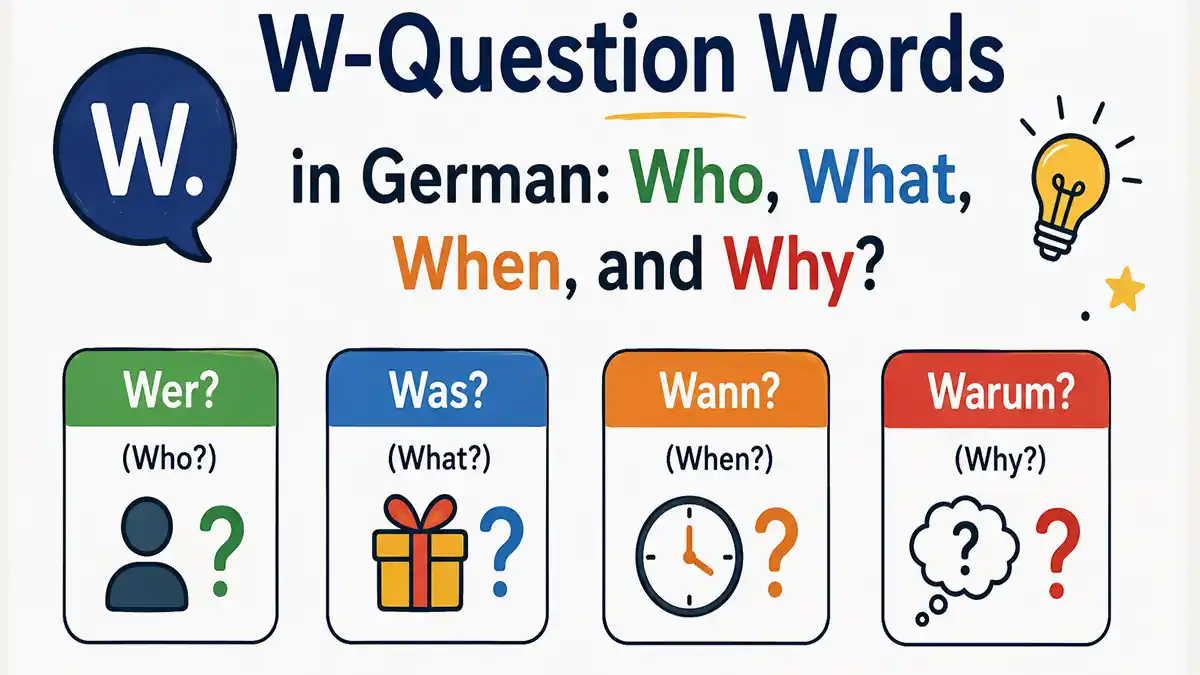
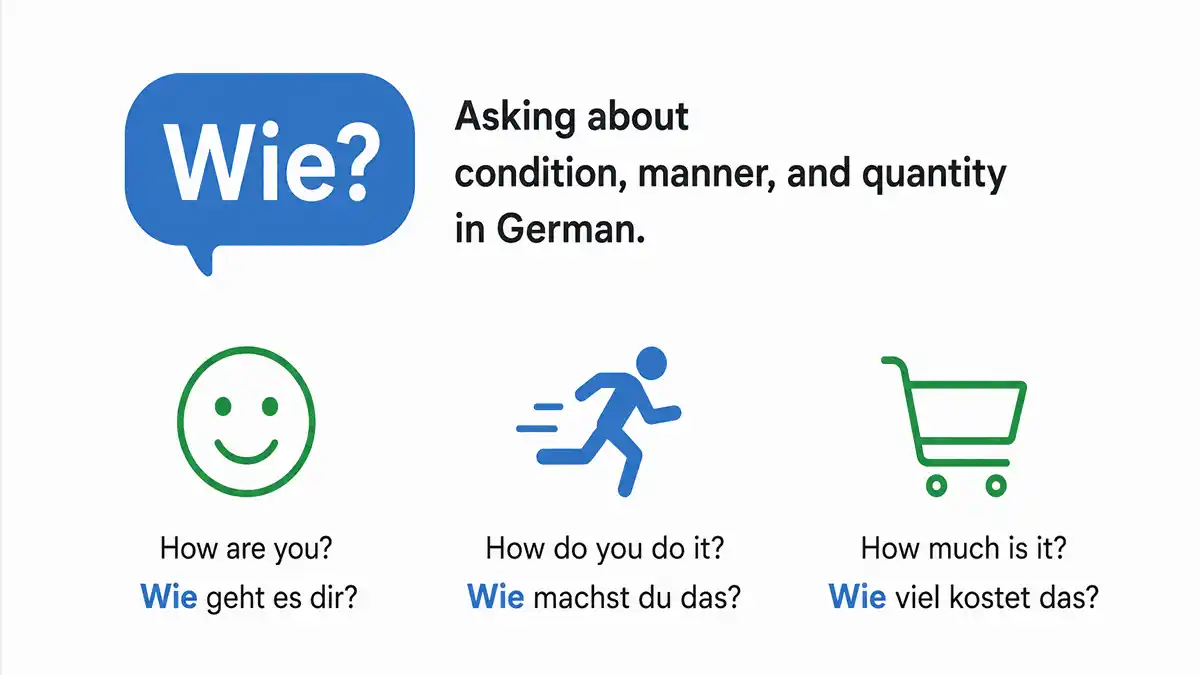
- W-Fragen: Questions that start with a question word beginning with W (such as who, what, where) using W-Question words, asking for specific information.
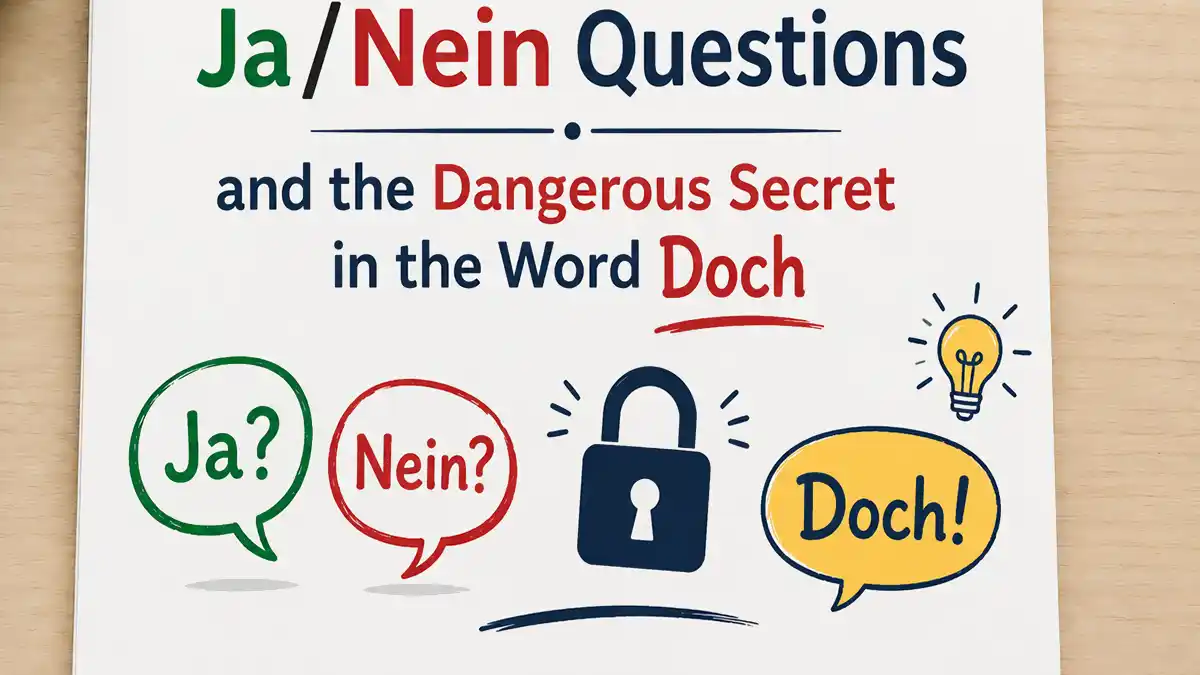
- Ja/Nein-Fragen: Questions starting directly with the verb without a question word. Learn more in our detailed lesson on Yes/No questions and when to use Doch, answered simply with Yes (Ja) or No (Nein).
1. Question Words (W-Fragen)
Named so because all German question words start with the letter W. The golden rule here is: the conjugated verb always sits in Position 2, requiring accurate German verb conjugation.
W-Frage + Verb (Pos. 2) + Subjekt + ... ?
Important Practical Examples:
- Was (What):
Was machen Sie hier? (What are you doing here?) -> The verb "machen" directly follows the question word in Position 2. Practice this using our available educational games and apps. - Wo (Where):
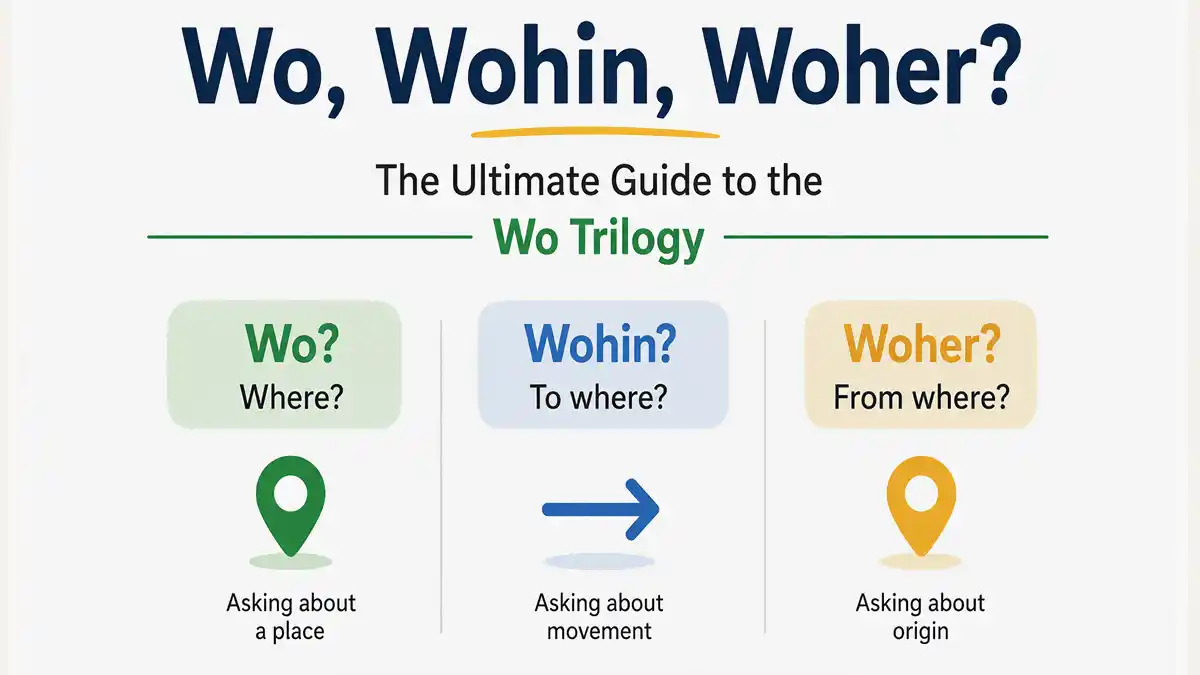
Wo wohnen Sie? (Where do you live?) -> To learn more about location question words, check out the difference between Wo, Wohin, and Woher. - Wer (Who):
Wer ist das? (Who is this?) -> Useful as an introduction in topics like self-introductions and personal details.
2. Yes or No Questions (Ja/Nein-Fragen)
When you don't need a question word and want a clear Yes/No answer, we perform the "verb swap" method where the verb moves straight to Position 1 followed directly by the subject. This rule is highly useful when drafting appointment cancellation templates.
Verb (Pos. 1) + Subjekt + ... ?
Important Practical Examples:
- Statement: Sie kommen aus Ägypten. (You come from Egypt).
- Converted Question: Kommen Sie aus Ägypten? (Do you come from Egypt?) -> Notice how the verb "Kommen" leads the question.
- Another Example: Lernst du Deutsch? (Are you learning German?) -> Expected answer: Ja, ich lerne Deutsch / Nein. Useful in daily conversations like asking how someone is doing formally or informally.
Advertisement
Intonation Differences Between Statements and Questions
German speakers don't rely solely on word order to indicate speech intent; vocal pitch (intonation) plays a key role in distinguishing statements from questions, especially in rapid daily speech:
- In Statements (Aussagesatz): Voice pitch gradually drops towards the end of the sentence.
- In Yes/No Questions (Ja/Nein-Fragen): Pitch rises noticeably on the last word to signal to the listener that an answer is expected. This is crucial during oral interviews or when writing cover letters and motivational statements (Anschreiben).