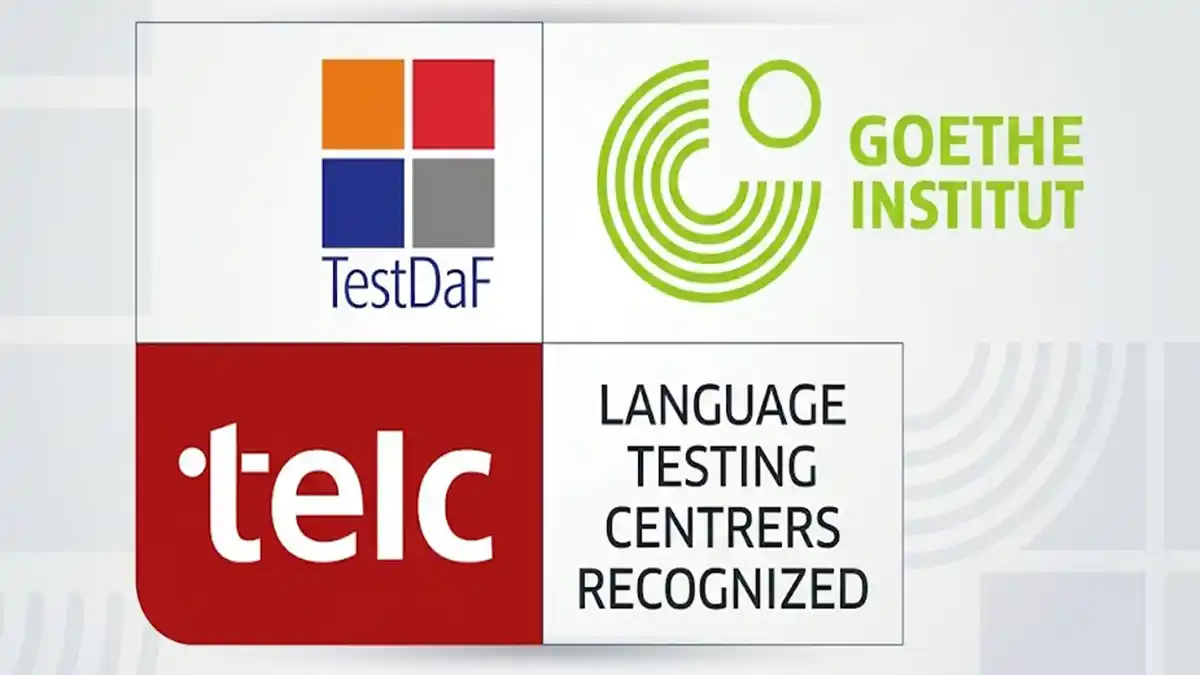
Comprehensive Comparison Table: Goethe vs telc vs TestDaF
| Comparison Criteria | Goethe-Zertifikat | telc (The European Language Certificates) | TestDaF |
|---|---|---|---|
| Available Levels | From A1 up to C2 | From A1 up to C2 | Exclusively covers B2 to C1 levels |
| Primary Purpose | General, academic, immigration, and family reunion | General, specialized vocational (medical/nursing), university | Strictly academic for German university admissions |
| Modular System (Modul) | Fully modular (individual sections can be retaken separately) | Split into Written and Oral (retake the failed part only) | Single-block exam (entire exam must be repeated) |
| Oral Exam Format | In-person face-to-face interview with an examiner | Interactive dialogue and discussion with a partner | Computer-recorded audio responses |
| Embassy Visa Acceptance | 100% globally accepted across all embassies | Officially recognized by all German embassies worldwide | Recognized exclusively for academic student visas |
| Test Locations | Goethe-Institut branches and authorized global partner centres | Accredited language centres across Germany and worldwide | Licensed test centres (both digital and paper-based formats) |
1. Goethe-Institut Examination (Goethe-Zertifikat)
The Goethe-Institut operates as the official cultural institution of the Federal Republic of Germany. Consequently, its certificate is regarded as the universally trusted gold standard by German embassies, foreign ministries, and global employers alike.
Advantages of the Goethe Exam
- Independent Modular System (Modularer Aufbau): For levels B1, B2, C1, and C2, the examination is divided into four independent modules: Reading (Lesen), Listening (Hören), Writing (Schreiben), and Speaking (Sprechen). If you fail a single module, you only need to re-register and sit for that specific module rather than retaking the entire exam.
- Absolute Diplomatic Recognition: Fully accepted without exception across all German embassies worldwide for every category of visa.
- Lifetime Validity: Official Goethe certificates have no legal expiration date.
Disadvantages of the Goethe Exam
- High Registration Competition: Test centres face extremely high booking demand, with examination seats often filling up within minutes of registration opening in many countries.
- Higher Examination Fees: Registration fees for Goethe tests are generally higher compared to alternative standardized options.
2. telc Examination (The European Language Certificates)
The telc organization is a leading European testing body offering standardized examinations aligned with the Common European Framework of Reference for Languages (CEFR).
telc certificates enjoy extensive recognition throughout Germany, state ministries, and foreign diplomatic missions.
Advantages of the telc Exam
- Specialized Healthcare Examinations: Offers tailored tests specifically designed for doctors and nursing staff, such as telc Deutsch B2-C1 Medizin and telc B1-B2 Pflege, which are formally approved for professional medical license recognition (Approbation) within the German healthcare sector.
- Flexible Scheduling: Certified test centres administer telc sessions on a frequent, monthly basis, making appointment bookings much easier compared to Goethe.
- Practical Exam Style: Heavily focuses on multiple-choice formats and authentic texts drawn directly from daily life and practical work environments.
- telc Deutsch C1 Hochschule: One of the most widely accepted alternatives across all German universities for satisfying academic matriculation requirements.
Disadvantages of the telc Exam
- Two-Part Exam Structure: The exam is divided into only two major blocks: the Written Exam (comprising reading, listening, language elements, and writing) and the Oral Exam. Failing a single written skill requires retaking the entire written section.
- Longer Result Processing Times: Official grading and certificate issuance from Germany typically takes between 4 to 6 weeks.
3. TestDaF Examination (Test Deutsch als Fremdsprache)
TestDaF is specifically engineered for international students, scholars, and researchers aiming to pursue higher education at German universities and tertiary academic institutions.
Exam Structure and Grading System
TestDaF does not operate on a standard "pass/fail" single-level model. Instead, it measures language competencies across the B2 to C1 spectrum, awarding scores classified into three standardized levels (TDN - TestDaF-Niveaustufe):
- TDN 3: Corresponds to level B2.1
- TDN 4: Corresponds to level B2.2 / C1.1 (the required standard for the vast majority of German degree programs)
- TDN 5: Corresponds to level C1.2 (mandatory for competitive fields such as Medicine and Law)
Advantages and Disadvantages of TestDaF
Advantages: Available in both paper-based and digital computer-based formats, automatically recognized by 100% of German universities without exception, and highly suitable for individuals who prefer speaking into a computer microphone rather than facing an in-person examination board.
Disadvantages: Not intended for standard work visas or family reunion, features dense academic content involving data analysis and scientific graphs, and does not permit retaking individual sub-skills if a single section score falls below requirements.
Comprehensive Price Comparison: Goethe vs telc vs TestDaF
Which German Language Exam Is Easiest for Visa Applications?
[Medical Staff and Nursing Visa] ──> Easiest & Best: telc Medizin / Pflege
[University Student Visa] ──> Best Choice: TestDaF or telc C1 Hochschule
1. Family Reunion Visa (Ehegattennachzug - A1)
Easiest Exam: Goethe A1 (Start Deutsch 1) or telc Deutsch A1.
Both examinations are very straightforward. Goethe A1 provides extensive and readily accessible practice models alongside essential A1 keywords and vocabulary. Conversely, telc features simpler everyday conversational prompts. Both are 100% accepted by the embassy for spousal reunion.
2. Job Seeker Visa & Opportunity Card (Chancenkarte - A1 to B2)
Easiest Exam: telc B1 or Goethe B1/B2.
The Opportunity Card points system grants tiered advantages for language levels starting from A2, B1, and B2.
telc B1 represents a faster and less complex option due to its direct question formatting, whereas Goethe B1/B2 provides the strategic safety net of repeating only the failed module if you encounter difficulties in one specific skill.
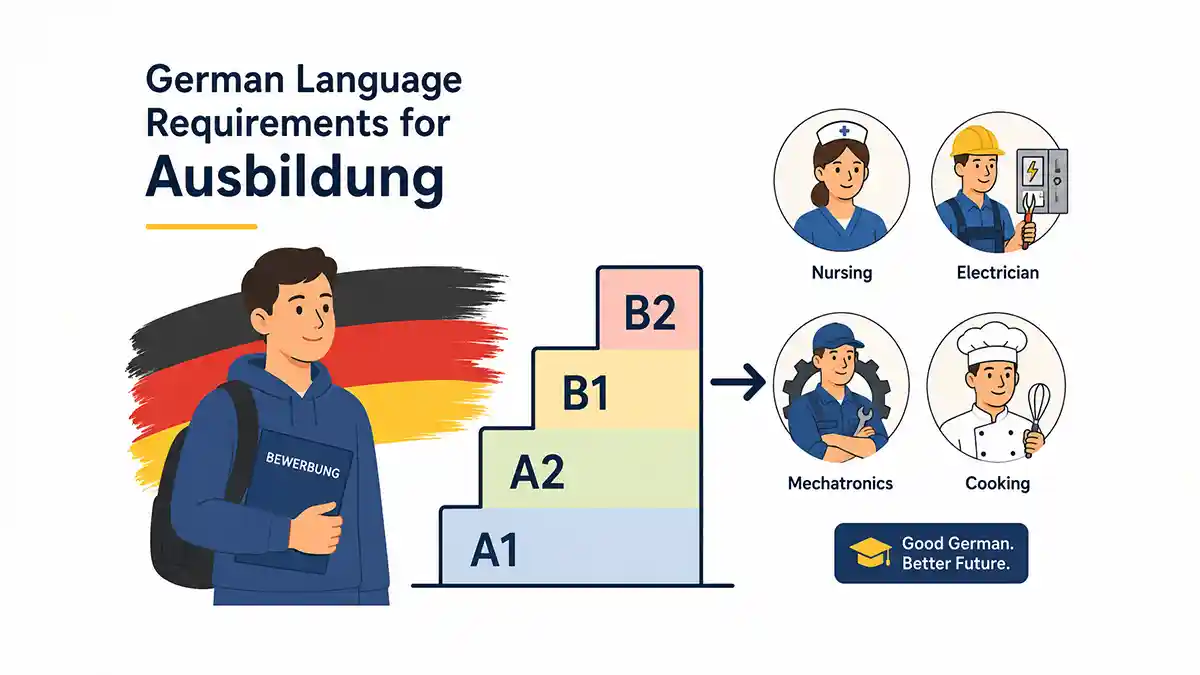
3. Vocational Training Visa (Ausbildung - B1 or B2)
Easiest Exam: telc B1/B2.
telc examination materials focus heavily on workplace communication and realistic occupational scenarios, aligning seamlessly with the expectations of German employers and the required language levels for Ausbildung programs.
4. Medical Practice Visa (Doctors & Nurses)
Easiest and Most Suitable: telc Deutsch B1-B2 Pflege and telc B2-C1 Medizin.
These exams are specifically tailored to the medical field, incorporating clinical terminology, doctor-patient dialogues, and medical reporting. This makes them the premier route for professional credential recognition (Anerkennung) under the official German healthcare sector requirements.
5. University Study Visa (Visum zur Studienaufnahme)
Best and Most Predictable Exam: TestDaF (or telc Deutsch C1 Hochschule).
TestDaF assesses standardized recurring tasks in every examination round (chart descriptions, academic reading, structured arguments), making it highly receptive to targeted preparation using fixed transitional expressions (Redemittel). For candidates who prefer traditional in-person speaking evaluations, telc C1 Hochschule is the direct equivalent.
Video Breakdown: Comprehensive Comparison & Student Experiences
Watch this detailed overview for further insights into the practical differences between German language exams and student feedback to make the right choice for your profile.
The video provides an in-depth practical comparison focusing on real candidate experiences, strengths, and weaknesses across each testing system.