Key Vocabulary for Level A1.1 (Schlüsselwörter)
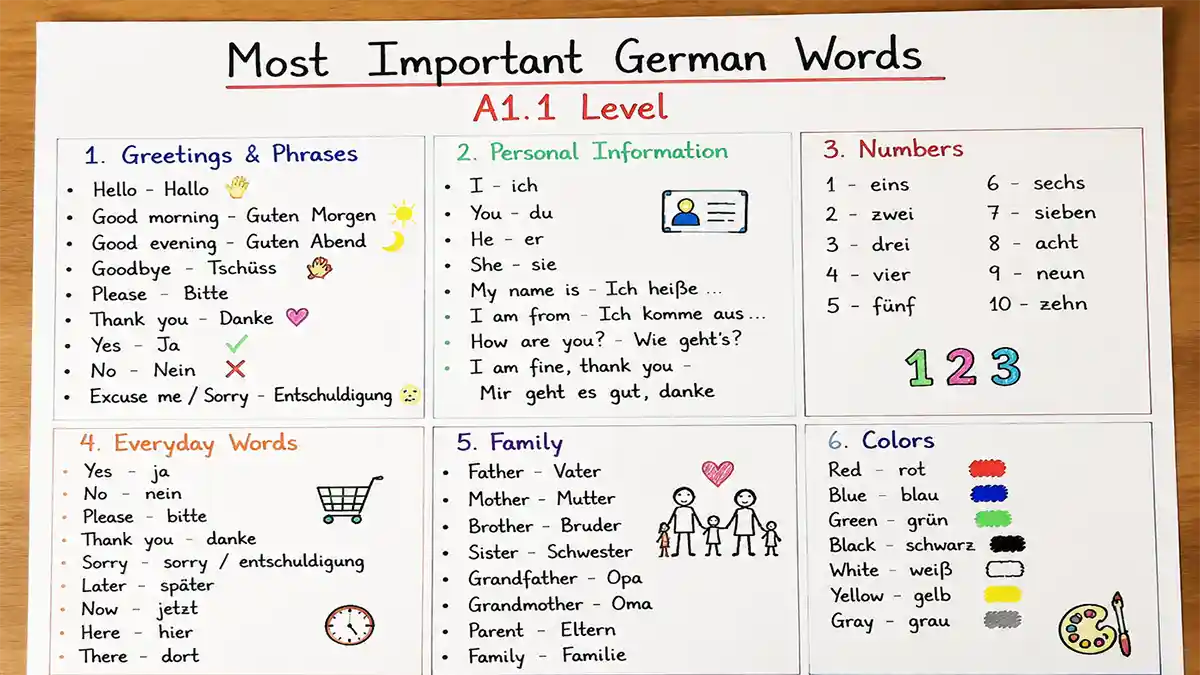
Welcome to your comprehensive guide to learning the German language. This article is an essential reference covering the most important vocabulary for the A1.1 beginner level, representing the first building block in your journey to properly master the German language. Explore our Levels Hub to access structured learning paths or use our Instant Translation tool for quick checks.
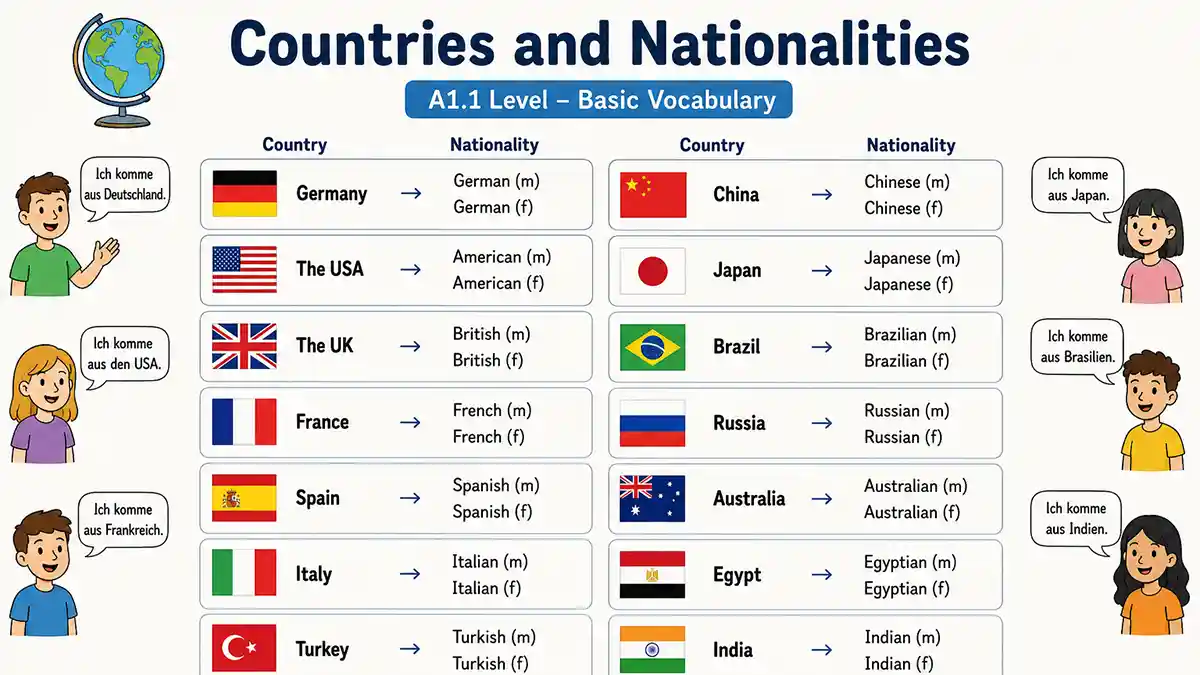
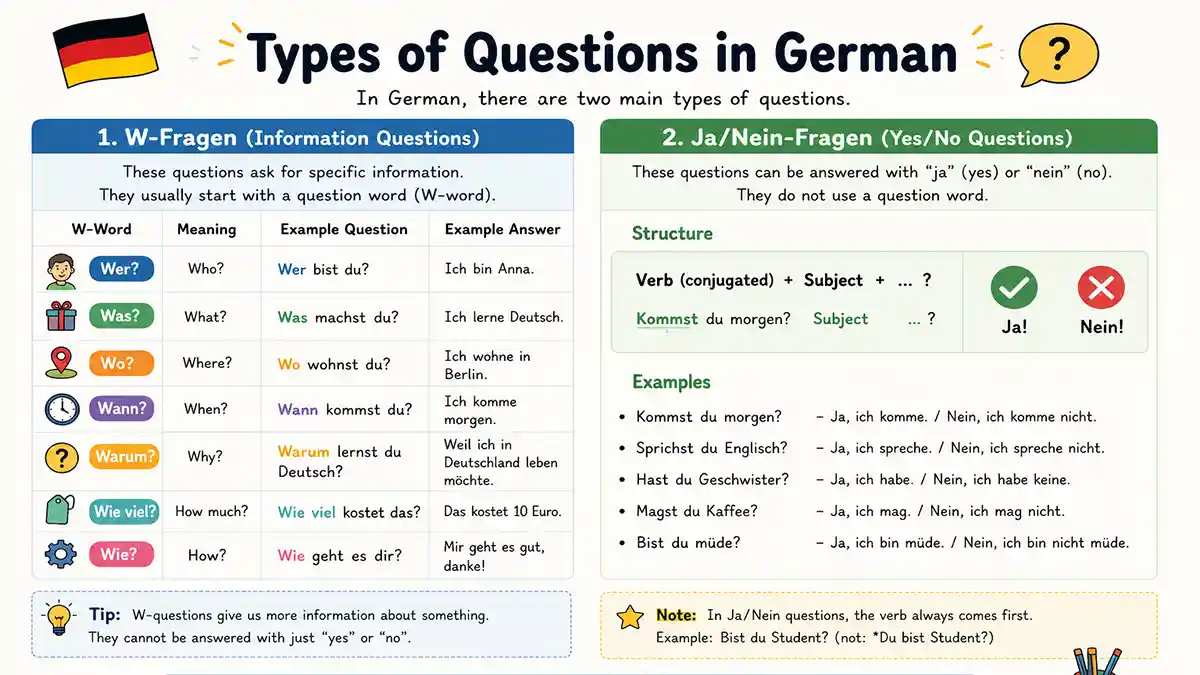
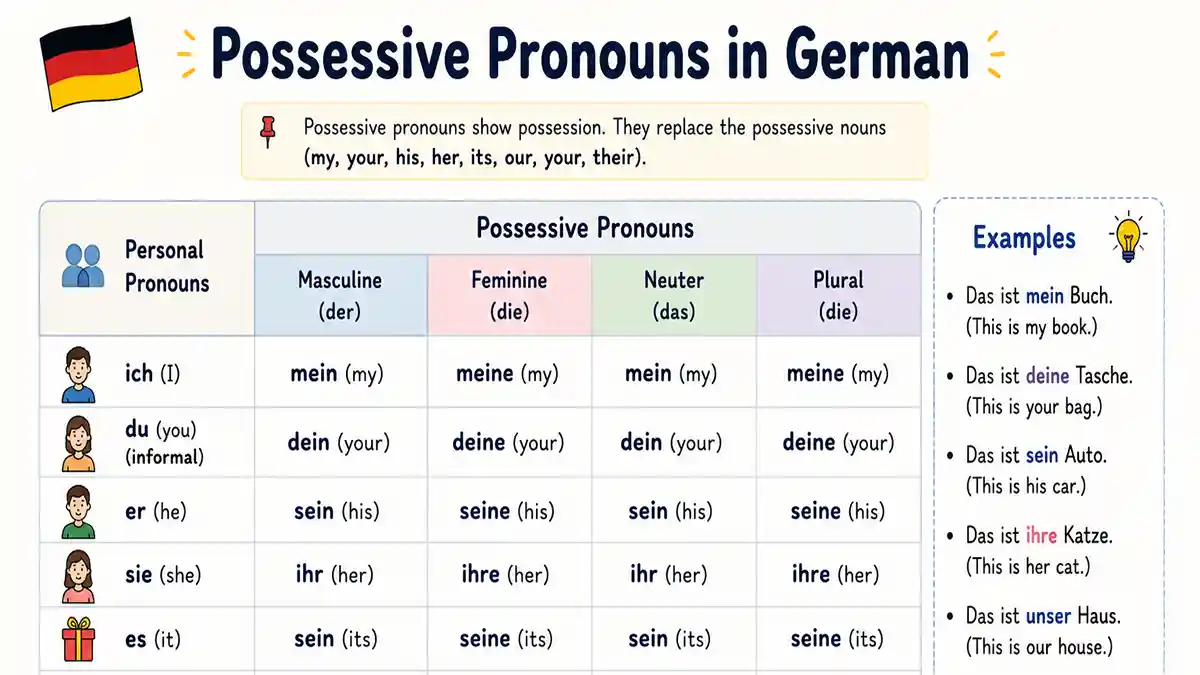
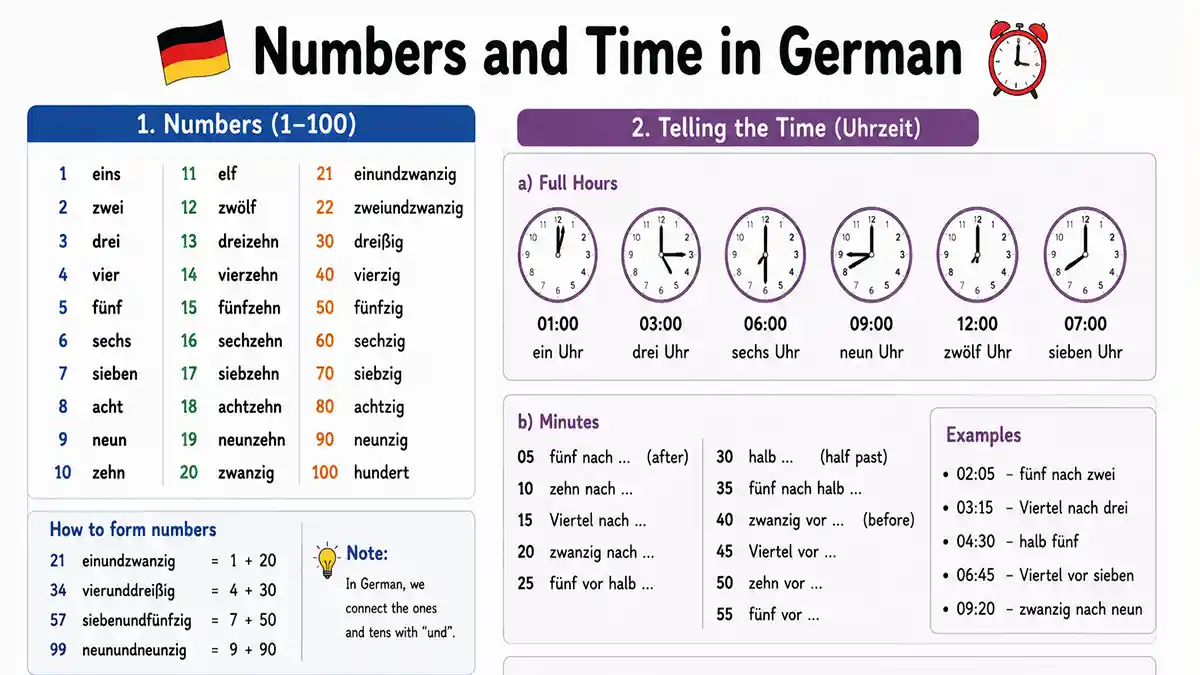
This guide contains necessary vocabulary divided into easy-to-digest categories, including: Family, Professions, Furniture, Everyday Objects, Office, Food & Drinks, Materials, Colors, Prices, Places, Greetings, Hobbies, Activities, and Verbs. You can also review grammar fundamentals such as Possessive Pronouns and Forming Questions.
Every vocabulary word in this guide supports high-definition interactive pronunciation. Please make sure to open this page inside the Google Chrome browser to fully and properly experience the audio pronunciation feature.
Family (Die Familie)
Family vocabulary is among the first words you must master to talk about your relatives correctly.
Professions (Die Berufe)
Here is a list of basic professions. Remember that professions in German usually take the suffix (-in) for the feminine form.
Furniture (Die Möbel)
Indispensable words for describing the contents of a house and living spaces.
Everyday Objects & Office (Alltag & Büro)
Important vocabulary describing things we use daily at work or in our personal lives.
Food & Drinks (Essen & Trinken)
Necessary words when visiting restaurants or supermarkets.
Materials (Materialien)
These words are used to describe what everyday items are made of.
Colors (Die Farben)
All colors in the German language take the article 'Das' when used as nouns.
Prices & Pronunciation (Preise und Aussprache)
Some basic words you will need to understand prices and pronunciation topics.
Places & Entertainment (Orte & Unterhaltung)
Where do you go in your free time? This vocabulary will help you describe places.
Greetings (Begrüßungen)
Essential phrases to start and close any conversation in German.
Hobbies (Hobbys)
Useful phrases for talking about things you like to do in your free time.
Activities (Aktivitäten)
Compound sentences and verbs for regular daily activities.
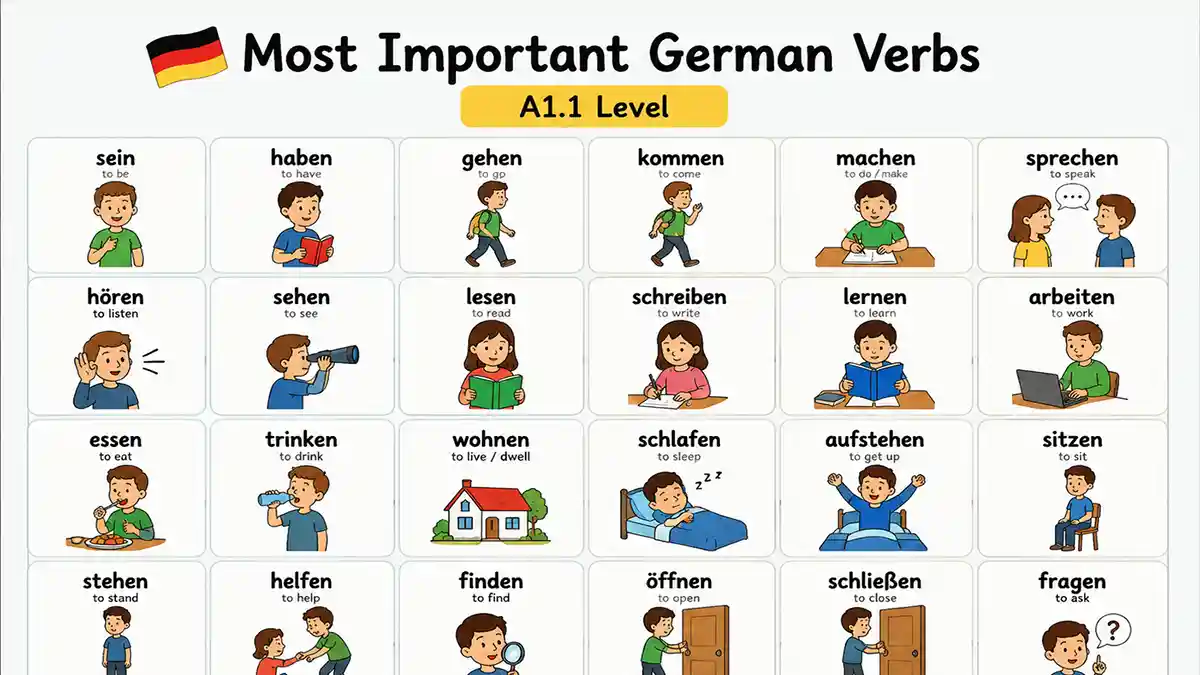
Verbs (Verben)
The most important verbs you need to build simple sentences and express movement and activity.
Golden Tips to Master Your A1.1 German Vocabulary
Connect Words to Reality
Mastering A1.1 German vocabulary is the absolute cornerstone of your language learning journey. Every word you memorize today alongside its correct article (der, die, das) lays a solid foundation for building accurate sentences with confidence. Don't rely solely on passive reading; actively practice repeating word pronunciations using our audio feature, and link new vocabulary to everyday objects around you.
Consistency & Smart Practice
Consistency and regular practice are the true secrets to achieving German fluency. Dedicating just 15 minutes a day to reviewing a targeted set of words and incorporating them into short sentences is far more effective than cramming for hours once a week. Consider using flashcards or interactive tools to keep core vocabulary and essential verbs fresh on the go.
Move Forward with Confidence
Once you've fully grasped this comprehensive A1.1 word list, you'll be ready to take your next confident step into German grammar and sentence structure. Keep practicing and never fear making mistakes—they are simply the first step toward genuine progress. Stay tuned for our upcoming guides and interactive lessons designed to simplify complex German concepts.
Frequently Asked Questions (FAQ)
Why do all colors use the 'das' article?
When used as nouns to represent the color itself (e.g., "Das Rot ist schön" - The red is beautiful), all colors in German are neuter and thus take the article das.
How can I remember whether a word is der, das, or die?
There is no single rule, but there are patterns (like words ending in -ung, -keit, -ion are usually feminine die). The best method is to always learn and memorize every new noun together with its article.
Is 'die' used for all plurals?
Yes! Regardless of the noun's gender in its singular form (der, das, or die), the definite article for the plural form is always die.
References & Learning Sources
Curriculum Textbooks & Materials
This vocabulary list was compiled and verified using the following standard German educational resources:
- Goethe-Zertifikat A1 Wortliste - Goethe-Institut
- Menschen A1 Glossar - Hueber Verlag
- Netzwerk neu A1 Wortschatz - Klett Sprachen
- Spektrum Deutsch A1+ - Schubert-Verlag