What is Ausbildung in Germany? Complete Step-by-Step Guide
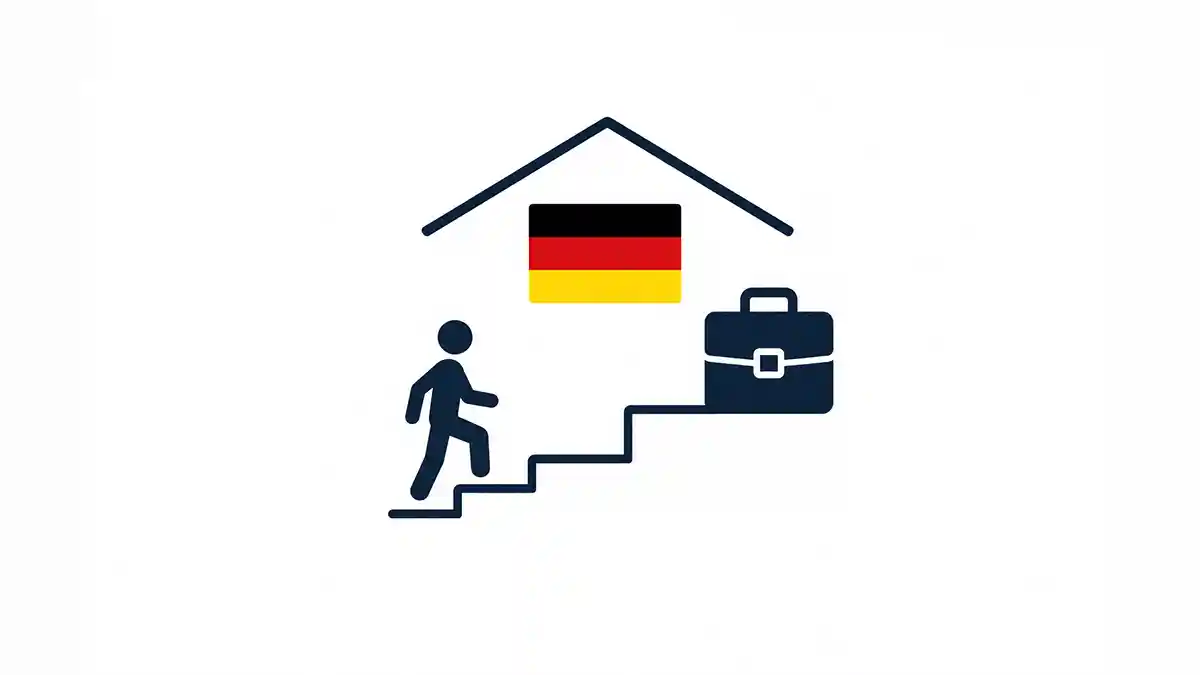
Germany stands as one of the strongest economies globally, renowned for its unique dual educational system designed to integrate young talent into the workforce seamlessly. If you are looking for opportunities to study, work, and build a career in Europe, you have certainly encountered the term "Ausbildung" or vocational training.
In this comprehensive guide, we walk you step-by-step through understanding what Ausbildung is, its advantages, admission requirements for international applicants, and actionable steps to secure a contract and visa successfully.
Important Notice: All regulations and visa guidelines in this guide are updated according to the latest Skilled Immigration Act regulations in Germany to ensure you receive precise data.
1. What is Vocational Training (Ausbildung) in Germany?
- Vocational School (Berufsschule):
- You spend 2 to 3 days a week studying theoretical subjects related to your profession, alongside general subjects such as German, Economics, and Social Studies. You can boost your vocabulary across our structured German Course Levels.
- Sponsoring Company (Ausbildungsbetrieb):
- You spend the remaining days putting theory into practice inside the company under the supervision of qualified instructors.
Types of Vocational Training in Germany (Ausbildung)
The vocational training system in Germany is divided into two primary pathways that applicants must understand before submitting their applications:
1. Dual Vocational Training (Duales System): The most popular and widespread pathway, combining practical work within a company with theoretical education at a vocational school (Berufsschule), while providing a guaranteed monthly salary.
2. School-Based Training (Schulische Ausbildung): Conducted entirely within specialized institutes or academies (e.g., private nursing, design, languages). Trainees generally do not receive a monthly stipend and may occasionally incur tuition fees.
2. Why is Ausbildung an Ideal Option for International Applicants?
- Monthly Paid Salary:
- Unlike university studies that require continuous tuition or savings, Ausbildung provides a guaranteed monthly allowance (Ausbildungsvergütung) from day one.
- No Blocked Bank Account (Sperrkonto) Needed:
- If your monthly allowance covers the net minimum living standard set by the embassy, you are exempt from locking large funds in a bank account.
- Guaranteed Employment Upon Graduation:
- Over 70% of trainees receive full-time permanent employment contracts at the same company where they completed their apprenticeship.
- Path to Permanent Residency & Citizenship:
- Years spent during Ausbildung count legally toward the required years of residence when applying for German citizenship later.
3. Admission Requirements for International Applicants
- German Language Proficiency (The Key Requirement):
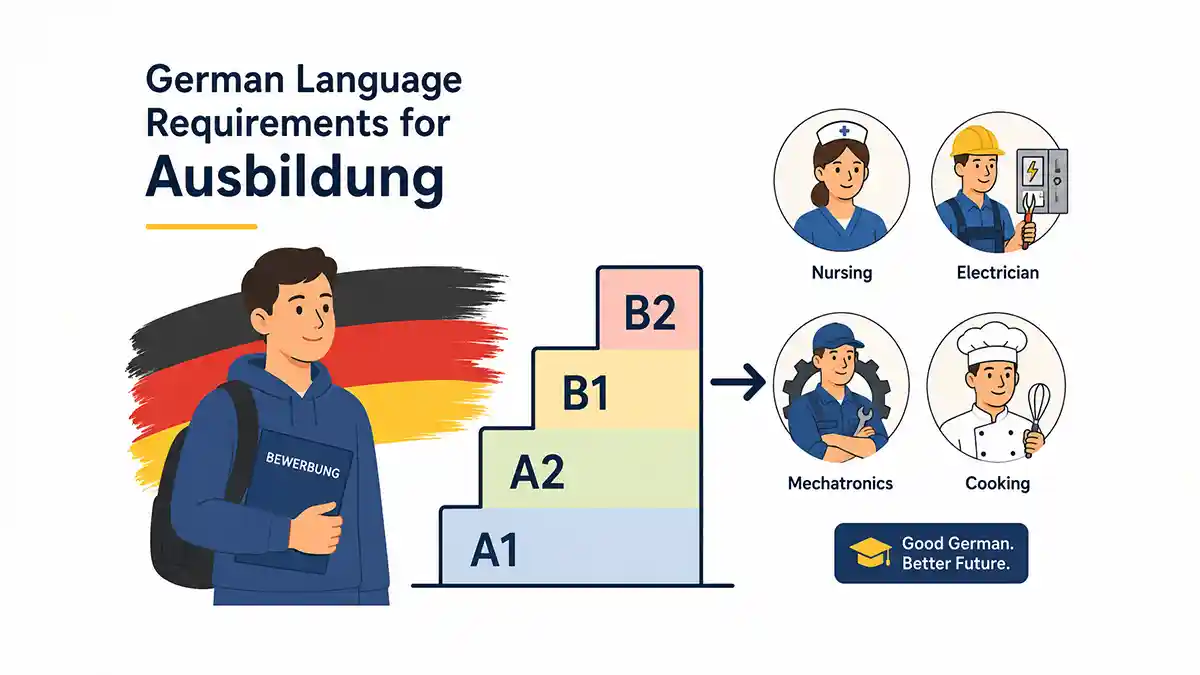
- B1 level certificate is required for most technical and commercial trades. Read our dedicated breakdown on Language Levels Required for Ausbildung.
- B2 level is mandated for healthcare fields such as nursing or caregiving, which are crucial for joining the German Healthcare Sector.
- Official certificates must be issued by recognized providers like Goethe-Institut, Telc, or ÖSD.
- Educational Qualifications & Recognition:
- A high school diploma or vocational school diploma is required as a minimum, along with official degree recognition (Zeugnisanerkennung).
- Age & Experience Conditions:
- There is no legal upper age limit for Ausbildung, although companies typically favor applicants between 18 and 30 years old.
4. Application Process (Step-by-Step Guide)
- Step 1: Preparing a German-Format Resume (Lebenslauf):
- Draft a professional reverse-chronological CV conforming to German standards.
- Step 2: Writing a Cover Letter (Anschreiben):
- Craft a personalized motivation letter highlighting your passion, skills, and exact reasons for choosing the company. You can refer to Anschreiben Job Application Cover Letters for pre-formatted templates.
- Step 3: Searching & Applying via Official Portals:
- Apply through approved German job portals such as Ausbildung.de, Azubi.de, and the Federal Employment Agency (Bundesagentur für Arbeit).
- Step 4: Passing the Job Interview (Vorstellungsgespräch):
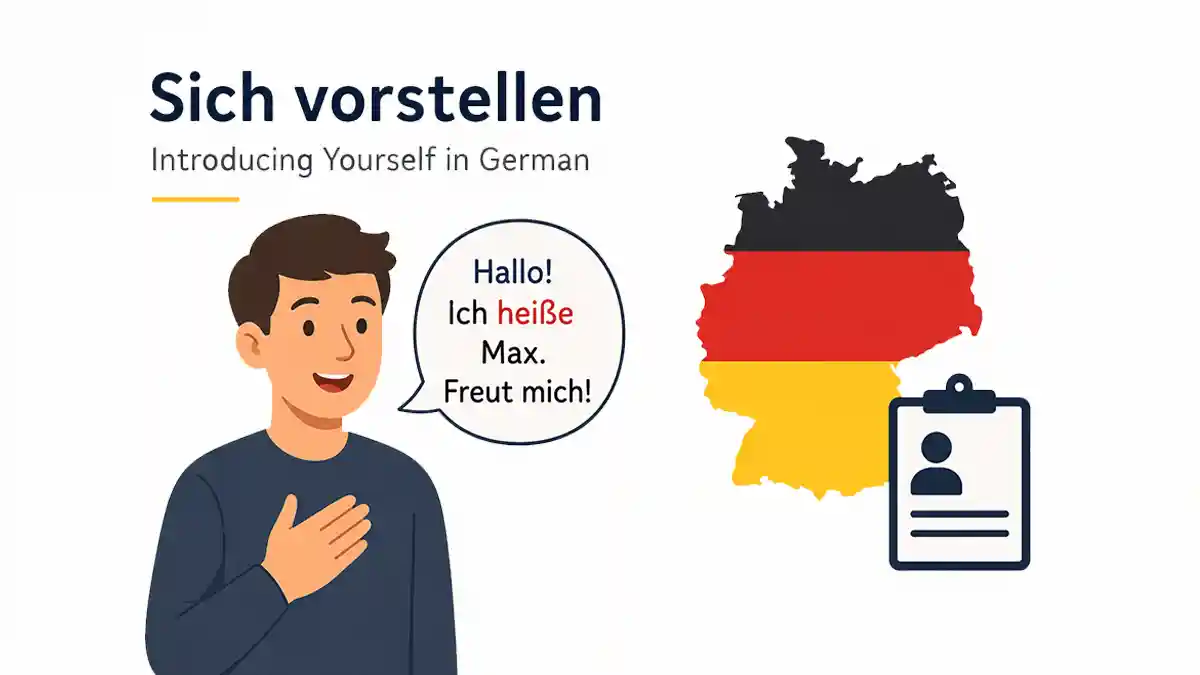
- Conduct online interviews and prepare well for questions regarding your motivation. Practice speaking with our guide on Self-Introduction in German.
5. Most In-Demand Ausbildung Fields in Germany
- Nursing & Healthcare (Pflegefachmann/frau):
- The highest demand specialty offering competitive salaries and immediate job guarantees upon graduation, particularly in the German Medical Sector.
- IT & Software Development (Fachinformatiker):
- High demand in application development, system integration, and digital infrastructure management.
- Mechatronics & Automotive (Mechatroniker):
- Combining mechanics and electronics for industrial production lines and major engineering firms like Siemens or Bosch.
- Hospitality & Culinary Arts (Hotelfachmann / Koch):
- A vital sector seeking hotel management trainees and professional chefs across major resorts and hotel chains.
Visa for Searching for a Vocational Training Position (Ausbildungssuche)
If you are unable to secure a contract remotely, modern German immigration regulations allow qualified international candidates to apply for a specialized search visa to enter Germany and look for opportunities in person.
Key Requirements for the Search Visa:
• German language proficiency of at least B2 level (or B1 depending on specific trade and embassy regulations).
• A recognized High School Diploma or equivalent academic qualification.
• Applicant age should not exceed 35 years.
Official and Commercial Portals to Find Ausbildung Positions
Finding the right vacancy requires using verified job boards and government portals dedicated to matching international applicants with certified German employers:
• Make it in Germany – The official portal of the German Federal Government for international skilled workers.
• Ausbildung.de – One of the largest platforms listing nationwide vacancies and career guides.
• Azubiyo.de – Offers matching tests to connect your skills with suitable training contracts.
• IHK Lehrstellenbörse – Specialized in commercial, technical, and industrial trades.
• Handwerk.de – Dedicated portal for skilled crafts, technical handwork, and trade professions.
6. Ausbildung Salaries During and After Training
- First Year:
- Gross monthly allowance (Brutto) ranges between €800 and €1,150.
- Second Year:
- Increases to range between €900 and €1,250 per month.
- Third Year:
- Reaches its peak during training, ranging from €1,000 to €1,400 per month.
- Starting Salary Upon Graduation:
- Full-time starting salaries range from €2,600 to €3,800 monthly, scaling higher with experience.
7. Common Visa Rejection Reasons & How to Avoid Them
- Insufficient Financial Proof:
- If the net salary falls below embassy threshold requirements, cover the deficit via a supplementary blocked account.
- Discrepancy in Language Ability:
- Ensure your actual spoken German matches your certificate during embassy interview interactions. Sharpen your fluency with Practical German Interview & Dialogue Exercises.
Frequently Asked Questions (FAQ)
Can I change my Ausbildung specialty or company after arriving in Germany?
Yes, legally you can. Every contract includes a probation period (Probezeit) of 1 to 4 months during which either party can terminate the contract without giving reasons. Afterward, changes are possible under stricter conditions and with Foreigners' Authority (Ausländerbehörde) approval.
Can I bring my family (spouse and children) during Ausbildung?
Legally yes, but practically it is challenging. Family reunification laws mandate adequate living space and proof of sufficient income to support all dependents without state aid, which a single training allowance rarely covers.
What are the prospects of completing a university degree after Ausbildung?
Prospects are excellent. Many companies financially support top graduates to pursue part-time or full-time university degrees (Weiterbildung) in engineering or management for internal promotions.
Does Ausbildung require high high-school grades?
No, the dual training system does not strictly focus on high GPA scores. The focus is primarily placed on practical personal skills, German language level, and diploma recognition.
What is the minimum German language level required for a visa?
The minimum requirement for most technical and commercial fields is a B1 certificate from Goethe, Telc, or ÖSD, whereas healthcare fields require a B2 certificate.
Are trainees allowed to work a part-time side job (Minijob)?
Yes, German law allows trainees to work a part-time Minijob (up to 10 hours weekly) provided your training employer approves and it does not affect your academic performance.
When does the academic year and application season start?
The academic year begins in August or September each year. Applications open 6 to 10 months prior (during autumn and winter).
Do trainees pay tuition fees for vocational school?
In the official Dual System, public vocational school education is 100% free of charge and you earn a salary from your company. Fees only apply in rare private vocational schools.
Academic & Official References
Approved Governmental & Educational Sources
Data compiled in this guide is sourced from official Federal German portals and legislation:
- Make it in Germany - Official Federal Government portal for qualified foreign professionals.
- Bundesagentur für Arbeit - German Federal Employment Agency database for job & training vacancies.
- BIBB (Bundesinstitut für Berufsbildung) - Federal Institute for Vocational Education and Training.
- Ausbildung.de - Comprehensive German portal for apprenticeship vacancies and career orientation.
- Goethe-Institut Learning Materials - Framework and standards for official language proficiency exams.
- Duden Online Wörterbuch - Standard reference dictionary for High German terminology.