Countries, Nationalities, and Geographical Terms in German
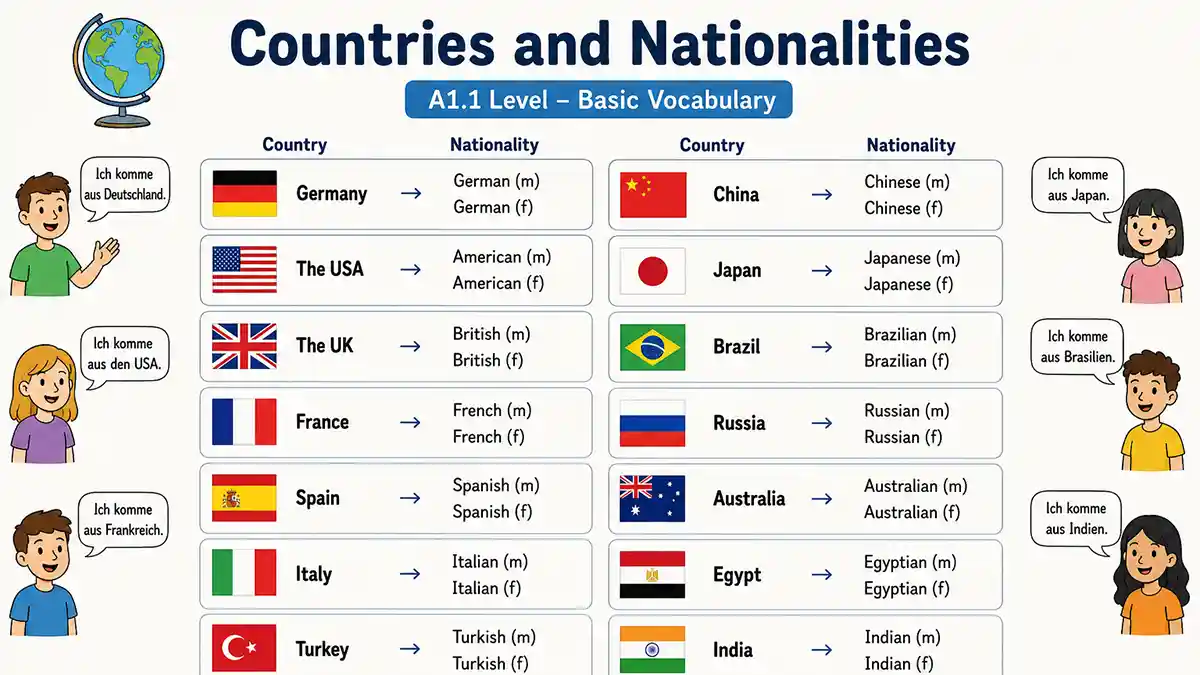
In this article, learning the names of countries, nationalities, and languages in German is an essential and crucial step for every beginner at the A1.1 level. This lesson allows you to confidently introduce yourself to others, talk about your hometown, and discuss the languages you speak, making it much easier to engage in everyday conversations. Expand your personal introduction skills further with our guides on Self introduction presentation deutsch, Name Alter Herkunft, and Wohnort Adresse.
In this comprehensive guide, we have compiled the world's most famous countries categorized by continents to make memorization and review easier. We have also ensured to include the nationalities and languages for each country, along with important geographical terms such as continents, cities, states, and villages, complete with an interactive audio pronunciation feature to ensure correct pronunciation. Make sure to also review our foundational vocabulary guides like Schlusselworter A1.1 and Possessivpronomen A1.1.
Every vocabulary word in this guide supports high-definition interactive pronunciation. Please make sure to open this page inside the Google Chrome browser to fully and properly experience the audio pronunciation feature.
Europa (Europe)
Asien (Asia)
Afrika (Africa)
Amerika (Americas)
Australien & Ozeanien
Geografische Begriffe (Important Geographical Terms)
Golden Tips to Master Countries and Nationalities in A1.1
Pay Attention to Articles Used with Countries
Most country names in German are neuter and used without articles (e.g., Deutschland or Ägypten), but certain exceptions strictly require definite articles (e.g., die Schweiz or der Irak). Always remember to learn the country's article alongside the appropriate preposition when discussing your origin or destination.
Rules for Deriving Nationalities and Languages
Keep in mind that masculine nationalities usually end in (-er) and feminine ones in (-in), whereas languages typically end with (-isch) and take the neuter article das. Practice speaking daily with interactive audio exercises to get used to masculine and feminine endings for different countries.
Integrate into Conversations and Self-Introductions
Linking country and nationality vocabulary with self-introduction sentences (like using the verb kommen with aus) is key to reinforcing what you learn. Keep practicing and rely on upcoming lessons to learn how to express your residence, address, and build daily conversation sentences with confidence.
Frequently Asked Questions (FAQ)
How do I say where I come from in German?
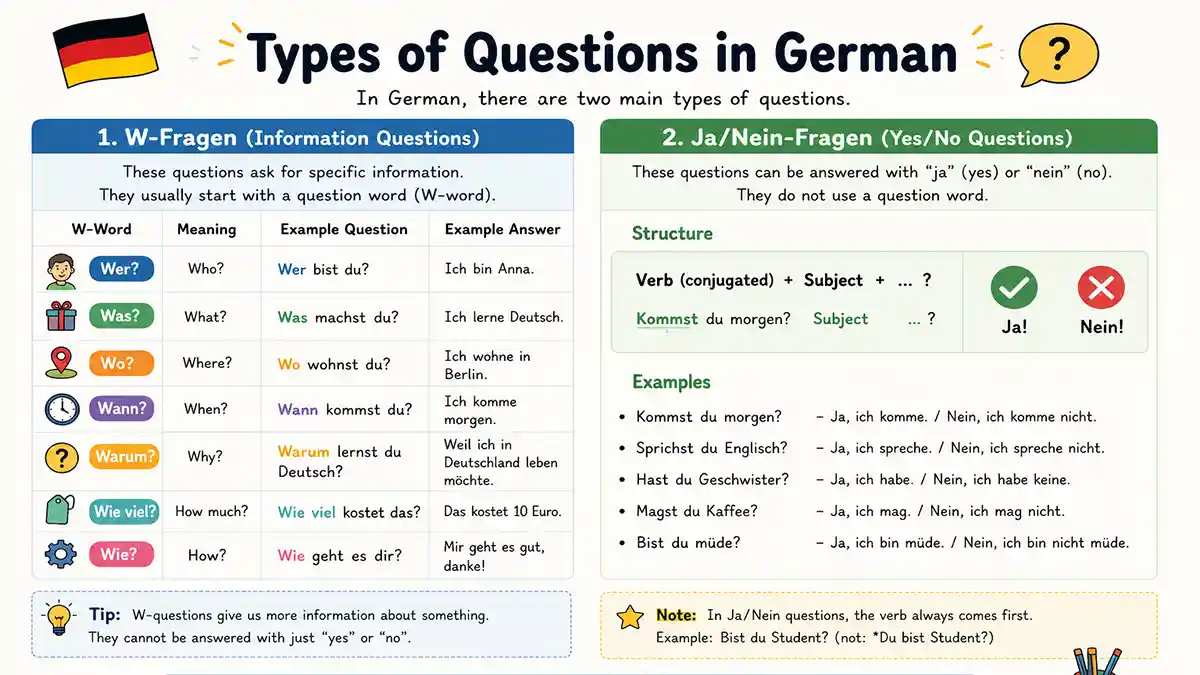
You use the verb kommen followed by the preposition aus and the country name (e.g., "Ich komme aus Deutschland" or "Ich komme aus Ägypten"). Check out our comprehensive guide on Fragen auf Deutsch to learn how to ask origin questions, and practice everyday context conversations in Kinder Haustiere.
Do all countries in German take an article?
No, most countries in German are neuter and used without an article (like Deutschland or Ägypten). However, some countries are feminine, masculine, or plural and strictly require an article in conversation.
Common examples: die Schweiz, die Türkei, die USA (plural), die Niederlande (plural), der Iran, der Libanon, der Sudan, der Irak.
How is the nationality formed in German?
In most cases, the masculine nationality is formed by adding -er to the country root (e.g., Italien -> Italiener), and the feminine form adds -in (e.g., Italienerin).
There are some exceptions that end in -e for masculine (e.g., der Franzose, der Chinese, der Türke) and -in for feminine (die Französin, die Chinesin, die Türkin).
How are languages formed from countries?
Languages are generally formed by adding the suffix -isch to the nationality root. For example: Spanien -> Spanisch, Frankreich -> Französisch, Italien -> Italienisch. All languages as nouns are neuter (das Spanisch). For additional language practice, read our guide on Sprachen Sprachniveau.
References & Learning Sources
Curriculum Textbooks & Materials
This comprehensive vocabulary list was compiled and strictly verified against standard, accredited German educational resources and linguistic databases:
- Duden Online Wörterbuch - The standard reference for the German language.
- DWDS (Digitales Wörterbuch der deutschen Sprache) - Comprehensive linguistic database.
- Goethe-Zertifikat A1 Wortliste - Official vocabulary for A1 by Goethe-Institut.
- Menschen A1 Kursbuch - Hueber Verlag.
- Netzwerk neu A1 - Klett Sprachen.
- Studio d A1 - Cornelsen Verlag.