Self-Introduction in German (Sich vorstellen): Templates, Phrases & Audio Pronunciation
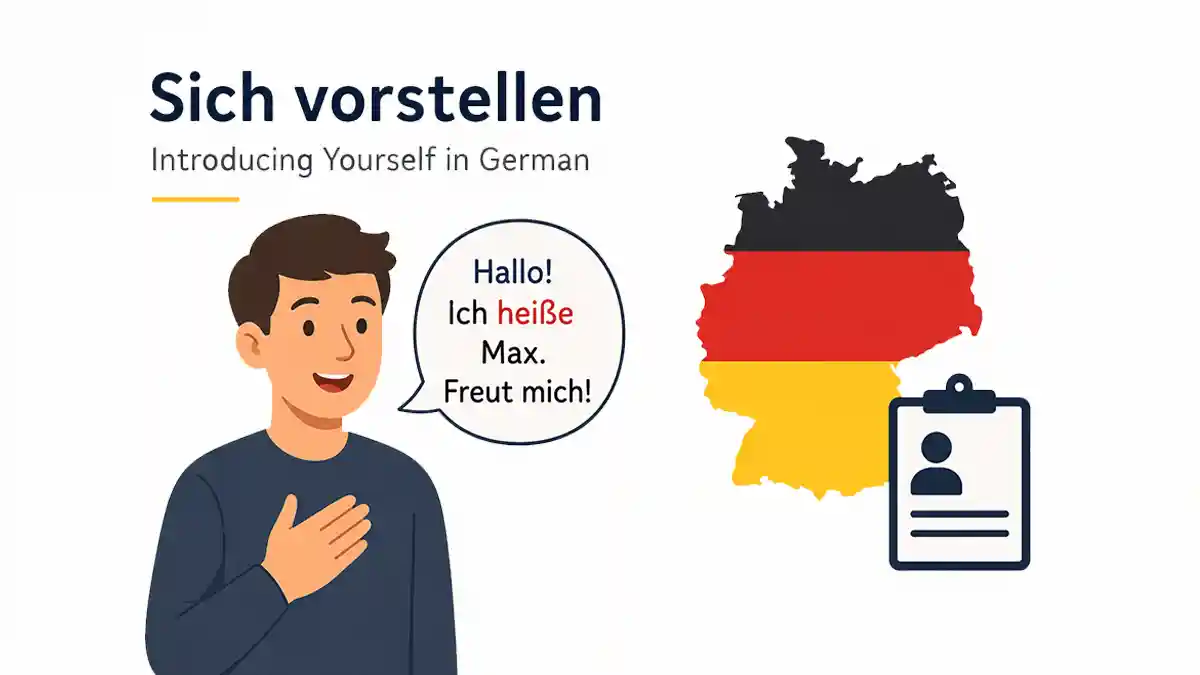
The first real step in learning any language, and the very first question you will face in a job interview, your first day at an Ausbildung vocational school, or when meeting new friends in Germany is: "Können Sie sich bitte vorstellen?" (Could you please introduce yourself?).
In this interactive guide, we have prepared professional self-introduction templates. You can also generate customized scripts using our interactive tools in the German Presentations & Self-Introduction section and build personalized introduction dialogues with audio playback via A1-A2 Presentation Sample Texts.
Interactive Audio Pronunciation Feature: All German sentences, examples, and vocabulary are integrated with high-definition audio buttons. Click the speaker icon next to any phrase to hear natural German pronunciation. We recommend using Google Chrome for the best audio experience.
🎤 Full Self-Introduction Presentation
1. Stating Your Name & Personal Data (Name und Personliche Daten)
- Using the possessive phrase for name:
- Mein Name ist Ahmed. : Most common and formal (My name is Ahmed).
- Using the verb (heißen):
- Ich heiße Ahmed. : Widely used and natural (I am called Ahmed).
2. Stating Your Age & Family Details (Alter und Familie)
- Expressing age:
- Ich bin 25 Jahre alt. : I am 25 years old. You can also practice family phrases via our Family & Relationship Status module.
3. Origin & Place of Residence (Herkunft und Wohnort)
- Home country / Origin:
- Ich komme aus Ägypten. : I come from Egypt.
- Current living place:
- Ich lebe in Berlin. : I live in Berlin.
4. Profession & Studies (Beruf und Studium)
- Professional formula:
- Von Beruf bin ich Webentwickler. : By profession, I am a web developer.
- Direct work formula:
- Ich arbeite als Webentwickler. : I work as a web developer. Also review formal letter writing via Anschreiben job application templates.
5. Hobbies & Free Time (Hobbys)
- Direct hobbies list:
- Meine Hobbys sind Fußball spielen und Lesen. : My hobbies are playing football and reading.
- Leisure activities:
- In meiner Freizeit spiele ich gerne Fußball. : In my free time, I like playing football. Practice interactively in our German learning games section.
6. Reason for Learning German (Warum Deutsch?)
- Stating your motivation:
- Ich lerne Deutsch, weil ich in Deutschland arbeiten möchte. : I am learning German because I would like to work in Germany.
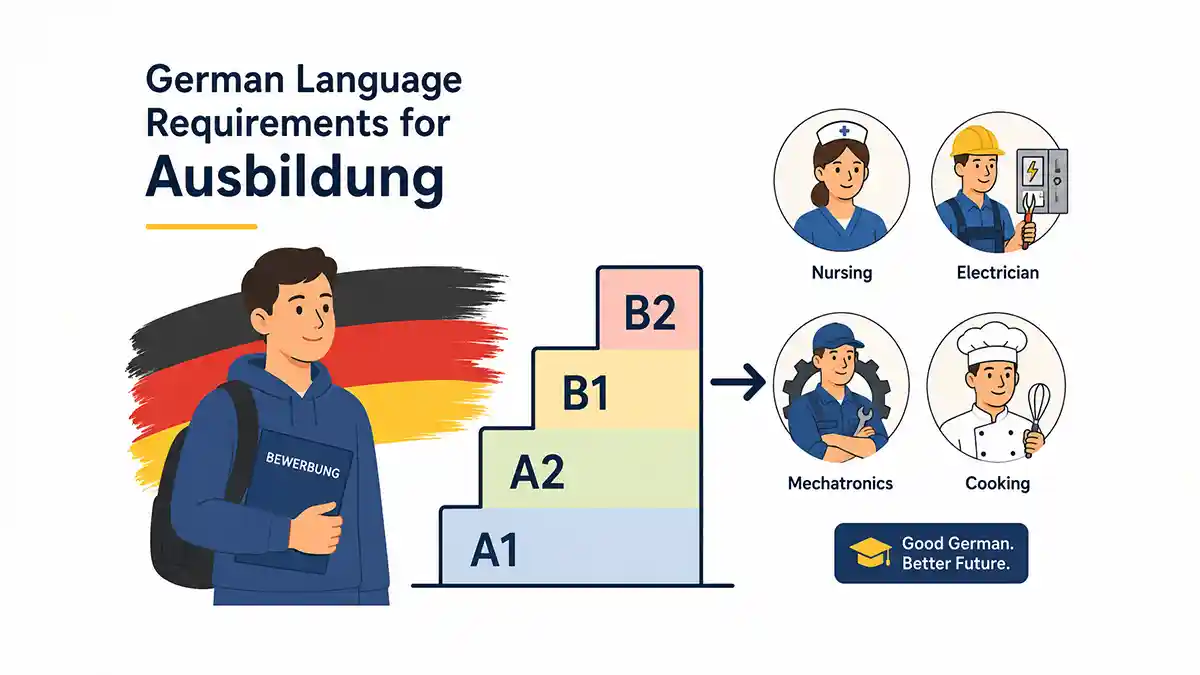
Self-Introduction in German for A1, A2, B1, and B2 Levels
Introducing yourself (Sich vorstellen) is the essential first step in your German learning journey, and your ability to express yourself evolves significantly as you advance through language levels. At the A1 level, introductions are limited to simple, direct sentences stating your name, age, country of origin, and place of residence. Upon reaching A2, your description expands to cover daily life details such as hobbies, marital status, and profession or studies. By B1, self-introductions become a more cohesive and fluent narrative covering work experience, motivations, and future plans. Finally, expression reaches its peak at B2 with a professional, structured, and analytical overview of your career and academic path.
Self-Introduction for Level A1
Hallo! Ich heiße Ahmed und ich bin 25 Jahre alt. Ich komme aus Ägypten und wohne jetzt in Kairo. Ich spreche Arabisch und ein bisschen Deutsch. Mein Hobby ist Fußball spielen.
Translation: Hello! My name is Ahmed and I am 25 years old. I am from Egypt and I live in Cairo now. I speak Arabic and a little German. My hobby is playing football.
Self-Introduction for Level A2
Hallo zusammen! Mein Name ist Ahmed. Ich bin ledig und arbeite als Webentwickler. In meiner Freizeit lese ich gerne Bücher und lerne Deutsch, weil ich in Deutschland arbeiten möchte. Seit zwei Monaten besuche ich einen Sprachkurs.
Translation: Hello everyone! My name is Ahmed. I am single and I work as a web developer. In my free time, I like reading books and learning German because I want to work in Germany. I have been attending a language course for two months.
Self-Introduction for Level B1
Guten Tag! Ich möchte mich kurz vorstellen. Ich habe Informatik studiert und verfüge über mehrjährige Erfahrung im Bereich IT. Neben meiner beruflichen Tätigkeit verbessere ich zielstrebig meine Deutschkenntnisse. Mein Ziel ist es, mich beruflich weiterzuentwickeln und neue kulturelle Erfahrungen zu sammeln.
Translation: Good day! I would like to briefly introduce myself. I studied computer science and have several years of experience in the IT field. Alongside my professional work, I am determinedly improving my German skills. My goal is to develop professionally and gain new cultural experiences.
Self-Introduction for Level B2
Guten Tag, mein Name ist Ahmed. Als erfahrener Softwareentwickler zeichne ich mich durch fundierte Fachkenntnisse und eine strukturierte Arbeitsweise aus. Im Laufe meiner beruflichen Laufbahn habe ich zahlreiche internationale Projekte erfolgreich geleitet. Ich strebe danach, meine Karriere in einem dynamischen Umfeld in Deutschland fortzusetzen, da ich von der Innovationskraft des deutschen Marktes überzeugt bin.
Translation: Good day, my name is Ahmed. As an experienced software developer, I am characterized by sound expertise and a structured approach to work. Over the course of my career, I have successfully managed numerous international projects. I strive to continue my career in a dynamic environment in Germany, as I am convinced of the innovative strength of the German market.
Frequently Asked Questions (FAQ)
How do I state my age correctly in German?
To state age, we use the verb 'sein' (to be) instead of 'haben' (to have). Say: Ich bin [age] Jahre alt. Example: Ich bin 25 Jahre alt.
How do I ask someone their name formally and informally?
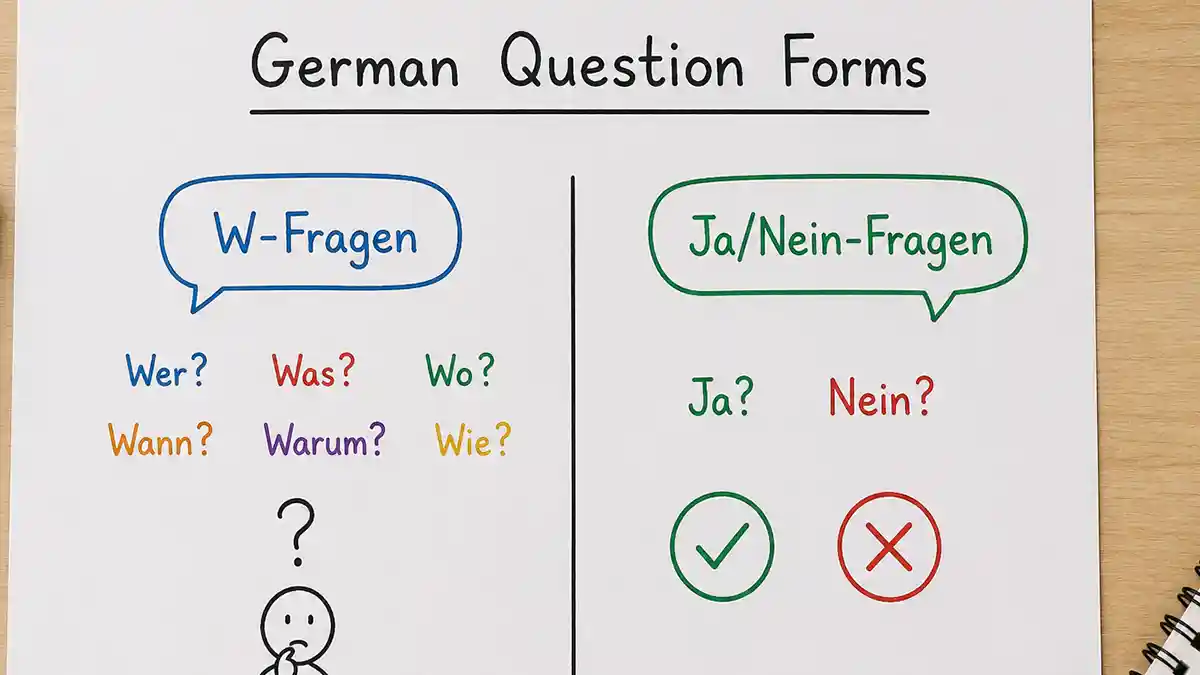
Formally (Sie): Wie heißen Sie? or Wie ist Ihr Name?. Informally (du): Wie heißt du? or Wer bist du?. Learn more question patterns in our guide on forming questions in German.
What is the difference between "kommen aus" and "wohnen in"?
'Kommen aus' is used for origin or country of birth, while 'wohnen in' or 'leben in' refers to your current city or place of residence.
How do I state my job professionally in interviews?
You can say: 'Ich arbeite als [job]' or 'Ich bin von Beruf [job]'. If you are a student: 'Ich bin Student/Studentin'.
How can I talk about my hobbies simply?
Use either: 'Meine Hobbys sind [hobbies]' for plural, or 'In meiner Freizeit [verb] ich gerne...' e.g., In meiner Freizeit lese ich gerne.
What are the best ways to conclude a self-introduction?
Conclude with polite closing phrases like: 'Vielen Dank für Ihre Aufmerksamkeit' (Thank you for your attention) or 'Freut mich, Sie kennenzulernen' (Nice to meet you).
Is a self-introduction required in official German exams?
Yes, 'Sich vorstellen' (Self-introduction) is the mandatory first part of speaking modules across A1, A2, and B1 official language exams.
How do I mention my marital status in German?
You can say: Ich bin ledig (single), Ich bin verheiratet (married), or Ich habe Kinder (I have children).
Textbooks & Academic References
Approved Academic & Language Sources
Phrases and self-introduction structures are cited and compiled based on standard CEFR framework curricula:
- Duden Online Wörterbuch - Primary reference dictionary for standard High German usage.
- DWDS (Digitales Wörterbuch der deutschen Sprache) - Comprehensive German language corpus and database.
- Menschen A1 Kursbuch - Standardized German textbook from Hueber publishing.
- Netzwerk neu A1 - German learning course series by Klett Sprachen.
- Goethe-Institut Learning Materials - Framework standards for CEFR language proficiency.
- telc Deutsch A1 Formate - European language test specifications and assessment criteria.