Lesson 6: Im Büro, Pluralformen und Akkusativ
Workplace Vocabulary, Stationery, The 5 Plural Forms, The Accusative Case (Akkusativ), and Professional Phone Calls
Every vocabulary word and dialog line in this curriculum supports high-definition interactive pronunciation. Please make sure to open this lesson inside Google Chrome browser to fully and properly experience the audio pronunciation system.
1. In the Office & Professional Roles (Auf der Arbeit)
We begin by exploring essential job titles, professional relationships, and daily actions linked to corporate office environments.
| German Term (Listen) | English Translation |
|---|---|
|
der Mitarbeiter / die Mitarbeiterin
|
the employee (male/female) |
|
der Chef / die Chefin
|
the boss / manager (male/female) |
|
der Kollege / die Kollegin
|
the colleague / coworker (male/female) |
|
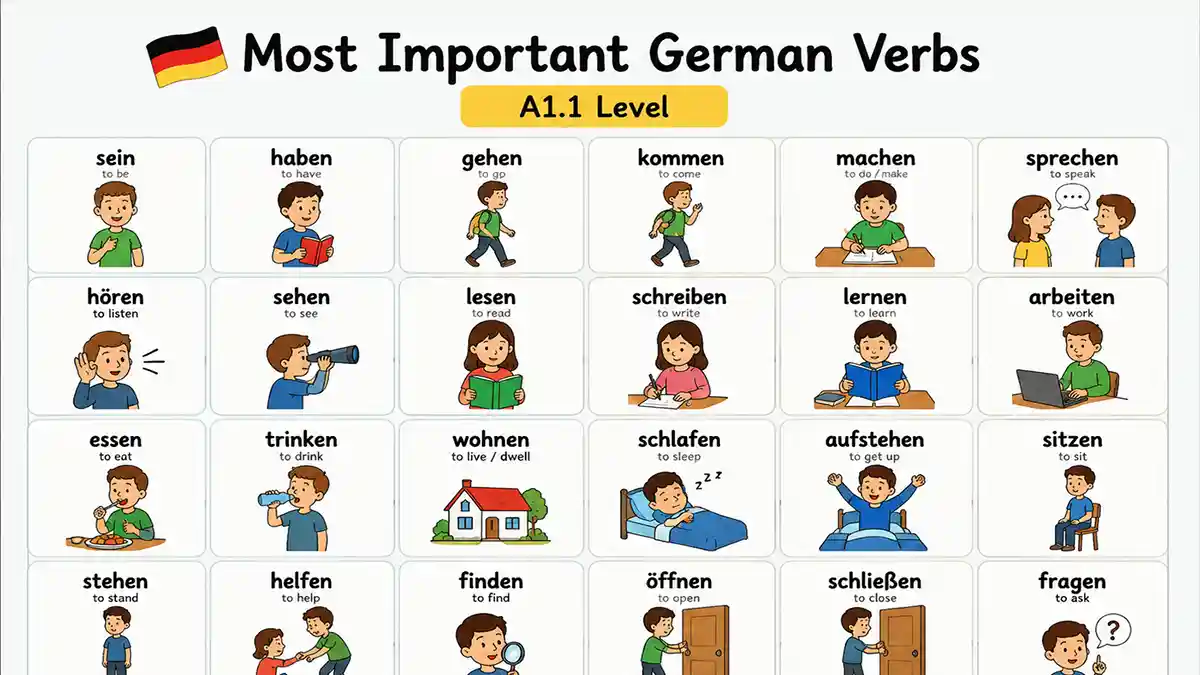
arbeiten
|
to work |
|
gestresst
|
stressed / under pressure |
2. Office Supplies & Equipment (Büroartikel)
What can be found inside a modern office? (Was gibt es im Büro?). Here are key electronic tools and accessories:
3. The 5 Plural Formation Rules (Die Pluralformen)
Unlike English which heavily relies on adding 's', German utilizes five unique plural inflections. Golden Rule: Always memorize every noun alongside its definite article and plural suffix!
Detailed Breakdown of the 5 Plural Categories:
- 1. Zero Change ( - ) or Umlaut ( ¨ ): Common for masculine (der) and neutral (das) nouns ending in suffixes like -er, -en, -el. Example: der Drucker ➝ die Drucker.
- 2. Adding (-e) or (¨e): Common for single-syllable masculine nouns, often adding an Umlaut. Example: der Stift ➝ die Stifte.
- 3. Adding (-er) or (¨er): Primarily used for neutral nouns (das), always taking an Umlaut. Example: das Bild ➝ die Bilder.
- 4. Adding (-n) or (-en): The standard rule for over 90% of feminine nouns (die). No Umlaut ever applies here. Example: die Tasche ➝ die Taschen.
- 5. Adding (-s): Applied primarily to foreign loanwords and words ending in vowels (a, i, o, u). Example: das Auto ➝ die Autos.
4. The Accusative Case (Der Akkusativ)
In the accusative case, only the masculine article (der) undergoes a morphological shift, changing to (den) when acting as the direct object.
💡 Article Shifts in the Accusative Case:
- Masculine (der): der ➝ den | ein ➝ einen | kein ➝ keinen
- Neutral (das): das ➝ das | ein ➝ ein | kein ➝ kein (Unchanged)
- Feminine (die): die ➝ die | eine ➝ eine | keine ➝ keine (Unchanged)
Examples:
Ich suche einen Drucker. (I am looking for a printer - masculine accusative).
Er sucht eine Lampe. (He is looking for a lamp - feminine accusative).
💬 5. Professional Phone Conversations (Am Telefon)
Handling office telephone protocols professionally is an essential skill in German corporate life. Let's listen to a standard call exchange.
Klara & Florian Dialogue
Firma Hansetec, hier ist Klara Stolley, guten Tag. Was kann ich für Sie tun?
Guten Tag. Mein Name ist Florian Stöckl. Ist Herr Thomsen da?
Einen Moment bitte ... Tut mir leid, Herr Stöckl, Herr Thomsen ist leider nicht da.
Vielen Dank. Auf Wiederhören.
Sehr gern. Auf Wiederhören, Herr Stöckl.
Frequently Asked Questions (FAQ)
What are the 5 plural formation rules in German?
The 5 plural forms include: zero change (with or without Umlaut), adding -e (with or without Umlaut), adding -er with an Umlaut, adding -n or -en for feminine nouns, and adding -s for loanwords and abbreviations.
When does the masculine article 'der' change to 'einen' in the accusative case?
The masculine article changes to 'einen' exclusively when it serves as the direct object following accusative verbs like haben, brauchen, suchen, and kaufen.
How do you start a professional business phone call in German?
You start by stating the company name, your personal name, a formal greeting, and offering assistance (e.g., Firma Hansetec, hier ist Klara Stolley, guten Tag. Was kann ich für Sie tun?).
Why must every German noun be memorized with its article and plural form?
Because there is no single universal rule for pluralizing German nouns, and the article determines grammatical cases like the accusative and subsequent inflections.
What is the most common plural ending for feminine nouns?
Over 90% of feminine nouns (die) form their plural by adding the suffix -n or -en without any vowel modification.
How do you express that someone is stressed or very busy at work?
You use the common adjective gestresst to indicate ongoing pressure and work stress.
What is the difference between 'der Kollege' and 'der Chef'?
der Kollege means a coworker at the same professional level, whereas der Chef refers to the boss or direct manager.
Do neutral (das) and feminine (die) articles change in the accusative case?
No, the articles 'das' and 'die', as well as the indefinite articles 'ein' and 'eine', remain entirely unchanged in the accusative case; only masculine 'der' changes.
References & Educational Resources
Approved Textbooks & Curriculum Materials
This lesson has been structured and verified using 6 certified German learning references:
- Momente A1 (Kursbuch & Arbeitsbuch) - Hueber Verlag
- Schritte International Neu (A1.1) - Hueber Verlag
- Netzwerk neu A1.1 - Klett Sprachen
- Begegnungen A1+ - Schubert-Verlag
- Grammatik aktiv A1-B1 - Cornelsen Verlag
- Studio [21] A1 - Cornelsen Verlag
Related A1.1 Lessons & Guides