Numbers and Telling Time in German (Zahlen und Uhrzeit) – A1.1
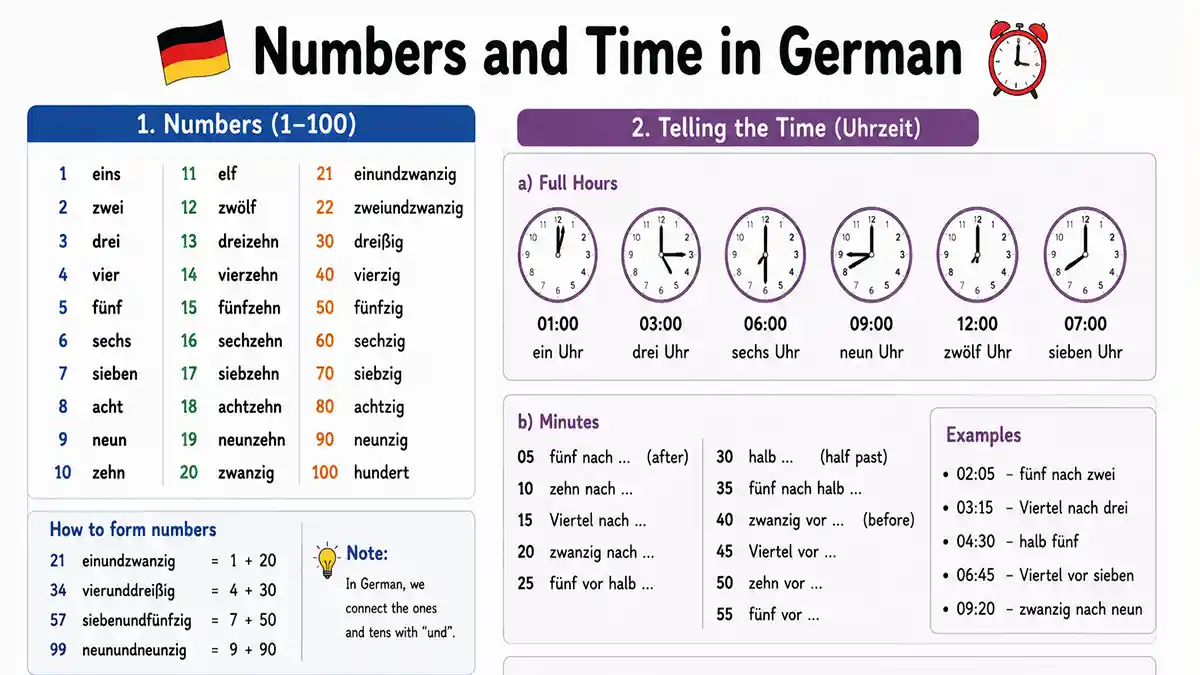
Welcome to an essential lesson on your German learning path. Numbers and telling time are foundational skills needed daily whether you are shopping, navigating train stations, or scheduling meetings with friends. Without them, everyday communication can be challenging. You can also explore our Levels Hub or practice with our Learn & Play section.
In this guide, we designed a complete interactive learning experience where you will master German numbers from 1 to 1 Billion step-by-step. Additionally, you will learn how to read prices and express time using both official and informal methods, supported by interactive audio playback. For more grammar foundations, check out our guides on Key Vocabulary, Essential Verbs, and Possessive Pronouns.
All numbers and time expressions support high-definition audio. Please open this page in Google Chrome browser to ensure full interactive audio playback functionality.
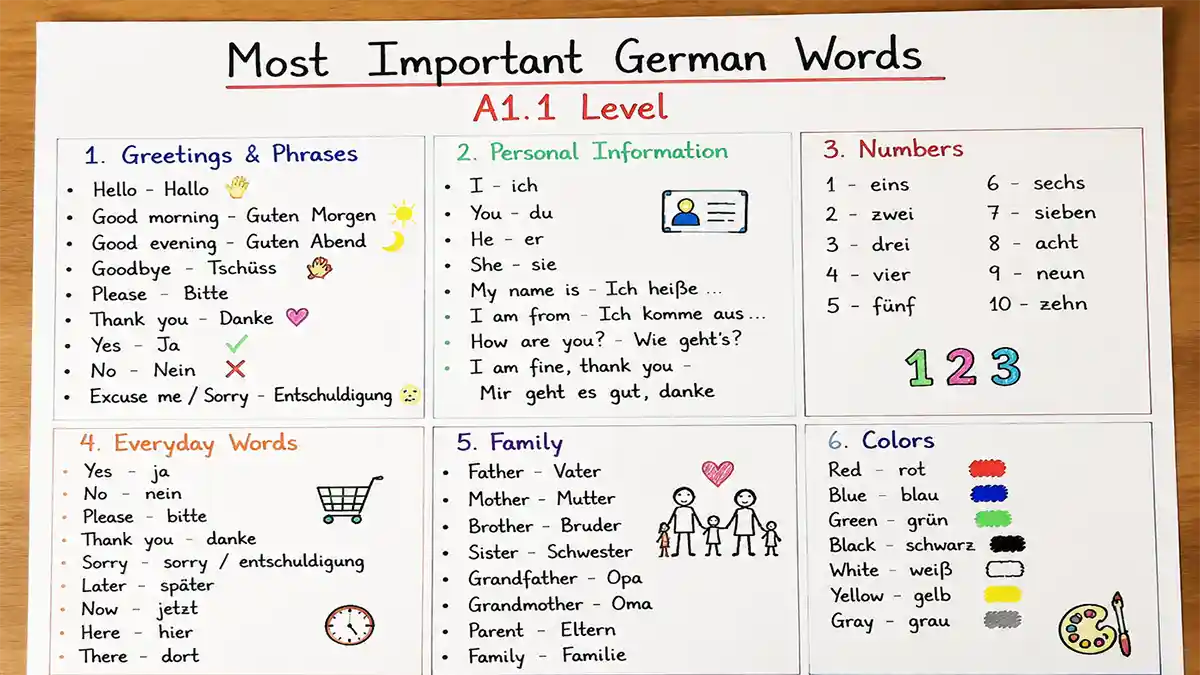
1. Numbers (Die Zahlen)
German numbers follow a unique rule starting from 21: units are stated first, followed by "und" (and), and then the tens, written as a single word. You can also explore our Numbers Interactive Game for extra practice.
Numbers from 1 to 50
Tens and Larger Numbers
2. Reading Prices (Die Preise)
When shopping or reading prices in Germany, state the Euro amount first, add the word "Euro", and then state the Cent value directly (the word 'Cent' is usually omitted in conversation). Practice shopping terms in our interactive game sessions.
| Price | German Pronunciation (Listen) |
|---|---|
| 2.50 € |
zwei Euro fünfzig
|
| 19.99 € |
neunzehn Euro neunundneunzig
|
| 100.25 € |
hundert Euro fünfundzwanzig
|
| 0.80 € |
achtzig Cent
|
3. Telling Time (Die Uhrzeit)
German uses two distinct methods for telling time: the Official system (offiziell) and the Unofficial/Conversational system (inoffiziell). You can also practice scheduling via our telling time game.
Method 1: Official Time (Offizielle Uhrzeit)
Used in official appointments, news, and travel timetables. It follows a 24-hour clock format (Hour + Uhr + Minutes):
| Digital Time | Official Pronunciation (Listen) |
|---|---|
| 08:15 |
acht Uhr fünfzehn
|
| 14:30 |
vierzehn Uhr dreißig
|
| 20:45 |
zwanzig Uhr fünfundvierzig
|
| 09:05 |
neun Uhr fünf
|
Method 2: Unofficial / Conversational Time (Inoffizielle Uhrzeit)
Used in everyday casual conversation. It follows a 12-hour clock format using terms like 'vor' (before/to) and 'nach' (after/past):
| Digital Time | Conversational Pronunciation (Listen) |
|---|---|
| 08:15 |
Viertel nach acht
|
| 14:30 |
halb drei
|
| 20:45 |
Viertel vor neun
|
| 09:05 |
fünf nach neun
|
| 09:55 |
fünf vor zehn
|
| 14:20 |
zwanzig nach zwei
|
Golden Tips to Master Numbers and Telling Time in A1.1
Understand the Reverse Number Logic
The key to forming German numbers starting from 21 lies in pronouncing the units first, followed by the tens, and connecting them with (und). When dealing with larger numbers, always break them down into segments (thousands, hundreds, units, and tens) to make reading and writing them completely effortless.
Daily Time Practice and Audio Repetition
Don't leave telling time as just theoretical rules! Try connecting both the formal (24-hour) and informal (using vor and nach) methods throughout your day. Look at your clock and practice out loud in German. Using the interactive audio pronunciation feature in the article will automatically lock the correct pronunciation in your mind.
Move to the Next Step with Confidence
By mastering numbers, prices, and time, you've gained essential tools for real-life interactions—whether shopping, booking appointments, or organizing your daily schedule in German. Keep practicing daily, and follow our upcoming lessons to learn how to integrate these terms into more complex daily sentence structures seamlessly.
Frequently Asked Questions (FAQ)
How do you pronounce compound numbers like 21 in German?
In German, compound numbers state the units first, followed by und (and), and then the tens, written as a single word without spaces. Example: 21 is read as einundzwanzig.
How do you read prices with Euros and Cents in German?
Read the Euro amount first followed by Euro, then state the Cent value directly without necessarily adding the word 'Cent'. Example: €2.50 is read as zwei Euro fünfzig.
What is the difference between official and unofficial time in German?
Official time (Offiziell) uses a 24-hour format and is used in timetables or news (e.g., 14:30 is vierzehn Uhr dreißig). Unofficial time (Inoffiziell) uses a 12-hour format with words like vor, nach, and halb in casual conversations (e.g., 14:30 is halb drei).
What do 'vor' and 'nach' mean when telling time informally?
nach means 'after/past' (minutes past the hour), whereas vor means 'before/to' (minutes remaining until the next hour).
Textbooks & Academic References
Academic and Linguistic Sources
Numbers, prices, and time formats were documented and verified against certified German reference works:
- Duden Online Wörterbuch - Standard reference for German grammar.
- Goethe-Zertifikat A1 Wordlist - Goethe-Institut official word list.
- Menschen A1 Kursbuch - Hueber Verlag curriculum.
- Netzwerk neu A1 - Klett Sprachen curriculum.