Anki at a Glance: What It Is and What It Gives You
Anki is a flashcard program built on spaced repetition: it shows you a word just before you forget it, so you need fewer reviews to remember it for longer. It is free on computers and on Android via AnkiDroid, works without internet, and syncs between your devices through AnkiWeb. If you are looking at other apps, compare with the best apps to learn German.
| Feature | What it means for you |
|---|---|
| Spaced repetition | You review a word only at the right time, not every day |
| Active recall | You see the Arabic and try to recall the German before flipping the card |
| Audio and images | You can add pronunciation and pictures to a card |
| Sync | Review on your phone and continue on your computer |
| Two algorithms | Classic SM-2 and the newer FSRS since version 23.10 |
Why Is Anki Good for Memorizing German Vocabulary?
A German word is not just a word: it is a noun with an article and a plural, or a verb with forms, and it may be separable. That is why memorizing bare translation lists fails. Anki lets you build a card that carries all these details and review it at spaced intervals. The official manual says FSRS lets you target a retention level, and that higher retention means more reviews each day.
Downloading Anki: Computer, Android and iPhone
Start with the computer version because it is strongest for creating and editing cards, then add the phone app for reviewing. The official AnkiMobile page warns that some apps use the name “Anki” but are not compatible with its ecosystem and charge expensive subscriptions, so download only from the links below:
| Platform | App | Notes |
|---|---|---|
| Windows, Mac, Linux | Anki | Free and open source; the base for creating cards |
| Android | AnkiDroid | Free and open source; syncs with AnkiWeb |
| iPhone and iPad | AnkiMobile | One-time paid; its sales support Anki development |
| Sync | AnkiWeb | A free service that syncs cards between devices |
Your First Steps: Creating a Deck and Your First Card
| Step | What to do |
|---|---|
| 1. Create a deck | Click Create Deck and give it a clear name such as “Deutsch A1” |
| 2. Open the Add window | Click Add; the Add Notes window appears |
| 3. Choose a note type | At the top left; choose the deck at the top right |
| 4. Fill the fields | Front and Back; Anki creates the cards for you |
| 5. Start reviewing | Click the deck then Study Now, and rate your recall: Again, Hard, Good or Easy |
The official manual explains that in Anki you add notes rather than cards, and the program generates cards from them. Anki also checks the first field to warn about duplicates.
Card Types Suited to German Vocabulary
| Type | When to use it | Example |
|---|---|---|
| Basic | One word with two sides, the simplest | Front: “table” → Back: der Tisch |
| Basic (and reversed card) | Generates two cards: Arabic → German and German → Arabic | For words you want to understand and produce |
| Basic (optional reversed card) | Generates a reverse card only when you fill the “Add Reverse” field | For important words only |
| Cloze | Hiding a word inside a sentence | Ich {{c1::rufe}} dich {{c2::an}}. |
The manual explains that “Basic (and reversed card)” generates two cards in both directions, that “Basic (optional reversed card)” generates a reverse card only when the extra field is filled, and that Cloze generates one card per number (c1 and c2). Anki also offers Image Occlusion for hiding parts of pictures, useful for picture vocabulary.
How to Design a Good German Vocabulary Card
The most dangerous mistake is memorizing a word without its article. Gender decides the article, and it is the hardest part of a German noun, so always write the noun with its article. Review the definite and indefinite articles in German to see how they change by case.
| Card field | What to write | Example |
|---|---|---|
| Front | The word in Arabic or a picture | table |
| Back: the word | The noun with its article | der Tisch |
| Back: plural | The plural form next to the noun | die Tische |
| Back: sentence | A short sentence using the word | Der Tisch ist groß. |
| Audio | Pronunciation of the word and sentence | Audio file or TTS |
The verb card
For verbs, write the important forms, and watch separable verbs because the prefix splits off in the sentence. To go deeper into these verbs, read separable verbs in German (Trennbare Verben).
| Front | Back |
|---|---|
| to call (by phone) | anrufen (trennbar): ich rufe an, hat angerufen |
| Example | Ich rufe dich morgen an. |
The sentence card (Cloze)
Once you know a word on its own, put it inside a sentence with the Cloze type to learn its context. You will find ready sentences in everyday conversation expressions in German. In Anki you write the sentence like this:
| What you type | What you see |
|---|---|
| Ich {{c1::rufe}} dich morgen {{c2::an}}. | Two cards: the first hides “rufe” and the second hides “an” |
A Custom Note Type for German: Article, Plural and Audio in One Card
The official manual explains that the basic types are enough for a word or phrase, but when you want more than one piece of information, it is better to split it into separate fields. That lets you, for example, move the audio from the front to the back without re-copying. You create the new type from the menu: Tools > Manage Note Types > Add, then click Fields to add the fields.
| Field name | What goes in it | Example |
|---|---|---|
| Bedeutung | The meaning in Arabic | table |
| Artikel | der, die or das | der |
| Wort | The German word without the article | Tisch |
| Plural | The plural form | Tische |
| Beispiel | A short sentence | Der Tisch ist groß. |
| Audio | Audio file or text for pronunciation | Optional |
After creating the fields, click Cards to edit the template. Make the front template show the meaning field, and the back template show the article, word, plural and example:
| Template | Content |
|---|---|
| Front | {{Bedeutung}} |
| Back | {{FrontSide}} <hr id=answer> <span class="{{Artikel}}">{{Artikel}} {{Wort}}</span> ({{Plural}}) <br> {{Beispiel}} |
| Styling CSS | .der{color:#1d4ed8} .die{color:#dc2626} .das{color:#16a34a} |
This way the noun is colored by gender automatically, and your eye links color to article. You can also ask to type the answer instead of just flipping the card by putting {{type:Wort}} in the back template, a good way to memorize German spelling. Test the template with one note before you build hundreds.
Verb Cards with Prepositions
Many German verbs need a specific preposition and case, and learners often get them wrong. Learn the verb with its preposition and case on one card, not the verb on its own:
| Verb | Meaning | Sentence |
|---|---|---|
| warten auf + Akkusativ | to wait for | Ich warte auf den Bus. |
| denken an + Akkusativ | to think of | Ich denke an dich. |
| Angst haben vor + Dativ | to be afraid of | Sie hat Angst vor dem Hund. |
| teilnehmen an + Dativ | to take part in | Er nimmt am Kurs teil. |
Shared Decks and Importing
You can download shared decks from the “Get Shared” section in Anki or from the AnkiWeb site and import them. Their quality varies, and some lack articles, plurals or audio. It is better to build your own decks on topics you study, such as food vocabulary in German food vocabulary.
| Criterion | Ask yourself |
|---|---|
| Article and plural | Does it give the noun with its article and plural? |
| Level | Does it suit your current level? |
| Sentences | Does it have examples and sentences? |
| Audio | Does it have pronunciation? |
| Size | Is it reasonable, or thousands of cards at once? |
Review and Sync Settings
| Setting | Suggestion for beginners |
|---|---|
| New cards per day | Start with about 10 to 20 cards (our suggestion) and raise it gradually |
| Algorithm | Enable FSRS in Deck Options if your version is 23.10 or newer, and start with 90% retention |
| Order | Review due cards first, then add new ones |
| Sync | Sync before and after studying between devices |
| Different decks | Give very different decks separate presets |
The official manual says FSRS lets you do fewer reviews for the same retention and handles delayed cards better after a break of several weeks. Since options differ between versions, check the Deck Options page of the manual for your version.
A Daily Routine to Memorize German Vocabulary
| Time | Activity |
|---|---|
| 5 to 10 minutes | Review due cards |
| 3 to 5 minutes | Add new words from today’s lesson with article, plural and a sentence |
| 2 minutes | Say today’s words aloud |
| Weekly | Delete bad cards and improve unclear ones |
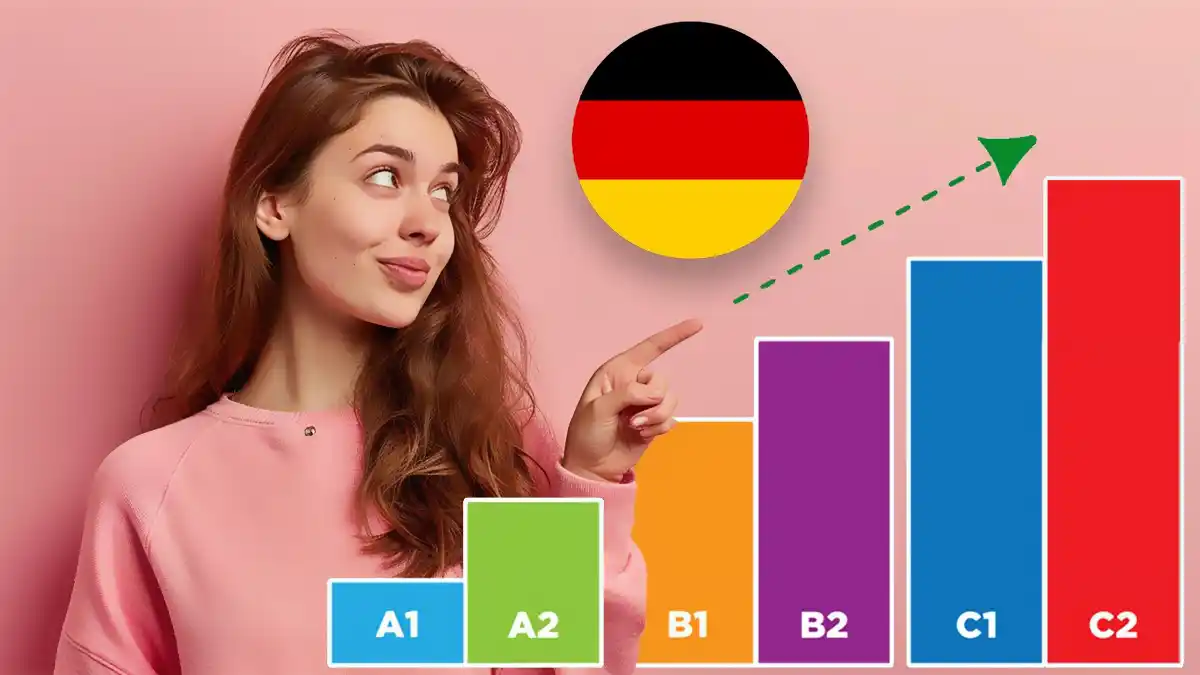
The number of new words should suit your level; to see the language levels and what each expects, review the German language levels from A1 to C2.
Maintaining Your Deck: Leeches, Backups and Statistics
| Tool | What it does | How to use it |
|---|---|---|
| Leeches | Cards you keep forgetting | Rewrite them with a sentence or picture, or split them instead of failing repeatedly |
| Browse | Searches, edits and organizes your cards | Use tags to classify cards by topic or level |
| Statistics | Shows your retention and review counts | Check weekly, and do not react to a single bad day |
| Empty Cards | Cleans empty cards after editing a template | From Tools > Empty Cards |
| Sync and backups | Protects you from losing your cards | Sync through AnkiWeb and occasionally keep an exported copy of your deck |
How Many Words Do You Need at Each Stage?
Do not obsess over fixed numbers. Focus on the vocabulary that appears in your lessons and daily life, and build one deck per topic: family, food, transport, work. Then move from single words to sentences as you progress.
| Stage | Focus on | Card type |
|---|---|---|
| A1 | Everyday words with their articles | Basic (and reversed card) |
| A2 | Common verbs and short sentences | Basic + Cloze |
| B1 | Verbs with prepositions and expressions | Cloze |
| B2+ | Synonyms, structures and formal phrasing | Cloze + Type |
Common Mistakes When Using Anki
| Mistake | Fix |
|---|---|
| Adding hundreds of cards at once | Add a small fixed number daily |
| Memorizing a noun without its article | Always write it with der, die or das and the plural |
| Cards with bare translation only | Add a sentence and audio |
| Long cards with too much information | Split them into small cards |
| Skipping days then a review pile-up | Cut new cards until the pile is cleared |
| Memorizing without using | Use the words in sentences and conversations |
The “one small piece of information” principle that Piotr Wozniak explains in his twenty rules of formulating knowledge helps with card writing.
Conclusion: How Do You Start Today?
Download Anki on your computer and AnkiDroid or AnkiMobile on your phone, create a simple deck of “Basic (and reversed card)” cards carrying the noun with its article, plural and a sentence, then review a fixed number of cards each day. After a few weeks, try Cloze to learn words in sentences.
Success here comes from daily consistency, not from the number of cards.
Complete Guide from DeutschPlayLearn German From Scratch for Free: Complete A1 to Advanced GuideStarting your journey and need a clear, free roadmap? Explore proficiency levels from A1 to advanced, along with top methods, resources, and tips to start with confidence.Frequently Asked Questions About Using Anki for German Vocabulary
Is Anki free?
How do I download Anki on Android and iPhone?
What is the best card type for German vocabulary?
How many new words should I add daily?
Should I use shared decks or build my own cards?
What is FSRS?
Does Anki work offline?
Should I add audio to my cards?
Is Anki enough to learn German?
References and Sources
Sources
- Anki Manual: Adding/Editing - Adding and editing, note types, duplicate check, Cloze and Image Occlusion.
- Anki Manual: Card Generation - Explains Basic (and reversed card), Basic (optional reversed card) and Cloze card generation.
- Anki Manual: What spaced repetition algorithm does Anki use? - The two algorithms available since 23.10 and the advantages of FSRS.
- FSRS4Anki (open-spaced-repetition) - The open-source project behind the FSRS algorithm.
- Anki: apps.ankiweb.net - The official Anki download page.
- AnkiWeb - The sync service and shared decks.
- App Store: AnkiMobile Flashcards - The official iPhone app page and its warning about imitation apps.
- Google Play: AnkiDroid Flashcards - The official Android app page.
- AnkiDroid on GitHub - The open-source project of the AnkiDroid app.
- SuperMemo: Twenty rules of formulating knowledge - Piotr Wozniak’s rules for formulating information into short cards.