

The Journey Map: Ten Steps from Zero to A1
If you stand in front of the German language and do not know where to start, this guide is for you. It is the starting point of your journey on DeutschPlay, arranging the road from the first letter to the first conversation and linking everything on the site in a logical order: levels, tests, games, tools and articles. The goal is to learn German from scratch for free and reach A1, the first of the six levels of the Common European Framework of Reference (CEFR).
What Will You Be Able to Do After A1?
The Goethe-Institut describes the A1 exam (Start Deutsch 1) as measuring basic language skills, covering listening, reading, writing and speaking. This table shows what to expect in each skill according to the exam description, so your goal is clear from day one:
| Skill | What you will do at A1 |
|---|---|
| Listening | Understand short everyday conversations, phone messages and public announcements |
| Reading | Read short notes, classified ads and information signs |
| Writing | Fill in simple forms and write a short personal text about an everyday situation |
| Speaking | Introduce yourself and others and ask and answer about everyday matters |
Before You Start: Is German Hard? And How to Start with the Right Mindset
Almost every beginner asks: is German hard? The honest answer is that it has real challenges such as articles, cases and sentence order, but it is an orderly language that follows clear rules and can be learned in small steps. If you want a longer read on this question, we gathered learning strategies in the article is German hard? learning strategies.
And before any lesson, define why you are learning. Someone learning to travel has a different path from someone learning to study, work or immigrate. The reason is what keeps your motivation through the hard weeks, so write it on paper and keep it in front of you. Then stick to four simple principles:
| Principle | What it means |
|---|---|
| A little every day | Thirty regular minutes beat three hours on Friday only |
| Speak from day one | Say words aloud and do not wait to “be ready” |
| Accept mistakes | Every mistake you fix is a step forward, so do not fear imperfect sentences |
| Nouns with articles | Learn der Tisch, not Tisch alone, which saves you years |
Step 1: Understand the German Language Levels (A1 to C2)
Languages in Europe are divided into six levels according to the Common European Framework of Reference for Languages (CEFR). The Goethe-Institut describes A1 as the first of the six levels, concerned with elementary language use. We built the learning path on this framework, so each level has its own page with its lessons. These are the six level cards grouped into the framework’s three bands, and from them you begin your journey from the German learning path.
Band A: Basic User
Band B: Independent User
Band C: Proficient User
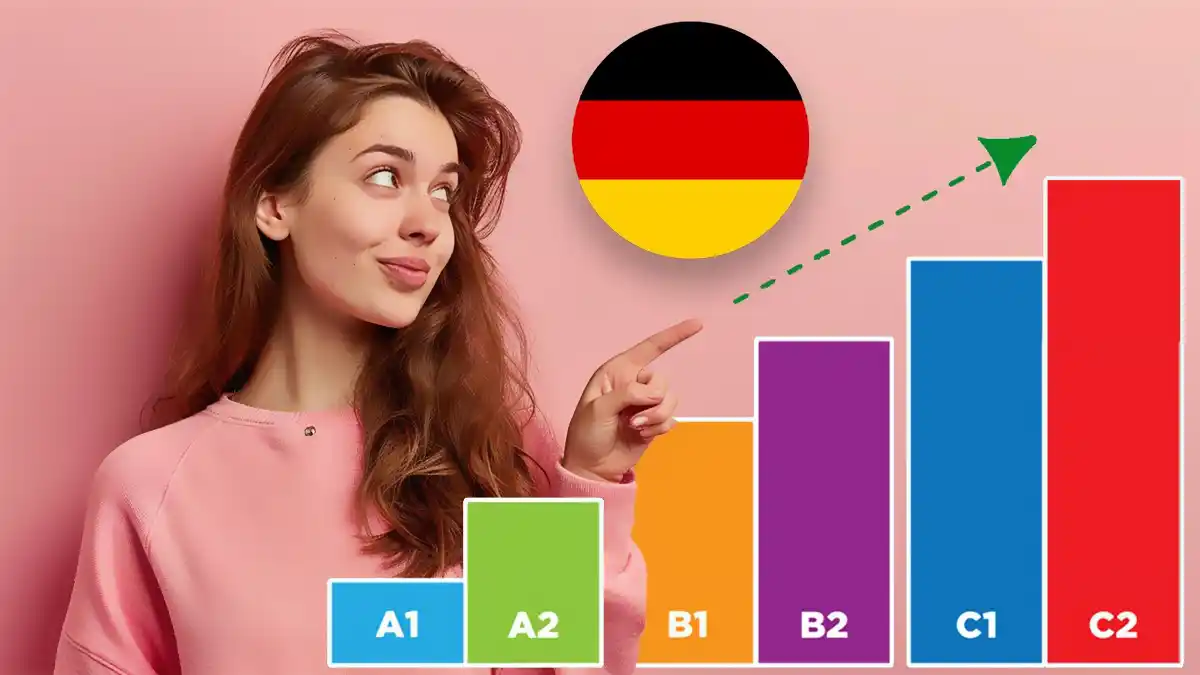 Levels guideGerman Language Levels from A1 to C2: The Complete Guide to MasteryRead the full explanation of each level and what a learner needs to move from one station to the next.Read the guide →
Step 2: Test Your Level Before You Start
Even if you are a complete beginner, the first test gives you a reference point to compare your progress after weeks, and shows what you already know. In the placement tests (Prüfungen) section there are interactive tests that realistically simulate grammar, listening and writing skills, and these are the main ones:
Our advice: start with the grammar or listening test to know where you stand, then retake the same tests after week twelve, and you will notice the difference yourself. The section also has two short quizzes that we will meet in their own places later (time and possessive pronouns).
Step 3: Letters and Pronunciation
German is mostly written as it is pronounced, a big advantage for beginners. Start with the twenty-six letters, then the special characters ä, ö, ü and ß, then the sounds with no Arabic counterpart such as ch and r. Do not postpone pronunciation to “later”, because wrong habits formed at the start are hard to change. Spend ten minutes a day in the first week listening and repeating aloud.
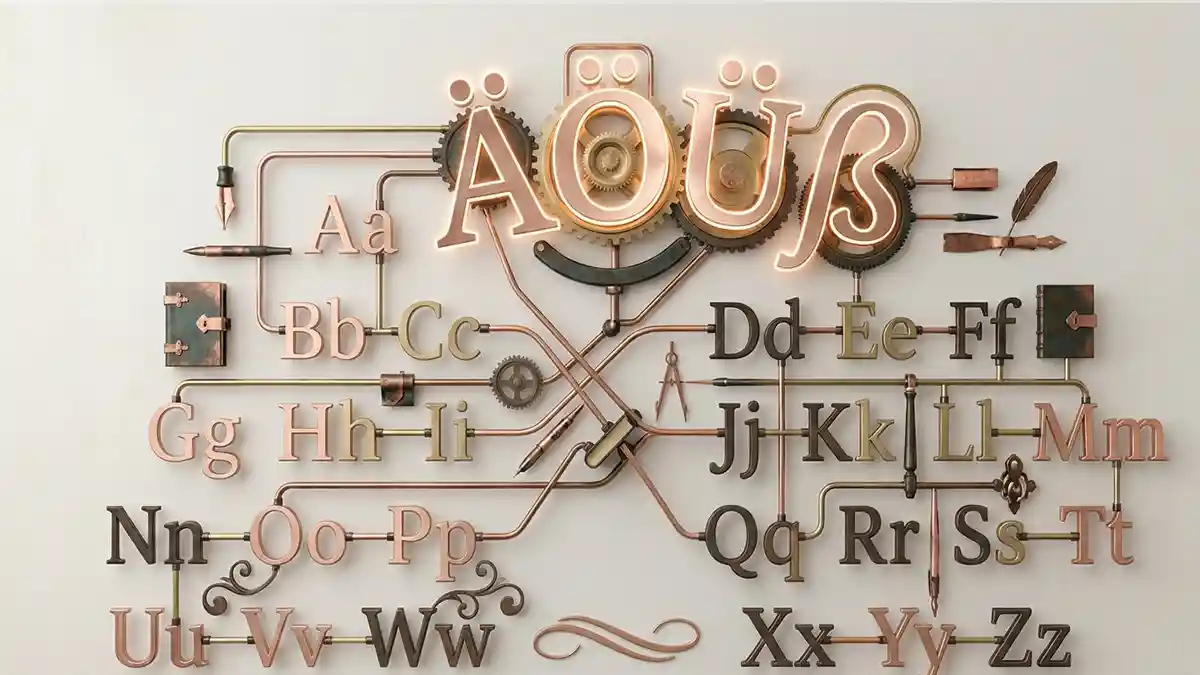 The foundationGerman Letters and Their Correct Pronunciation: Your Complete Beginner GuideEvery letter and special sound with examples and basic pronunciation rules.Read the guide →
| Sound | How to say it | Example |
|---|---|---|
| ä | Between “a” and “e”, like an open e | Mädchen |
| ö | An “e” with rounded lips | schön |
| ü | An “ee” with lips rounded forward | üben |
| ß | A long “s” | Straße |
| ch | A soft sound after e and i, deeper after a, o and u | ich, Buch |
| sch | “sh” | Schule |
| z | “ts” | Zeit |
| v / w | v like “f”, w like English “v” | Vater, Wasser |
Step 4: Your First Vocabulary by Topics and Games
Do not memorize random lists. Learn vocabulary by topic, start with what you will actually use at A1, memorize each noun with its article, and repeat the word in a short sentence. For each topic we prepared an article explaining the words and an interactive game in the Learn and Play section. Start with the first basics: colors, family and days of the week, which are explained in colors in German, describing your family in German, and days of the week in German.
For time and dates, use the article months and seasons in German, and for ordering at a restaurant and café the articles food in German and drinks in German. Then test yourself on time with the time quiz (Uhrzeit) which measures telling time formally and informally in about ten minutes.
When these topics settle, widen your vocabulary with what concerns your daily life: professions and jobs in German, body parts in German, transportation in German, and directions in German.
| Memorizing method | How to apply it |
|---|---|
| One topic a week | Devote each week to one topic instead of hopping between ten |
| Article with the noun | Write der, die and das in a fixed color for each gender |
| A sentence for each word | Make a short sentence from your life for each new word |
| Spaced review | Review the word after a day, then three, then a week |
| Sound | Say the word aloud three times |
Step 5: Your First Sentences: Introducing Yourself and Daily Conversations
What you need most in the first weeks is ready phrases you can use immediately without thinking about grammar. Start by learning how to present yourself in detail in introducing yourself in German (Sich vorstellen), then move on to life situations in the most important daily conversation expressions, and learn how to ask precisely through question forms in German.
| Situation | Phrase | Meaning |
|---|---|---|
| Greeting | Hallo! Guten Morgen! | Hello! Good morning! |
| Name | Ich heiße Ahmed. | My name is Ahmed. |
| Country | Ich komme aus Ägypten. | I come from Egypt. |
| Residence | Ich wohne in Kairo. | I live in Cairo. |
| Asking how someone is | Wie geht es dir? | How are you? |
| Thanks | Danke schön! Bitte schön! | Thank you very much! You are welcome! |
| Asking for repetition | Können Sie das bitte wiederholen? | Could you please repeat that? |
| Not understanding | Ich verstehe das nicht. | I do not understand that. |
And these two short dialogues show how these phrases work together in a real conversation:
| Dialogue | Meaning |
|---|---|
| A: Guten Tag! Wie heißen Sie? B: Ich heiße Sara. Und Sie? | A: Good day! What is your name? B: My name is Sara. And you? |
| A: Woher kommen Sie? B: Ich komme aus Syrien. Ich wohne jetzt in Berlin. | A: Where are you from? B: I am from Syria. I now live in Berlin. |
Step 6: Grammar Basics at A1
At A1 you do not need all the grammar, only five basics to build on: articles, verb conjugation, sentence order, questions and negation. The best-known mistake is jumping into cases before these basics settle. Start with articles and then sentence order:
| Basic | What you learn | Example |
|---|---|---|
| 1. Articles | der, die, das, ein, eine and kein | der Tisch, die Lampe, das Buch |
| 2. Verb conjugation | sein, haben and regular verbs in the present | Ich lerne, du lernst, er lernt |
| 3. Sentence order | The verb in second position | Heute lerne ich Deutsch. |
| 4. Questions | wer, was, wo, wann, wie and yes/no questions | Wo wohnst du? |
| 5. Negation | nicht and kein and their position | Ich habe keine Zeit. |
To go deeper into articles, read definite and indefinite articles in German, and for the sentence, verb position and negation German word order and sentence structure.
| Verb | ich | du | er / sie / es | wir | ihr | sie / Sie |
|---|---|---|---|---|---|---|
| sein | bin | bist | ist | sind | seid | sind |
| haben | habe | hast | hat | haben | habt | haben |
| lernen | lerne | lernst | lernt | lernen | lernt | lernen |
After these basics settle, start with a kind of verb that needs special attention, namely separable verbs Trennbare Verben, then the first case in the basics of the object (Akkusativ). To check your understanding of possessive pronouns, try the possessive pronouns quiz.
Step 7: DeutschPlay’s Free Interactive Tools
We prepared two tools on the site for you to use daily from day one, and they work right in your browser with no installation and no account. They are designed to teach you, not just to translate for you:
And do not rely only on our tools: learn to search dictionaries too. Start with the guide to the arabdict German-Arabic dictionary, then review the best offline talking German-Arabic dictionaries, and compare the best German translation apps, and read the guide to Google Translate for German.
If you receive files or learn from the browser, you will benefit from translating German PDF files to Arabic for free, and the guide to Chrome extensions for learning German.
Step 8: Free Resources That Complement the Site
You can learn from scratch for free by combining our site with free external resources, provided you vary them to cover reading, listening, speaking and writing. These are the three most important guides we recommend for building your curriculum:
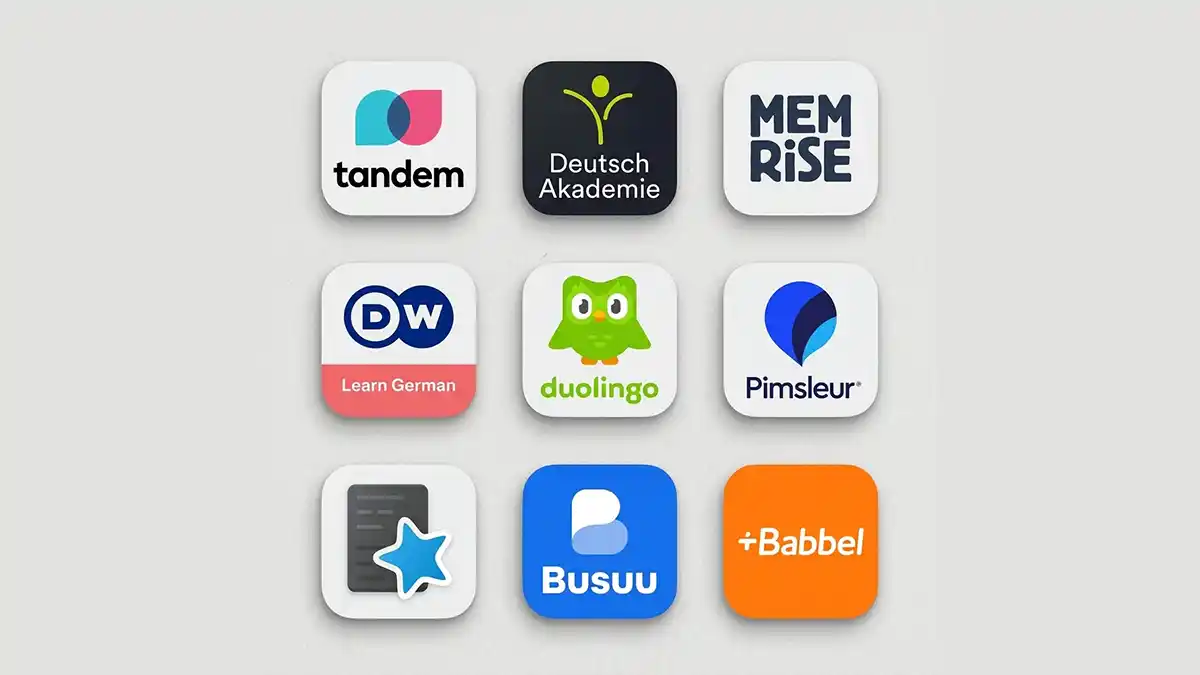 AppsThe Best Apps to Learn German on SmartphonesA comparison of the main apps so you can choose what suits your level and goal.Read the guide →
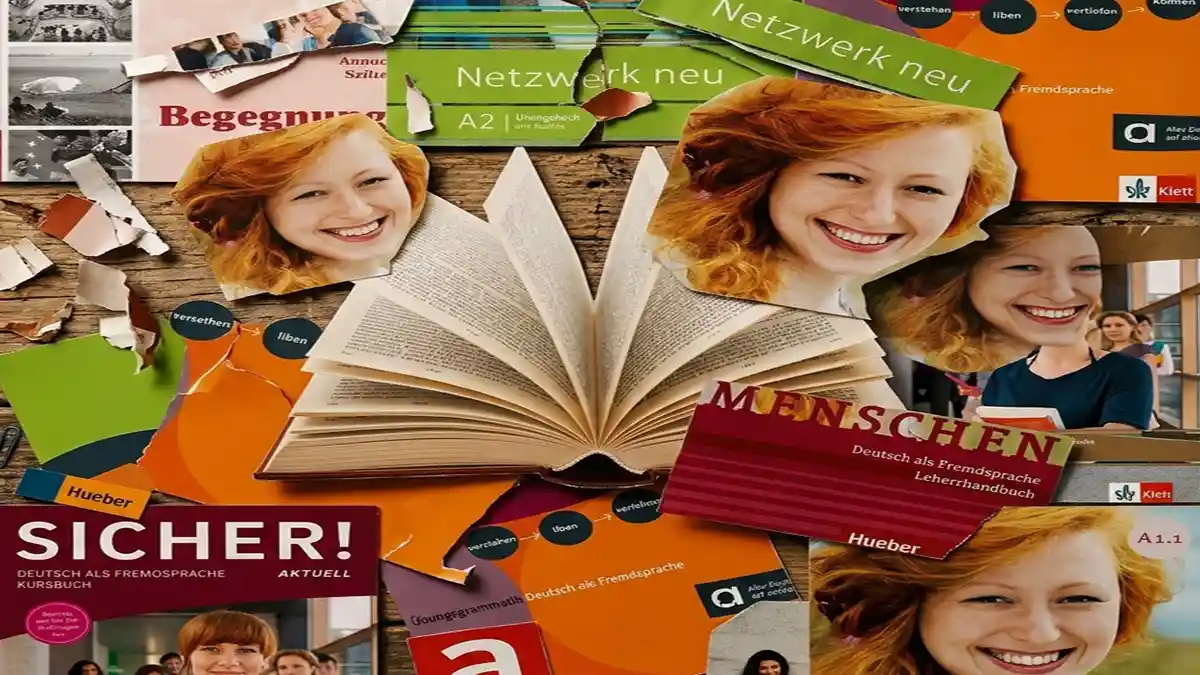 BooksThe Best Books to Learn German from A1 to B2The right books for each level to build a structured curriculum.Read the guide →
 Free coursesDW Learn German Guide: Free Courses from A1 to B1How to benefit from Deutsche Welle’s free curriculum.Read the guide →
If you like a light daily habit that keeps you going, read the Duolingo guide to learning German, which suits waiting and commuting minutes.
If you prefer a structured book, look at our detailed guides to the books Menschen, Netzwerk neu, Momente, and the grammar book Grammatik aktiv. These books are usually paid, but they are available in libraries and language centers.
Listening is the muscle most often neglected. Devote part of your day to German content, and start with channels that explain in your language then move to authentic content:
 In ArabicLearning German for Beginners: The Best Arabic YouTube ChannelsExplanations in your language for beginners, a comfortable start.Read the guide →
 YouTubeThe Best YouTube Channels to Learn German from Zero to ProficiencyChannels for every level to move from explanation to authentic content.Read the guide →
 SeriesThe Best German Series to Learn the Language by LevelSeries suited to every level and an effective way to watch.Read the guide →
For variety, you will benefit from the best films for learning German and the best songs for learning German, both of which get your ear used to the rhythm of the language.
 Artificial intelligenceLearning German with ChatGPT: The Practice and Interactive Speaking GuideTurn ChatGPT into a private tutor that converses with you and corrects your mistakes with ready prompts and a 30-day plan.Read the guide →
For those who want to go further, there is the best AI apps and tools for learning German, and for long-term vocabulary retention using the Anki program.
Step 9: A Daily Routine of 30 to 45 Minutes
The biggest enemy of the learner is not the difficulty of the language but stopping. That is why we designed a short routine you can keep even on busy days. Split your time across four skills, and never let a day pass without speaking aloud. This is what we suggest (our suggestion, not an official rule):
| Time (suggested) | Activity | Skill |
|---|---|---|
| 10 minutes | Review yesterday’s words with a game or flashcards | Vocabulary |
| 15 minutes | A new lesson: an article, video or course | Grammar and reading |
| 10 minutes | Pronunciation and speaking: repeat 5 sentences aloud | Speaking and listening |
| 5 minutes | Write 3 sentences about your day | Writing |
| Optional | Watch a clip or a song in German | Listening |
Each week set one day for a full review and one for rest, and do not miss more than one day in a row. If your time is tight, settle for ten minutes, since ten minutes daily is far better than nothing.
A 12-Week Plan to Reach A1
This plan gathers the previous steps into one table. Each week has a focus and a checkpoint to make sure you are on track. Return to the sections of this guide to reach the right lessons and games for each week.
| Week | Focus | Checkpoint |
|---|---|---|
| 1 | Letters, pronunciation and greetings | You read any German word with acceptable pronunciation and take a first test |
| 2 | Numbers and self-introduction | You introduce yourself in five sentences |
| 3 | Articles, sein and haben | You say 20 nouns with their articles |
| 4 | Family and colors | You describe your family in four sentences |
| 5 | Days, months and seasons | You say today’s date and an appointment |
| 6 | Time | You tell time in both ways |
| 7 | Sentence order and questions | You form five correct questions |
| 8 | Food and drinks | You order a meal in German |
| 9 | Daily conversations | You hold a short dialogue with an assistant or a friend |
| 10 | Transport and directions | You ask the way and understand the answer |
| 11 | Separable verbs and the first case | You write a short paragraph with correct sentences |
| 12 | A full review and a test | You retake the listening and grammar tests and compare |
Step 10: The Official A1 Exam and Moving to A2
If you need an official certificate, the Goethe-Zertifikat A1: Start Deutsch 1 exam is the best known. According to the Goethe-Institut it is an exam for adults made up of listening, reading, writing and speaking (in a group), used for example as proof of the level required for a spousal reunification visa, and age 16 or older is recommended. It was developed together with telc. To compare the providers and which suits your goal, read the difference between the Goethe, telc and TestDaF exams.
| Exam part | Duration per Goethe |
|---|---|
| Listening | 20 minutes |
| Reading | 25 minutes |
| Writing | 20 minutes |
| Speaking | About 15 minutes (in a group) |
If you prefer paid in-person or online courses, these are our guides for those living in Egypt: Goethe-Institut Egypt course prices, German Cultural Center course prices, and the best German language centers in Egypt.
After A1: Your Road to A2, B1 and Beyond
When you pass the A1 tests with confidence and talk about yourself, your family and your routine in simple sentences, you are ready for the next level. The first thing you will meet at A2 is the cases, so start with the difference between the two cases in the difference between Akkusativ and Dativ, then learn the most important Akkusativ verbs, the most important Dativ verbs, and prepositions with Akkusativ.
At B1 compound sentences begin. Learn the connectors in the difference between weil, dass and obwohl, and in the difference between wann, wenn and als, then descriptive clauses in relative clauses Relativsätze, and the flexible prepositions in the two-way prepositions Wechselpräpositionen.
Later, when you reach writing at B1 and B2, you will need the guide to writing the Schreiben essay in the B1 and B2 exams.
If Your Goal Is Work or Vocational Training (Ausbildung)
Many people learn German to work or train in Germany. If that is your goal, start by understanding what Ausbildung is in Germany, then review the language levels required for Ausbildung, whether Ausbildung is free, and the Ausbildung search visa.
For searching and choosing, you will find the best websites to find Ausbildung, Ausbildung specializations, and for the health sector German for the medical sector.
Common Beginner Mistakes and How to Avoid Them
| Mistake | Fix |
|---|---|
| Starting with hard grammar before the basics | Stick to the five basics at A1 |
| Memorizing a noun without its article | Learn der Tisch, not Tisch |
| Relying on literal translation | Learn ready phrases |
| Neglecting pronunciation and listening | Listen and repeat aloud daily |
| Stopping then restarting from zero | Reduce the time instead of stopping |
| Relying on a single resource | Combine the site, an app and audio content |
| Not testing regularly | Retake the site’s tests every 4 weeks |
Conclusion: Start Today from Level A1
Learning German from scratch for free is truly possible if you combine a clear plan, a daily routine and varied resources. Test your level, learn the letters, start with the first vocabulary and simple sentences, build your five grammar basics, use our tools daily, vary your resources and stick to the plan. After twelve weeks you will have laid a solid foundation for level A2.
And if you need a quick answer to a question along the way, review the FAQ page. And remember that German is not mastered in a day but in hundreds of small days, so start today with just ten minutes.
Frequently Asked Questions About Learning German from Scratch
Can I learn German from scratch for free?
Where do I start learning German?
What is level A1?
How much time do I need daily to learn German?
Is German hard for an Arabic speaker?
What is the best free resource for beginners?
Do I need an official exam for level A1?
How do I practise pronunciation?
When do I move to A2?
Is AI enough to learn German?
References and Sources
Sources
- Goethe-Institut: German A1 - A description of A1 as the first of six levels, concerned with elementary language use.
- Goethe-Institut: Goethe-Zertifikat A1: Start Deutsch 1 - What the exam confirms, its sections, and its use for a spousal reunification visa.
- Goethe-Institut: Prüfungsziele und Testbeschreibung A1 SD1 (PDF) - The official description of the exam’s aims and structure, and that it was developed with telc.
- Council of Europe: Common European Framework of Reference for Languages (CEFR) - The official reference of the Common European Framework of Reference for Languages.
- DW Learn German - Free official courses from Deutsche Welle for beginner levels.
- Goethe Prüfungen Switzerland: A1 Start Deutsch 1 - The exam format, the speaking duration and the grading scale.