Lektion 12: Jahreszeiten, Jahreszahlen und das Perfekt mit sein
Lesson 12: Seasons, Months, Reading Years, Simple Past (war & hatte), Present Perfect Tense with sein, and Spatial Prepositions
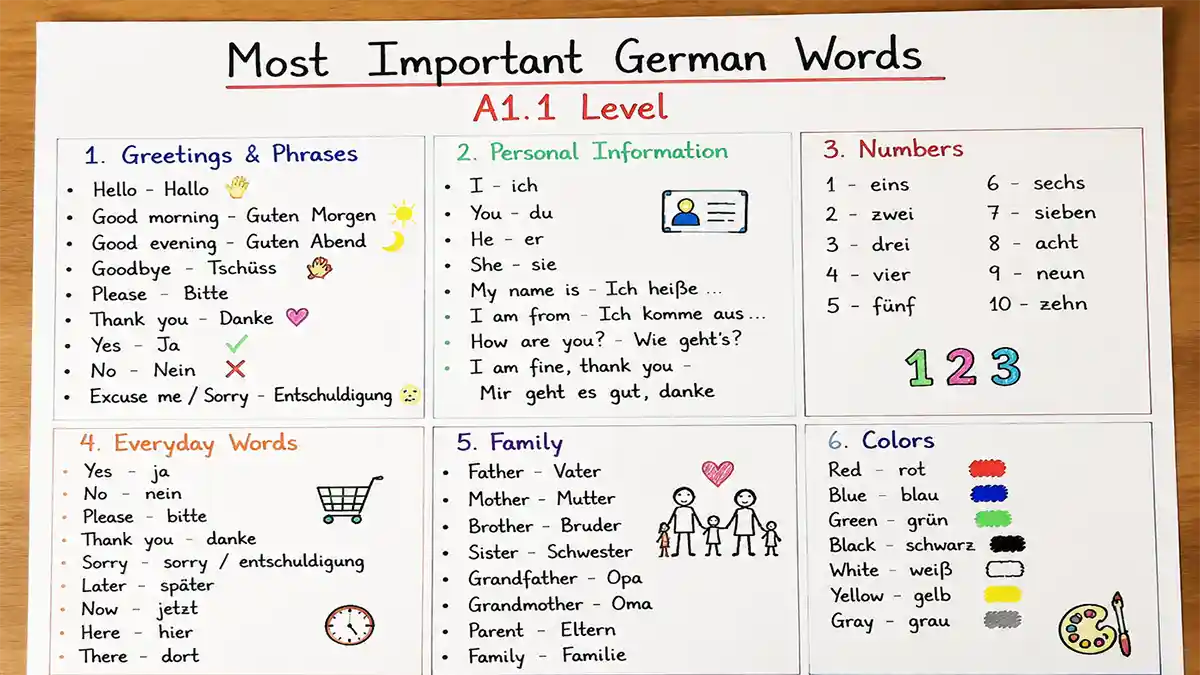
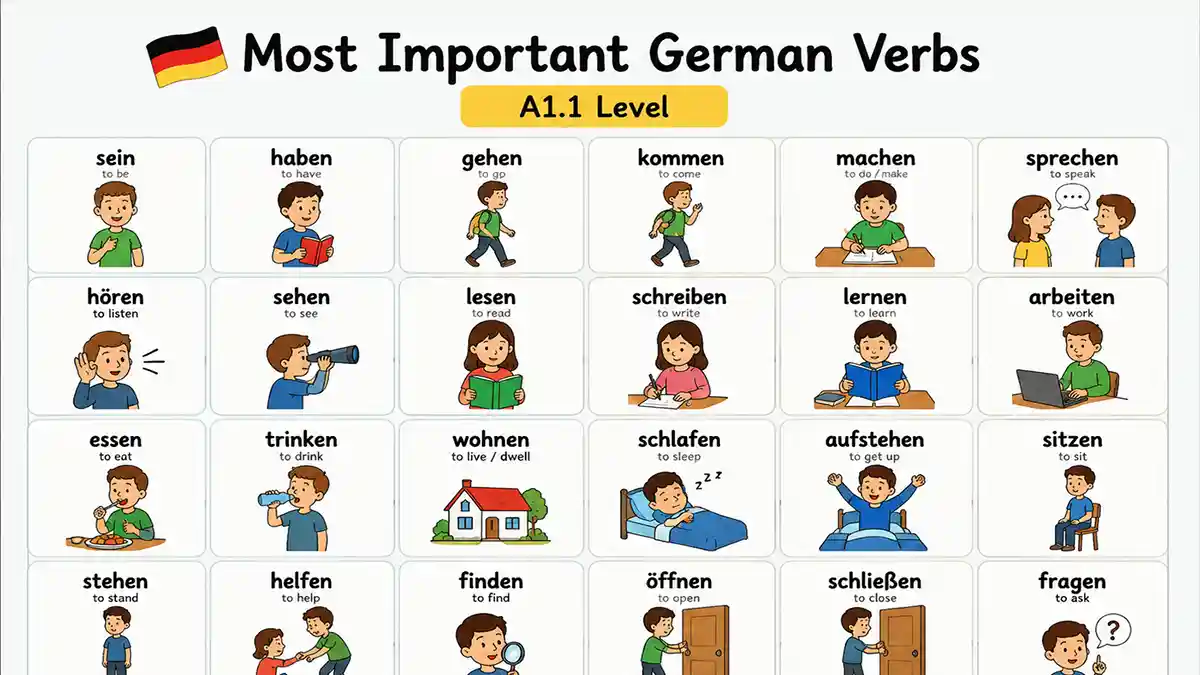
Welcome to the final milestone of the A1.1 Level Path! In this comprehensive concluding lesson, you will learn how to discuss seasons and months, accurately read years in German, master the simple past (Präteritum) for war and hatte, and dive into the present perfect tense with the auxiliary verb sein along with spatial prepositions. Check out our guide on the difficulty of learning German to keep your momentum strong!
Every vocabulary word and dialog line in this curriculum supports high-definition interactive pronunciation. Please make sure to open this lesson inside Google Chrome browser to fully and properly experience the audio pronunciation system.
1. Seasons and Months (Jahreszeiten und Monate)
In German, all seasons and months are **masculine** and take the definite article der. To express that something happens in a particular season or month, we use the merged preposition im (short for in dem). For more practice with time, visit German Numbers & Telling Time, or practice with games like Die Uhrzeit and Die Monate:
The Four Seasons (Die vier Jahreszeiten):
Sample Months of the Year (Beispiele für Monate):
(We like summer. In summer one can go on trips.)
2. Reading Years (Jahreszahlen)
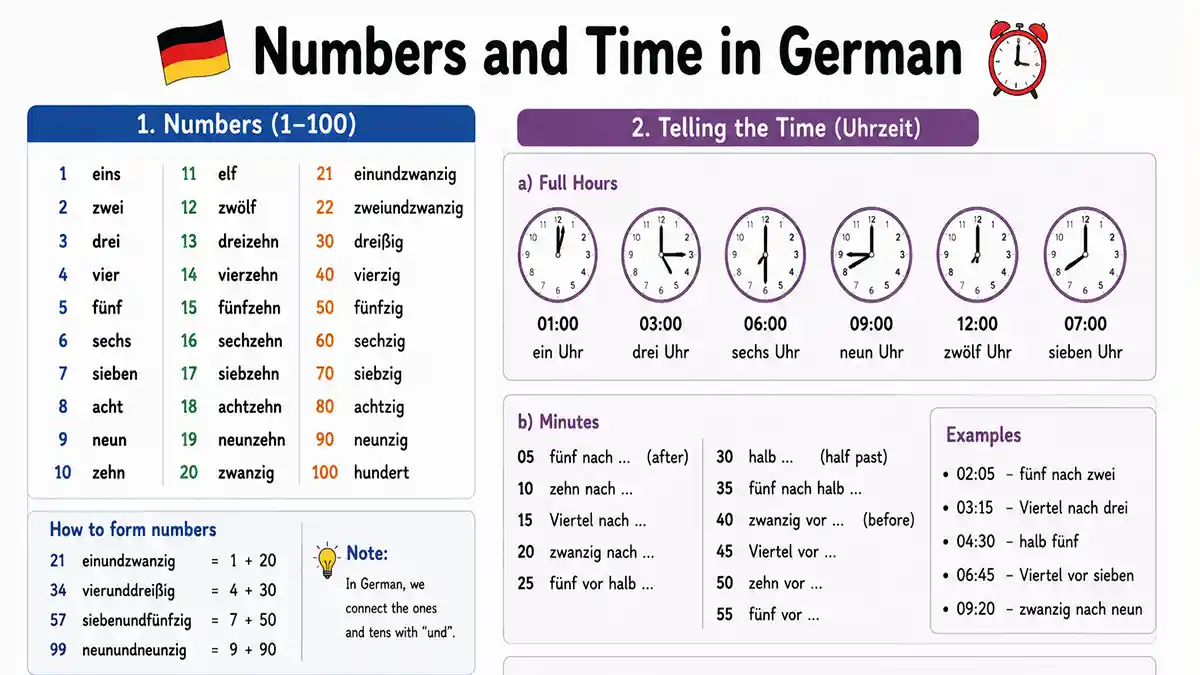
Reading years in German follows two distinct structural rules based on whether the year is before or after 2000. Test your numbers with our interactive game Die Zahlen:
Years Before 2000
Split the four-digit number into two halves. State the first two digits, add the word hundert (hundred), then state the last two digits:
Split: 18 + 23 ➔ eighteen hundred twenty-three
⚠️ Note: Never say 'eintausendachthundert...' when reading years in German.
Years 2000 and Later
Read the year as a regular cardinal number using tausend (thousand):
3. Simple Past for sein and haben
Even though spoken German prefers the present perfect (Perfekt), the verbs sein and haben are almost exclusively used in the **Simple Past (Präteritum)** during everyday speech because it is shorter and more concise. Try our Verb Conjugation Tool for other verb conjugations:
We say war instead of bin gewesen (was), and hatte instead of habe gehabt (had).
| sein ➝ war (was / were) | |
|---|---|
| ich |
war
|
| du |
warst
|
| er / es / sie |
war
|
| haben ➝ hatte (had) | |
|---|---|
| ich |
hatte
|
| du |
hattest
|
| er / es / sie |
hatte
|
Everyday Conversation Examples:
(We had lots of sunshine, but it was cold.)
4. Present Perfect with Auxiliary Verb (sein)
While most German verbs take haben in the present perfect, specific verbs take **sein** according to 3 golden rules. See our article on Important Akkusativ Verbs to complement your verb knowledge:
Verbs of Movement (From A to B)
Any verb that indicates physical relocation of the entire body from one location to another requires sein:
Verbs Indicating Change of State
Any verb that expresses a transition from state A to state B requires sein:
Key Verb Exceptions (Ausnahmen)
Core verbs that do not indicate physical movement yet always take sein:
Complete Sentence Examples:
5. Spatial Prepositions (aus, in, nach)
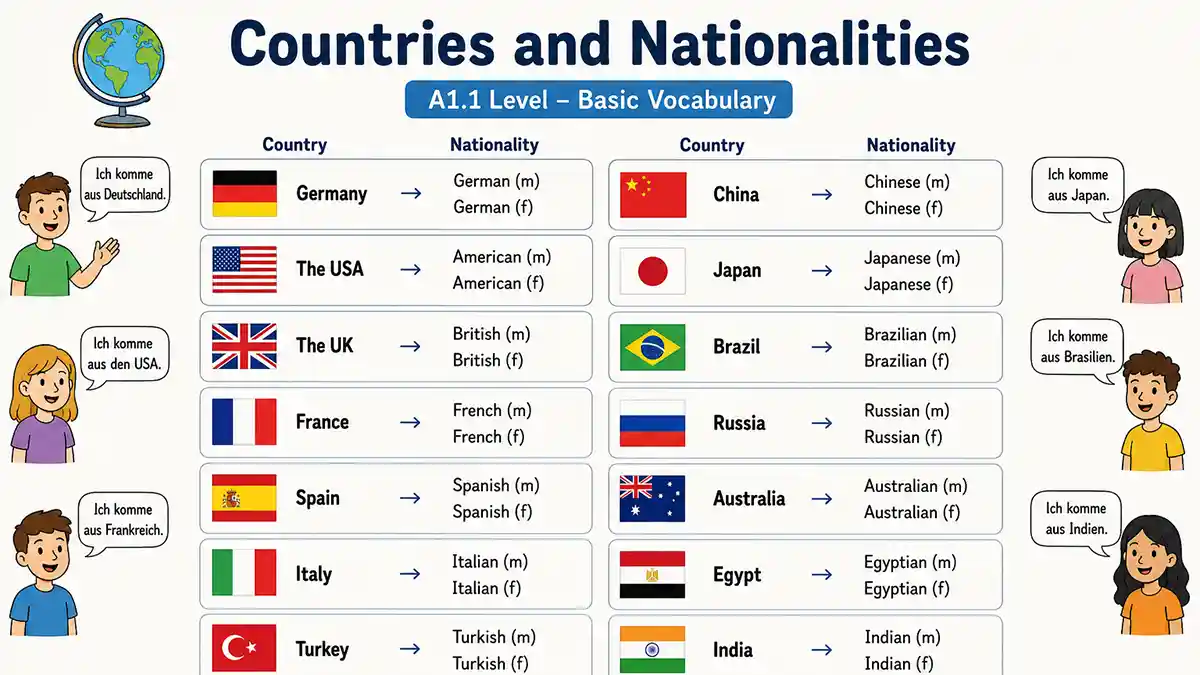
Spatial prepositions describe direction, origin, or static location during travel. Learn more in our Countries and Nationalities guide and our explanation on Wo vs. Wohin vs. Woher:
1. aus (from) - Expressing Origin (Woher?)
Used to indicate the city or country a person comes from:
2. nach (to) - Expressing Direction (Wohin?)
Used with cities and countries that do not have a grammatical article:
3. in (in / to)
A. Direction to countries with articles: We use in die (e.g., in die Türkei, in die Schweiz).
B. Static location (in): Indicating current presence inside a city or place.
Herzlichen Glückwunsch! (Congratulations!)
You have successfully completed all lessons in the A1.1 level curriculum! You now possess a solid foundation in German grammar and communication. Keep practicing with our A1.1 Key Vocabulary, and we look forward to welcoming you in Level A1.2!
Frequently Asked Questions (FAQ)
Which gender articles and prepositions are used with seasons and months in German?
All seasons and months are masculine in German and take the article der. To express 'in' a season or month, we use the merged preposition im (e.g., im Sommer, im Januar).
How do you read years before the year 2000 in German?
The number is split into two halves with hundert (hundred) inserted in between (e.g., 1823 is read as achtzehnhundertdreiundzwanzig).
How do you read years from the year 2000 onwards in German?
They are read as standard cardinal numbers using tausend (e.g., 2014 is read as zweitausendvierzehn).
Why is simple past (Präteritum) preferred for 'sein' and 'haben' in spoken German?
Because forms like war and hatte are shorter and much easier to pronounce in daily speech compared to bin gewesen and habe gehabt.
When do we use 'sein' as an auxiliary verb in the present perfect tense (Perfekt)?
We use sein with verbs expressing movement from A to B (e.g., gehen, fahren), verbs indicating a change of state (e.g., aufstehen, einschlafen), and key exceptions (sein, bleiben, werden, passieren).
What is the difference between 'nach' and 'in die' when traveling to countries?
We use nach with cities and article-less countries (e.g., nach Deutschland), whereas in die is used with countries that have a feminine article (e.g., in die Türkei, in die Schweiz).
When do we use the spatial preposition 'aus'?
It is used to indicate origin or country/city of birth/residence in response to Woher? (e.g., aus Ankara).
How is 'sein' conjugated in the simple past (war) for singular pronouns?
For ich it is war, for du it is warst, and for er/es/sie it is war.
References & Educational Resources
Approved Textbooks & Curriculum Materials
This lesson has been structured and verified using 6 certified German learning references:
- Momente A1 (Kursbuch & Arbeitsbuch) - Hueber Verlag
- Schritte International Neu (A1.1) - Hueber Verlag
- Netzwerk neu A1.1 - Klett Sprachen
- Begegnungen A1+ - Schubert-Verlag
- Grammatik aktiv A1-B1 - Cornelsen Verlag
- Studio [21] A1 - Cornelsen Verlag
Related A1.1 Lessons & Guides