Most Important German Accusative Verbs (Akkusativ)
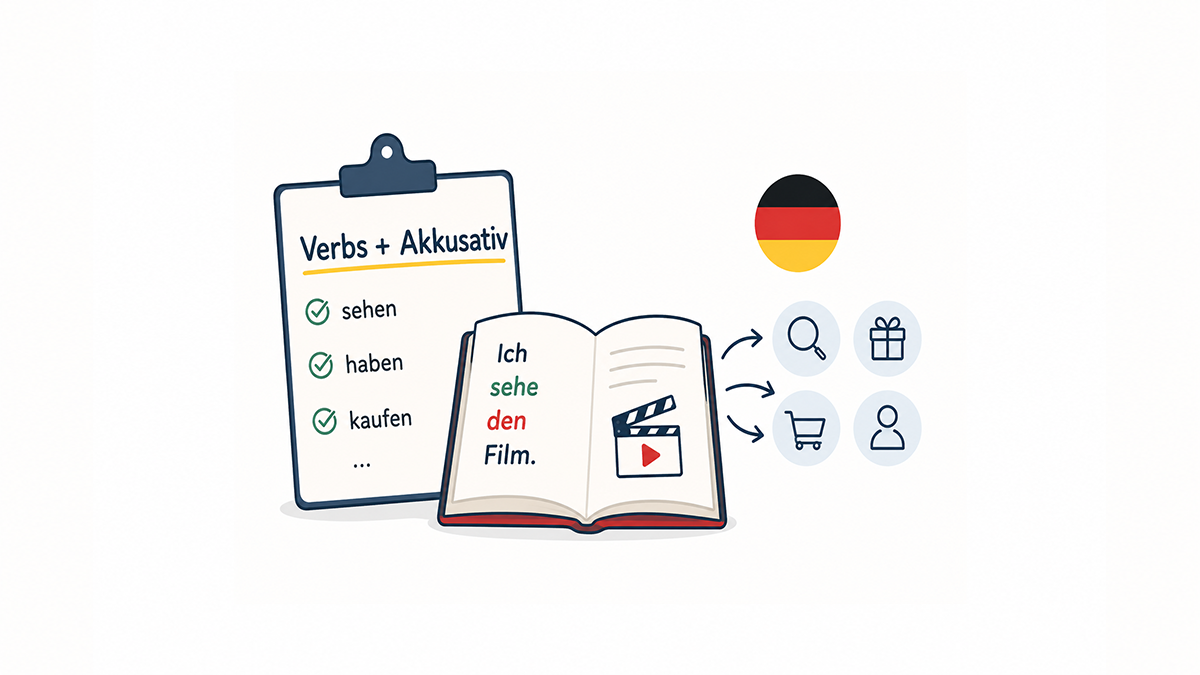
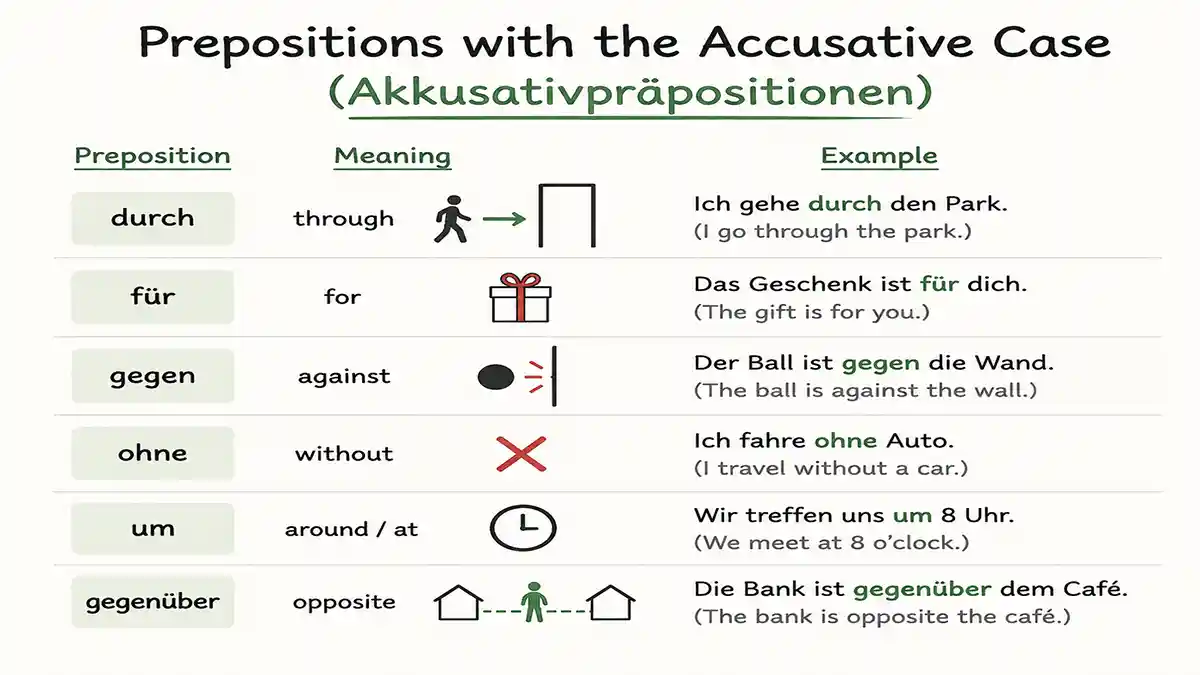
If you are at the start of your German language learning journey across our structured German Course Levels, you have likely noticed that certain verbs change the form of words and articles that follow them. The secret lies in the accusative case (Akkusativ). The reassuring news is that the vast majority of transitive German verbs require this direct object case!
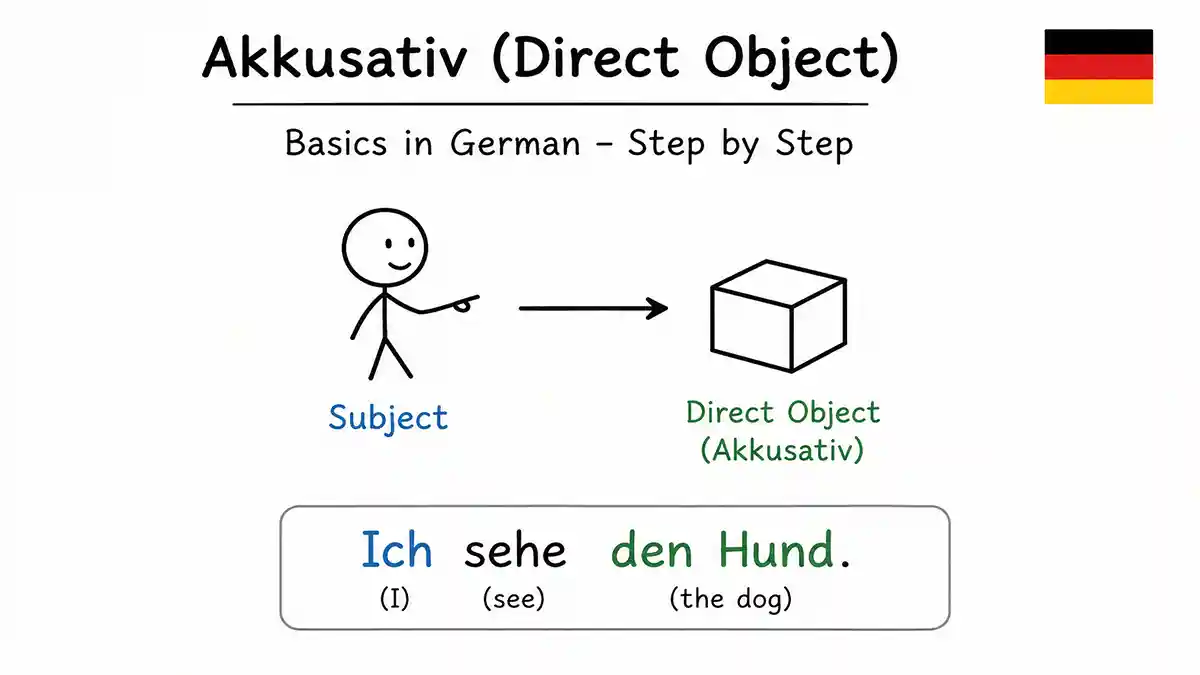
In this guide, we have compiled the most essential daily German verbs that always place the following noun into the Akkusativ case. Golden rule to remember: The article change only affects masculine nouns (der becomes den, and ein becomes einen), while feminine, neutral, and plural articles remain unchanged.
Learning Note: All examples and verbs are equipped with interactive speech synthesis buttons. Click the audio icon next to any German phrase to listen to natural pronunciation.
1. Possession & Need Verbs (Haben & Brauchen)
- To have (Haben):
- Ich habe einen Hund. : I have a dog. (Masculine "Hund" changes to "einen").
- To need (Brauchen):
- Er braucht den Computer. : He needs the computer.
2. Searching & Finding Verbs (Suchen & Finden)
- To search / look for (Suchen):
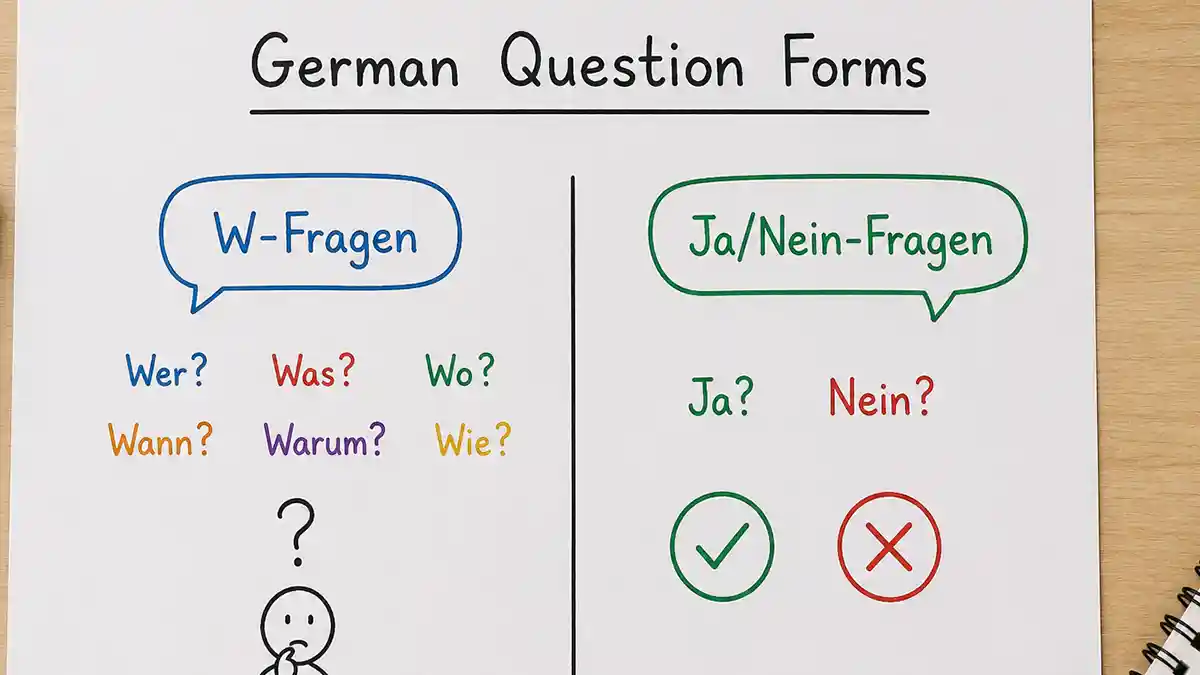
- Wir suchen den Bahnhof. : We are looking for the train station. You can also master asking for directions with our guide on Forming Questions in German.
- To find / think of (Finden):
- Sie findet den Film gut. : She finds the movie good.
3. Shopping & Desire Verbs (Kaufen, Möchten, Nehmen)
- To buy (Kaufen):
- Ich kaufe den Tisch. : I am buying the table.
- To would like (Möchten):
- Er möchte einen Apfel. : He would like an apple.
- To take (Nehmen):
- Wir nehmen den Bus. : We are taking the bus.
4. Senses & Perception Verbs (Sehen, Hören, Verstehen, Fragen)
- To see (Sehen):
- Ich sehe den Mann. : I see the man.
- To hear (Hören):
- Hörst du den Vogel? : Do you hear the bird?
- To understand (Verstehen):
- Ich verstehe den Satz nicht. : I do not understand the sentence. If you encounter comprehension challenges, read our strategies on Overcoming German Learning Hardships.
- To ask (Fragen):
- Der Schüler fragt den Lehrer. : The student asks the teacher.
5. Food & Drink Verbs (Essen, Trinken, Kochen)
- To eat (Essen):
- Er isst einen Hamburger. : He is eating a hamburger.
- To drink (Trinken):
- Sie trinkt den Saft. : She is drinking the juice.
- To cook (Kochen):
- Ich koche den Reis. : I am cooking the rice.
All Akkusativ Verbs by Level
1. Akkusativ Verbs in Level A1
- kaufen : to buy
- haben : to have
- trinken : to drink
- essen : to eat
- sehen : to see
- hören : to hear / listen
- verstehen : to understand
- brauchen : to need
- machen : to do / make
- suchen : to search for / look for
- finden : to find
- lesen : to read
- schreiben : to write
- kennen : to know (a person or place)
- anrufen : to call (by phone)
2. Akkusativ Verbs in Level A2
- besuchen : to visit
- bestellen : to order (food / goods)
- bezahlen : to pay for
- einladen : to invite
- verlassen : to leave / abandon
- vergessen : to forget
- verlieren : to lose
- buchen : to book / reserve
- feiern : to celebrate
- fragen : to ask
- öffnen : to open
- schließen : to close
- vorbereiten : to prepare
- aufräumen : to tidy up / clean up
3. Akkusativ Verbs in Level B1
- beeinflussen : to influence / affect
- unterstützen : to support
- unterbrechen : to interrupt
- informieren : to inform
- überzeugen : to convince / persuade
- verhindern : to prevent / hinder
- lösen : to solve (a problem)
- erreichen : to reach / achieve
- entdecken : to discover
- genießen : to enjoy
- übernehmen : to take over / assume responsibility
4. Akkusativ Verbs in Level B2
- berücksichtigen : to consider / take into account
- beabsichtigen : to intend / plan
- beeinträchtigen : to impair / negatively affect
- bekämpfen : to fight / combat
- fördern : to promote / encourage / support
- fordern : to demand / require
- gewährleisten : to guarantee / ensure
- wahrnehmen : to perceive / seize (an opportunity)
- rechtfertigen : to justify
- vernachlässigen : to neglect
- vollziehen : to carry out / execute
Frequently Asked Questions (FAQ)
Do most German verbs take Akkusativ or Dativ?
The vast majority of transitive German verbs (around 80%) require the accusative case (Akkusativ). Therefore, it is best to assume a verb takes Akkusativ unless learned specifically as a Dativ verb.
What happens to masculine articles in the accusative case?
The definite masculine article changes from 'der' to 'den', and the indefinite article changes from 'ein' to 'einen'. Feminine, neutral, and plural articles remain completely unchanged.
How can I easily memorize these accusative verbs?
The most effective method is memorizing verbs inside full sentences featuring a masculine noun rather than isolated words. For instance, memorize 'Ich kaufe den Apfel' instead of just 'kaufen'.
Do personal pronouns change after accusative verbs?
Yes, subject pronouns change into accusative object pronouns (e.g., 'ich' becomes 'mich', 'du' becomes 'dich', and 'er' becomes 'ihn').
What is the main difference between Akkusativ and Dativ verbs?
Akkusativ verbs express a direct object directly receiving the action, whereas Dativ verbs usually represent the indirect object or person benefiting from the action.
Does the verb 'sein' (to be) take the accusative case?
No! The linking verbs 'sein' (to be) and 'werden' (to become) never take the accusative case; nouns and adjectives following them remain in the nominative case (Nominativ).
How are masculine adjectives affected in the accusative case?
Masculine adjectives always take an '-en' ending when modifying an accusative direct object (e.g., Ich kaufe einen neuen Computer).
Do negative articles (kein) change with Akkusativ verbs?
Yes, the masculine negative article changes to 'keinen', while feminine and plural remain 'keine', and neutral remains 'kein'.
Textbooks & Academic References
Approved Academic & Language Sources
German verb lists and grammar rules are cited and documented from official international CEFR standards:
- Duden Online Wörterbuch - Primary reference dictionary for High German verb grammar and conjugation.
- DWDS (Digitales Wörterbuch der deutschen Sprache) - Comprehensive German language corpus database.
- Menschen A1 Kursbuch - Standardized German learning textbook from Hueber publishing.
- Netzwerk neu A1 - German learning course series by Klett Sprachen.
- Goethe-Institut Learning Materials - Framework standards for CEFR language proficiency exams.
- telc Deutsch A1 Grammatik - European language test specifications and assessment criteria.