Wann, Wenn and Als at a Glance
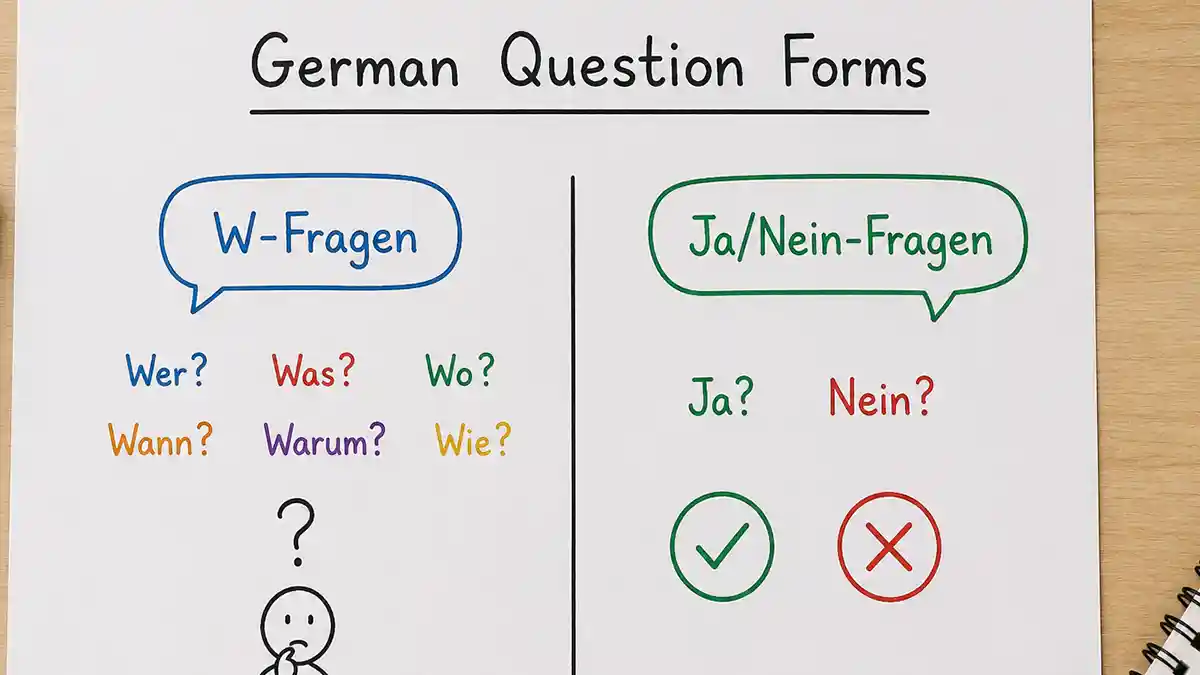
Learners mix up these three words because Arabic and English use roughly one word (“when”) for different jobs. German separates them: wann asks about time, als is for an event that happened once in the past, and wenn is for conditions, repetition, the present and the future. For all the question words, review how to form questions in German.
| Word | Function | Arabic equivalent | Example |
|---|---|---|---|
| wann | A question about time (direct or indirect) | «متى» (a question) | Wann beginnt der Kurs? |
| als | A single event in the past, and comparison after a comparative | «عندما / لمّا» (past), «من» (comparison) | Als ich ankam, regnete es. |
| wenn | A condition, repetition, or the present and future | «إذا» / «كلما» (repetition) | Wenn es regnet, bleibe ich zu Hause. |
Wann: The Question About Time
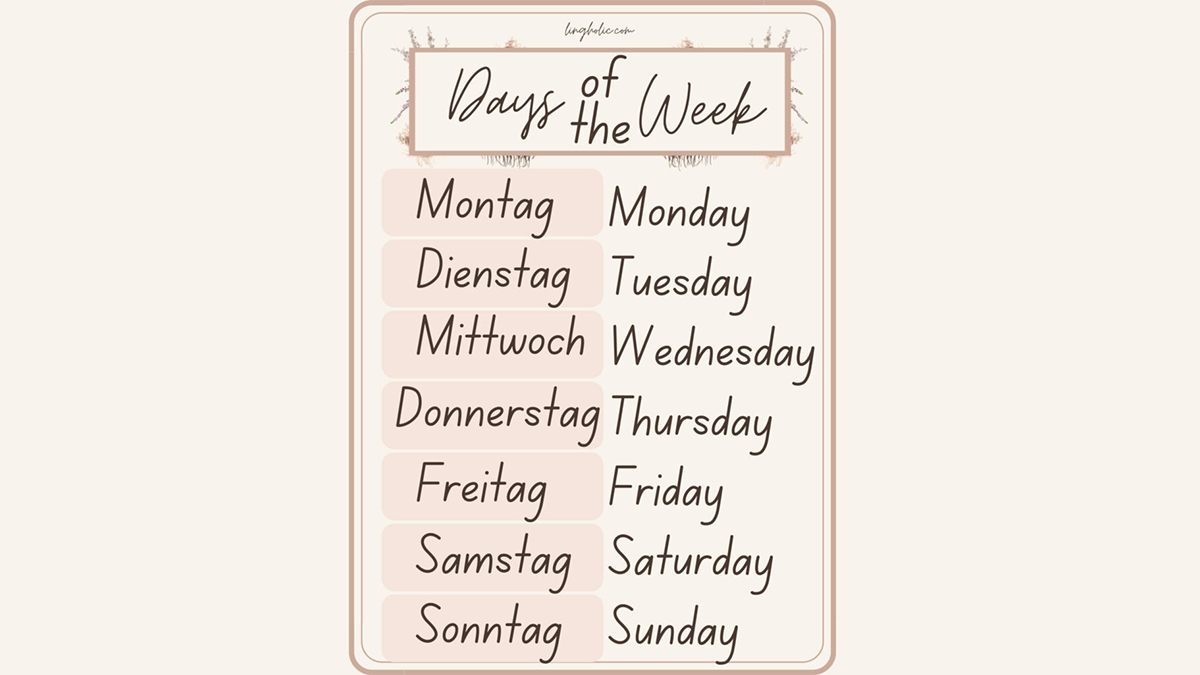
wann is a question word that asks “when?”. It appears in direct questions and in indirect questions inside a subordinate clause where the verb goes to the end. The answer is usually a time: a day, month or hour, so review the days of the week in German to answer in the right form.
| Type | Example | Meaning |
|---|---|---|
| Direct question | Wann beginnt der Kurs? | When does the course start? |
| Question with a preposition | Seit wann lernst du Deutsch? | Since when have you been learning German? |
| Question with a preposition | Bis wann brauchst du das? | Until when do you need that? |
| Indirect question | Ich weiß nicht, wann er kommt. | I do not know when he is coming. |
Als: A Single Event in the Past
als is used for an event that happened once in the past, whether a moment or a defined period. It is usually combined with past tenses (Präteritum, Plusquamperfekt, or Perfekt in conversation). Its verb goes to the end of the subordinate clause.
| Use | Example | Meaning |
|---|---|---|
| A moment in the past | Als ich ankam, regnete es. | When I arrived, it was raining. |
| A period in the past | Als ich Kind war, wohnten wir in Kairo. | When I was a child, we lived in Cairo. |
| An interrupting event | Als er anrief, schlief ich. | When he called, I was asleep. |
| Comparison | Er ist größer als ich. | He is taller than me. |
| As if (Konjunktiv) | Er tut so, als ob er alles wüsste. | He acts as if he knew everything. |
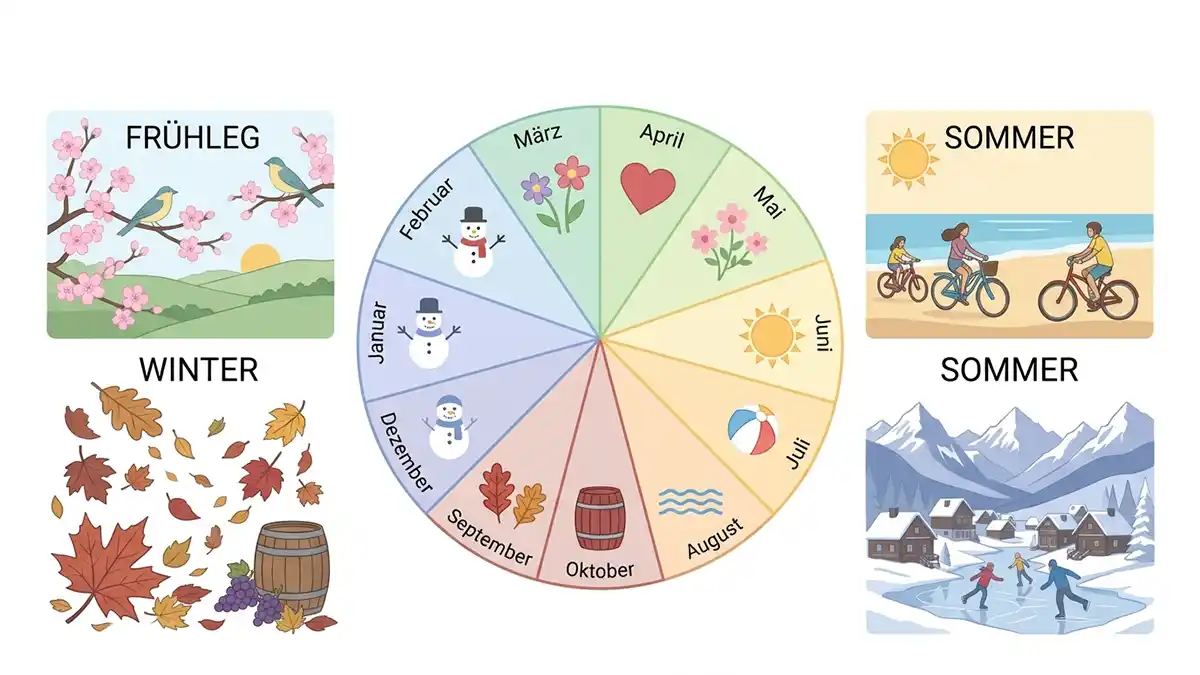
Time vocabulary helps you pinpoint the moment, such as the names of seasons and months in seasons and months in German: “Als ich im Sommer in Berlin war…”.
Wenn: Conditions, Repetition, the Present and the Future
wenn covers four cases: a condition (if), repetition in any tense (whenever), the present and the future. To stress repetition, add immer or jedes Mal before it.
| Use | Example | Meaning |
|---|---|---|
| Condition | Wenn es regnet, bleibe ich zu Hause. | If it rains, I stay at home. |
| Repetition in the present | Wenn ich Zeit habe, lese ich. | Whenever I have time, I read. |
| Repetition in the past | Wenn ich krank war, blieb ich im Bett. | Whenever I was ill, I stayed in bed. |
| Stressing repetition | Immer wenn ich ihn sehe, lacht er. | Whenever I see him, he laughs. |
| Future (once) | Wenn ich in Berlin ankomme, rufe ich dich an. | When I arrive in Berlin, I will call you. |
| Unreal condition | Wenn ich reich wäre, würde ich reisen. | If I were rich, I would travel. |
Note: wenn means “if” or “when” depending on context, and falls can replace it in conditions only: Falls es regnet, nehme ich einen Schirm.
Decision Table: als or wenn by Tense and Frequency
| Tense | Single event | Repeated event |
|---|---|---|
| Past | als | wenn |
| Present | wenn | wenn |
| Future | wenn | wenn |
For quick application, ask yourself in this order:
| Step | Question | If yes |
|---|---|---|
| 1 | Is this a question about time, direct or indirect? | wann |
| 2 | Is it a comparison after a comparative? | als |
| 3 | Is it a condition, the present or the future? | wenn |
| 4 | Is it past? If once, als; if repeated, wenn | als / wenn |
Word Order: The Verb Goes to the End
After these words the conjugated verb goes to the end of the subordinate clause. If you start with the subordinate clause, the verb of the main clause comes right after the comma (inversion). With separable verbs the prefix rejoins the verb in the subordinate clause, so review separable verbs in German.
| Order | Example |
|---|---|
| Main then subordinate | Ich rufe dich an, wenn ich ankomme. |
| Subordinate then main (inversion) | Wenn ich ankomme, rufe ich dich an. |
| Separable verb in the subordinate clause | Ich komme, wenn du mich anrufst. |
| Plusquamperfekt with als | Als ich gegessen hatte, ging ich spazieren. |
| Indirect question | Sag mir, wann du kommst. |
Tenses with als and wenn: What Follows Them?
A university thesis drawing on Duden says temporal clauses express three relations: simultaneity (Gleichzeitigkeit), anteriority (Vorzeitigkeit) and posteriority (Nachzeitigkeit), and that the tense and mood work with the conjunction to set the relation. These are the most common patterns with the two words:
| Pattern | Example | The idea |
|---|---|---|
| als + Präteritum | Als ich nach Hause kam, regnete es. | Two simultaneous past events |
| als + Plusquamperfekt | Als ich gegessen hatte, ging ich spazieren. | The first event ended before the second |
| als + Perfekt (conversation) | Als ich angekommen bin, hat es geregnet. | The everyday spoken form |
| wenn + Präsens | Wenn ich Zeit habe, komme ich. | A condition, the future or repetition |
| wenn + Konjunktiv II | Wenn ich Zeit hätte, würde ich kommen. | An unreal condition in the present |
| wenn + Plusquamperfekt | Wenn ich es gewusst hätte, wäre ich gekommen. | An unreal condition in the past |
If you want to express an event that precedes another, use nachdem, and for one that follows, use bevor. They are temporal connectors that follow the same verb-position rule.
Similar Words: ob, falls and wie
| Word | When? | Example |
|---|---|---|
| ob | An indirect yes/no question | Ich weiß nicht, ob er kommt. |
| wann | An indirect question about time | Ich weiß nicht, wann er kommt. |
| falls | A condition only (in case) | Falls du Zeit hast, ruf mich an. |
| wie | Equality in comparison | Er ist so groß wie ich. |
| als | Inequality in comparison | Er ist größer als ich. |
Why Do Arabic Speakers Make Mistakes?
| In Arabic | In German | Example |
|---|---|---|
| «متى» = when (a question) | wann | Wann kommst du? |
| «عندما / لمّا» = when (once in the past) | als | Als ich kam, war er schon weg. |
| «إذا / لو» = if | wenn | Wenn du willst, komme ich. |
| «كلما / عندما» = whenever (repetition) | wenn / immer wenn | Immer wenn es regnet, bleibe ich zu Hause. |
| «من» = than (in comparison) | als | Mein Bruder ist älter als ich. |
Common Mistakes
| Mistake | Correct | Reason |
|---|---|---|
| Wann ich müde bin, schlafe ich. | Wenn ich müde bin, schlafe ich. | a condition and the present, not a question |
| Ich weiß nicht, wenn er kommt. | Ich weiß nicht, wann er kommt. | an indirect question about time |
| Wenn ich Kind war, wohnte ich in Kairo. | Als ich Kind war, wohnte ich in Kairo. | a defined period in the past |
| Als ich Zeit habe, lese ich. | Wenn ich Zeit habe, lese ich. | present → wenn |
| Immer als ich ihn sah, lachte er. | Immer wenn ich ihn sah, lachte er. | repetition in the past → wenn |
| Er ist größer wie ich. | Er ist größer als ich. | inequality comparison → als |
| Wenn ich komme, ich rufe dich an. | Wenn ich komme, rufe ich dich an. | inversion after the subordinate clause |
Exercises with Answers
| # | Sentence |
|---|---|
| 1 | ___ kommt der Zug an? |
| 2 | ___ ich müde bin, trinke ich Kaffee. |
| 3 | ___ ich gestern ankam, regnete es. |
| 4 | Ich weiß nicht, ___ der Kurs beginnt. |
| 5 | ___ ich Kind war, spielte ich oft Fußball. |
| 6 | Immer ___ er anruft, bin ich beschäftigt. |
| 7 | ___ ich morgen in Berlin bin, rufe ich dich an. |
| 8 | Er ist älter ___ ich. |
| 9 | Seit ___ lernst du Deutsch? |
| 10 | Jedes Mal, ___ ich ihn sah, grüßte er. |
Click to show the answers
Tips to Remember the Difference
- Ask yourself first: is it a question? Is it a single past event? Otherwise it is wenn.
- Memorize a model sentence for each word: Wann kommst du? / Als ich ankam… / Wenn es regnet…
- Watch the verb: always put it at the end of the subordinate clause.
- Speak aloud: make three sentences about your day with the three words. For ready sentences, review everyday conversation expressions in German.
- Practise writing: connectors such as wenn and als make your texts richer, and you can practise them with learning to write in German (Schreiben).
- Write down your mistakes and review them weekly.
Conclusion: How to Choose Between Wann, Wenn and Als
wann is for asking about time, als for an event that happened once in the past and for inequality comparison, and wenn for conditions, repetition, the present and the future. Then the verb goes to the end of the subordinate clause.
And remember that practising full sentences is more useful than memorizing the bare rule.
To enhance your sentence structure and express reasons, statements, or contrasts naturally, check out our comprehensive guide on the difference between weil, dass, and obwohl in German to master subordinate clause word order.
Complete Guide from DeutschPlayLearn German From Scratch for Free: Complete A1 to Advanced GuideStarting your journey and need a clear, free roadmap? Explore proficiency levels from A1 to advanced, along with top methods, resources, and tips to start with confidence.Frequently Asked Questions About Wann, Wenn and Als
What is the difference between wann, wenn and als?
When do I use als and when wenn in the past?
Do I use wenn for the future?
Can wann be used in a condition?
What is the difference between wenn and falls?
What is the difference between wann and ob?
Where does the verb go after wenn and als?
Is als used in comparison?
How do I practise these words?
References and Sources
Sources
- Lingoda: When to use als, wenn or wann in German - An explanation separating als for a single past event, wenn for repetition, conditions and the future, and wann for questions.
- Forum Wirtschaftsdeutsch: Übersicht Konnektoren Temporalsätze (PDF) - A table of temporal connectors: immer wenn, als, wann and others.
- Forum Wirtschaftsdeutsch: Überblick Temporalsätze (PDF) - An overview of temporal subordinate clauses with examples.
- Chatterbug: Wann, wenn, falls, als, ob - The words classified by function and verb position in the subordinate clause.
- Lernlaterne: Subordinate clauses with wenn and als - The rule of als for a single event and wenn for conditions, with verb position.
- Mango Languages: Clauses and conjunctions of time in German - An explanation of time clauses with als and seitdem examples.
- University of Osijek: thesis on Temporalsätze - A university thesis that draws on Duden to define temporal subordinate clauses.
- Sublearn: The Master Key wenn - An explanation of wenn for conditions and repetition and how it differs from wann and als.