Days of the Week in German: Names, Pronunciation, Examples and Translated Sentences
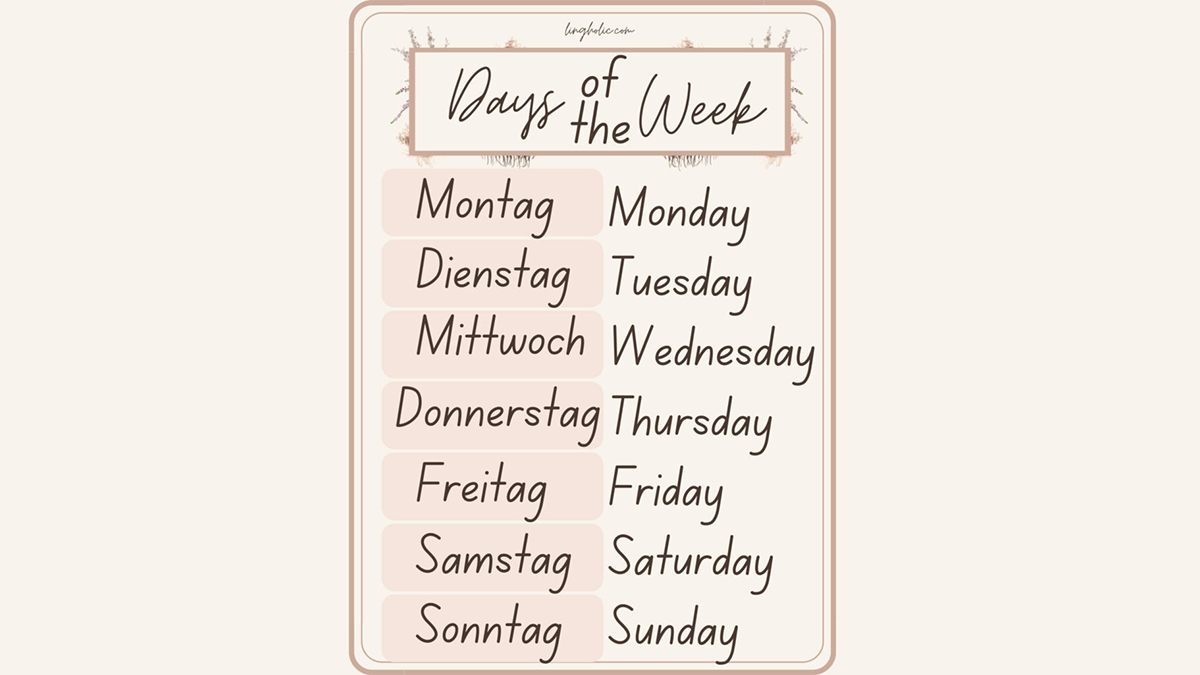
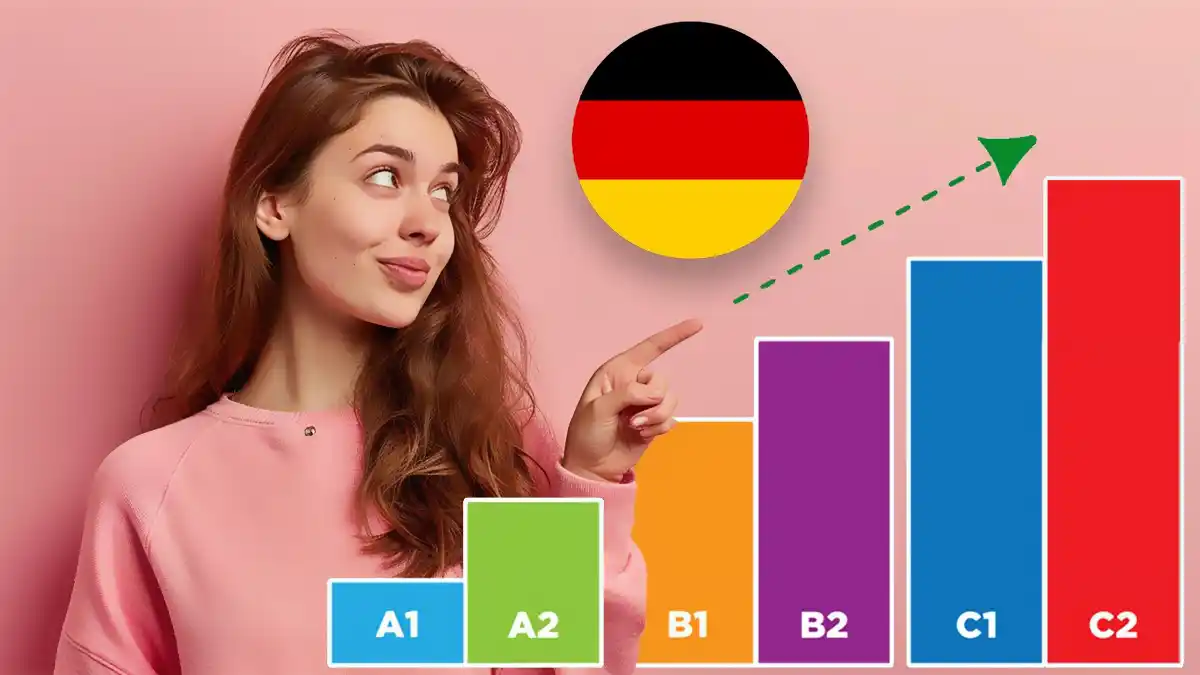
The days of the week are core vocabulary for anyone starting German, whether at level A1 or for travel, study and work; it is hard to talk about appointments, classes or weekend plans without them. The good news is that there are only seven, and they are easy to learn through repetition and listening. See German language levels from A1 to C2 to know where this lesson fits.
This article covers the day names, their pronunciation, the article used with them, how to ask about the day and talk about appointments and activities, plus sentences, a dialogue and a short quiz. For more everyday phrases read key daily conversation expressions.
Audio pronunciation: Click the sound icon next to any word or sentence to hear it in German through your browser. Audio quality depends on the voices installed on your device; if you do not hear a German voice, install a German (de-DE) voice in your system settings.
What Are the Days of the Week in German?
| English | German | Approximate pronunciation |
|---|---|---|
| Monday | Montag | MOHN-tahk |
| Tuesday | Dienstag | DEENS-tahk |
| Wednesday | Mittwoch | MIT-vokh |
| Thursday | Donnerstag | DON-ers-tahk |
| Friday | Freitag | FRY-tahk |
| Saturday | Samstag | ZAMS-tahk |
| Sunday | Sonntag | ZON-tahk |
Read Also
Telling Time, Days of the Week & Making Appointments in German (A1.1)
Learn how to ask for the time, read clock times in German, and organize your daily schedules with ease.
→1. Monday in German: Montag
- Heute ist Montag. : Today is Monday.
- Ich arbeite am Montag. : I work on Monday.
- Am Montag gehe ich zur Schule. : On Monday I go to school.
- Wir haben am Montag einen Deutschkurs. : We have a German course on Monday.
- Der Termin ist am Montag. : The appointment is on Monday.
2. Tuesday in German: Dienstag
- Heute ist Dienstag. : Today is Tuesday.
- Ich lerne am Dienstag Deutsch. : I learn German on Tuesday.
- Am Dienstag habe ich einen Termin. : I have an appointment on Tuesday.
- Mein Deutschkurs beginnt am Dienstag. : My German course starts on Tuesday.
- Was machst du am Dienstag? : What are you doing on Tuesday?
- Am Dienstag gehe ich ins Fitnessstudio. : On Tuesday I go to the gym.
3. Wednesday in German: Mittwoch
- Heute ist Mittwoch. : Today is Wednesday.
- Am Mittwoch besuche ich meine Familie. : On Wednesday I visit my family.
- Wir lernen jeden Mittwoch Deutsch. : We learn German every Wednesday.
- Am Mittwoch arbeite ich von acht bis vier. : On Wednesday I work from eight to four.
4. Thursday in German: Donnerstag
- Morgen ist Donnerstag. : Tomorrow is Thursday.
- Am Donnerstag gehe ich zum Arzt. : On Thursday I go to the doctor.
- Ich habe am Donnerstag keine Zeit. : I have no time on Thursday.
- Am Donnerstag treffen wir unsere Freunde. : On Thursday we meet our friends.
- Tut mir leid, ich habe am Donnerstag keine Zeit. : Sorry, I have no time on Thursday.
5. Friday in German: Freitag
- Heute ist Freitag. : Today is Friday.
- Am Freitag gehe ich ins Kino. : On Friday I go to the cinema.
- Wir treffen uns am Freitag. : We meet on Friday.
- Ich habe am Freitag einen Deutschtest. : I have a German test on Friday.
- Am Freitag bin ich müde. : On Friday I am tired.
6. Saturday in German: Samstag
- Heute ist Samstag. : Today is Saturday.
- Am Samstag schlafe ich lange. : On Saturday I sleep in.
- Am Samstag gehe ich einkaufen. : On Saturday I go shopping.
- Wir besuchen am Samstag unsere Großeltern. : We visit our grandparents on Saturday.
7. Sunday in German: Sonntag
- Heute ist Sonntag. : Today is Sunday.
- Am Sonntag bleibe ich zu Hause. : On Sunday I stay at home.
- Am Sonntag besuche ich meine Freunde. : On Sunday I visit my friends.
- Am Sonntag haben wir frei. : We are off on Sunday.
- Was machst du am Sonntag? : What do you do on Sunday?
- Am Sonntag ruhe ich mich aus. : On Sunday I rest.
Test Yourself
German Time Quiz (Uhrzeit Quiz)
Test your skills in telling time using both formal and informal German systems with audio pronunciation.
→The Article der and the Word am with Weekdays
| With der | With am | Meaning |
|---|---|---|
| der Montag | am Montag | Monday |
| der Dienstag | am Dienstag | Tuesday |
| der Mittwoch | am Mittwoch | Wednesday |
| der Donnerstag | am Donnerstag | Thursday |
| der Freitag | am Freitag | Friday |
| der Samstag | am Samstag | Saturday |
| der Sonntag | am Sonntag | Sunday |
- Der Montag ist mein erster Arbeitstag. : Monday is my first working day.
- Der Sonntag ist ein Ruhetag für mich. : Sunday is a rest day for me.
- Wir spielen am Samstag Fußball. : We play football on Saturday.
- Der Deutschkurs findet am Mittwoch statt. : The German course takes place on Wednesday.
- Am Montag arbeite ich zu Hause. : On Monday I work from home.
The Difference Between jeden Montag and am Montag
- Ich gehe am Montag zum Arzt. : I am going to the doctor on Monday.
- Ich lerne jeden Montag Deutsch. : I learn German every Monday.
- Ich spiele jeden Dienstag Tennis. : I play tennis every Tuesday.
- Wir besuchen jeden Sonntag unsere Familie. : We visit our family every Sunday.
- Jeden Freitag gehe ich einkaufen. : Every Friday I go shopping.
How to Say Yesterday, Today and Tomorrow in German
| German | Meaning |
|---|---|
| vorgestern | the day before yesterday |
| gestern | yesterday |
| heute | today |
| morgen | tomorrow |
| übermorgen | the day after tomorrow |
| jeden Tag | every day |
| jeden Morgen | every morning |
| am Wochenende | at the weekend |
- Gestern war Montag. : Yesterday was Monday.
- Heute ist Dienstag. : Today is Tuesday.
- Morgen ist Mittwoch. : Tomorrow is Wednesday.
- Übermorgen ist Freitag. : The day after tomorrow is Friday.
- Morgen lerne ich Deutsch. : Tomorrow I will learn German.
- Am Morgen trinke ich Kaffee. : In the morning I drink coffee.
Weekdays and the Weekend in German
- Was machst du am Wochenende? : What are you doing at the weekend?
- Ich besuche meine Freunde am Wochenende. : I visit my friends at the weekend.
- Am Wochenende habe ich frei. : I am off at the weekend.
- Wir fahren am Wochenende nach Berlin. : We are going to Berlin at the weekend.
- Am nächsten Wochenende besuche ich meine Familie. : Next weekend I am visiting my family.
- Am letzten Wochenende war ich zu Hause. : Last weekend I was at home.
How to Ask About the Day in German
| Question | Answer | Meaning |
|---|---|---|
| Welcher Tag ist heute? | Heute ist Montag. | What day is it today? → Today is Monday. |
| Was machst du am Freitag? | Am Freitag gehe ich ins Kino. | What are you doing on Friday? → On Friday I am going to the cinema. |
| Wann hast du Deutschunterricht? | Ich habe am Dienstag Deutschunterricht. | When do you have German class? → I have German class on Tuesday. |
| Arbeitest du am Samstag? | Ja, ich arbeite am Samstag. / Nein, ich arbeite am Samstag nicht. | Do you work on Saturday? → Yes, I work on Saturday. / No, I do not work on Saturday. |
| Wann triffst du deinen Freund? | Ich treffe meinen Freund am Sonntag. | When are you meeting your friend? → I am meeting my friend on Sunday. |
Daily German Sentences Using the Days of the Week
- Am Montag stehe ich früh auf. : On Monday I get up early.
- Am Dienstag fahre ich mit dem Bus zur Arbeit. : On Tuesday I take the bus to work.
- Am Mittwoch lerne ich neue deutsche Wörter. : On Wednesday I learn new German words.
- Am Donnerstag koche ich mit meiner Familie. : On Thursday I cook with my family.
- Am Freitag treffe ich meine Freunde. : On Friday I meet my friends.
- Am Samstag gehe ich auf den Markt. : On Saturday I go to the market.
- Am Sonntag sehe ich einen Film. : On Sunday I watch a film.
- Jeden Morgen trinke ich eine Tasse Kaffee. : Every morning I drink a cup of coffee.
- Jeden Montag wiederhole ich meine Deutschlektion. : Every Monday I review my German lesson.
- Am Wochenende spiele ich mit meinen Kindern. : At the weekend I play with my children.
- Am Dienstag habe ich keine Zeit. : I have no time on Tuesday.
- Am Freitag beginnt mein Urlaub. : My vacation starts on Friday.
- Der Supermarkt ist am Sonntag geschlossen. : The supermarket is closed on Sunday.
- Wir gehen am Samstag zusammen spazieren. : We go for a walk together on Saturday.
- Ich freue mich auf das Wochenende. : I am looking forward to the weekend.
A Simple German Dialogue About the Days of the Week
- Anna: Hallo, Ali! Was machst du am Montag? : Hello, Ali! What are you doing on Monday?
- Ali: Am Montag arbeite ich. Und du? : On Monday I am working. And you?
- Anna: Ich lerne Deutsch. Hast du am Dienstag Zeit? : I am learning German. Do you have time on Tuesday?
- Ali: Ja, am Dienstag habe ich Zeit. : Yes, I have time on Tuesday.
- Anna: Super! Dann treffen wir uns am Dienstag. : Great! Then we will meet on Tuesday.
- Ali: Gern! Was machen wir am Wochenende? : Gladly! What are we doing at the weekend?
- Anna: Vielleicht gehen wir ins Kino. : Maybe we will go to the cinema.
- Ali: Das klingt gut! : That sounds good!
Key words from the dialogue
- Was machst du? : What are you doing?
- arbeiten : to work
- lernen : to learn
- Zeit haben : to have time
- sich treffen : to meet
- am Wochenende : at the weekend
- Vielleicht : maybe
- Das klingt gut! : That sounds good!
Are German Weekdays Written with a Capital Letter?
- Ich arbeite am Freitag. : I work on Friday.
Do the Days of the Week Differ Between Germany and Egypt?
- Wann ist der Termin? : When is the appointment?
- Am Montag um neun Uhr. : On Monday at nine o'clock.
- Ist das Geschäft am Sonntag geöffnet? : Is the shop open on Sunday?
- An welchem Tag beginnt der Kurs? : On which day does the course start?
How to Memorize the German Days of the Week Quickly
- Learn them in order: repeat them daily: Montag, Dienstag, Mittwoch, Donnerstag, Freitag, Samstag, Sonntag.
- Link each day to an activity: Am Montag arbeite ich. Am Dienstag lerne ich Deutsch. Am Sonntag sehe ich fern.
- Switch your calendar language to German if possible so you see the days daily.
- Listen to native pronunciation and repeat; focus on the ch sound in Mittwoch because it does not exactly match the Arabic khaa. For real listening try the best YouTube channels to learn German and the best apps to learn German.
- Describe your week in writing in seven sentences, one per day, with help from learning to write in German.
Short Interactive Quiz: Days of the Week in German
What does Mittwoch mean?
How do you say "on Friday" in German?
Complete: Heute ist _____. (Today is Monday)
What does Wochenende mean?
How do you say "I learn German every Monday"?
Read also
The 10 Best YouTube Channels to Learn German in 2026
Hear real German and apply what you learned about the weekdays.
→Frequently Asked Questions About the German Days of the Week
What are the seven days of the week in German?
Montag, Dienstag, Mittwoch, Donnerstag, Freitag, Samstag, Sonntag: Monday to Sunday in order.
Which article is used with weekdays?
The masculine article der, as in der Montag and der Sonntag.
How do I say "on Monday" in German?
You say am Montag, e.g. Ich arbeite am Montag.
How do I say "every Monday"?
You say jeden Montag, e.g. Ich lerne jeden Montag Deutsch.
What is the difference between Samstag and Sonnabend?
Both mean Saturday; Samstag is the most common, and Sonnabend is used in some regions.
How do I ask "What day is it today?"
You say Welcher Tag ist heute? and the answer is e.g. Heute ist Dienstag.
Are weekdays written with a capital letter?
Yes, they start with a capital letter because they are nouns, even mid-sentence.
Books and Curricula (References)
Trusted Academic and Linguistic Sources
The days of the week and their usage were compiled based on internationally recognized standard curricula:
- Duden Online Wörterbuch - the first reference for German verb rules, usage and conjugation.
- DWDS (Digitales Wörterbuch der deutschen Sprache) - the unified language database for German words and verbs.
- Menschen A1 Kursbuch - standard German course book from Hueber.
- Netzwerk neu A1 - German course series with core grammar from Klett.
- Goethe-Institut Lernmaterialien - CEFR frameworks and exams from the Goethe-Institut.
- telc Deutsch A1 Grammatik - European language proficiency and grammar exam specifications.