Seasons and Months in German: The Quick Summary
The seasons and months in German are some of the first words you learn at level A1, because you need them to talk about birthdays, appointments, the weather, holidays and school. The good news is that this topic is easy: four seasons, twelve months, and every one of them takes the same article, der. You do not have to memorize a separate gender for each word.
In this guide you will learn the German names of the seasons and months with pronunciation tips, what makes each season special in Germany, how to say “in summer”, “in May” and “on May 5th” correctly, how to write and read dates, and you will finish with ready-made sentences and a short exercise.
| Item | Information |
|---|---|
| Number of seasons | Four, plural: die Jahreszeiten |
| Number of months | Twelve, plural: die Monate |
| Article | der for every season and every month, without exception |
| Preposition for a month or season | im (short for in dem), as in im Mai and im Sommer |
| Preposition for a specific day | am (short for an dem), as in am 5. Mai |
| Spelling | Always capitalized, because they are nouns in German |
| Level | A1, and used constantly at every later level |
The Seasons in German (Die Jahreszeiten)
The German word for “season” is die Jahreszeit, plural Jahreszeiten. It is a compound of Jahr (year) and Zeit (time). The four seasons have fixed names that you will use in daily life and in exams:
| English | German | Approximate pronunciation | Months in Germany |
|---|---|---|---|
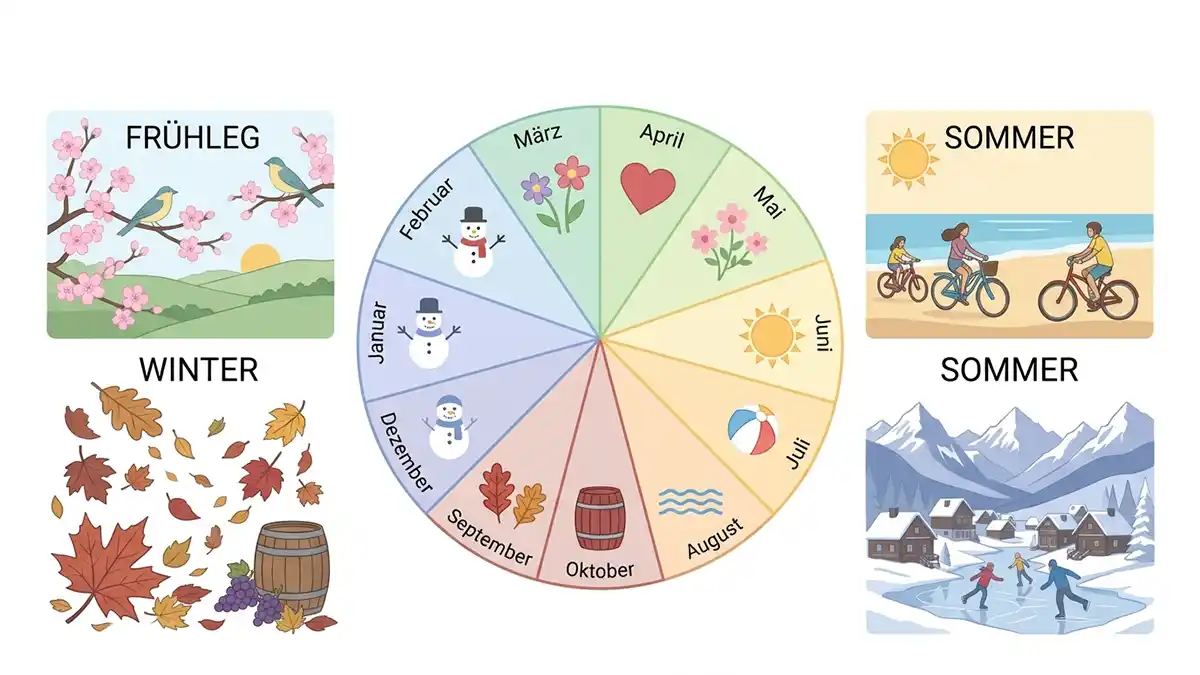
| Spring | der Frühling | FROO-ling | March, April, May |
| Summer | der Sommer | ZOM-er | June, July, August |
| Autumn / Fall | der Herbst | HEHRBST | September, October, November |
| Winter | der Winter | VIN-ter | December, January, February |
Notice the letter ü in Frühling. It is a typical German sound: round your lips as if you were saying “oo”, but keep your tongue in the position for “ee”. It also helps to picture each season in colors: green for spring, golden yellow for summer, orange and brown for autumn, and white for winter. You can learn the names of these shades in our lesson on colors in German.
You may wonder when a season really begins. There are two systems. The astronomical seasons start around March 20, June 21, September 22 and December 21. The meteorological seasons, which the German Weather Service (DWD) uses, are simply three full months each starting on the first of the month. That is the system shown in the table above, and it is the easiest to memorize.
To reinforce month vocabulary in your memory in a fun and engaging way, try our interactive German months game to test your vocabulary retention and improve your recall speed.
What Makes Each Season Special? Vocabulary and Sentences
Spring (Der Frühling)
The weather slowly gets warmer, flowers open and the days get longer. In Germany spring is connected with Easter (Ostern) and with asparagus season (Spargelzeit), which runs roughly from April to late June.
| English | German | Example |
|---|---|---|
| flower | die Blume | Im Frühling blühen die Blumen. |
| grass | das Gras | Das Gras wird grün. |
| bird | der Vogel | Die Vögel singen am Morgen. |
| to bloom | blühen | The flowers bloom in spring. |
| to grow | wachsen | Die Pflanzen wachsen schnell. |
Summer (Der Sommer)
Summer is warm with long days, and it is the season of travel, beaches, swimming pools and ice cream. The dates of the school summer holidays (die Sommerferien) differ from one German state to another. If you plan to travel, you will need words for trains, planes and cars, which you will find in our lesson on transportation in German.
| English | German | Example |
|---|---|---|
| sun | die Sonne | Die Sonne scheint den ganzen Tag. |
| beach | der Strand | Wir gehen zum Strand. |
| vacation | der Urlaub | Ich mache im August Urlaub. |
| ice cream | das Eis | Im Sommer esse ich gern Eis. |
| heat | die Hitze | Die Hitze ist heute sehr stark. |
Autumn (Der Herbst)
In autumn the leaves turn yellow, red and brown, and rain, wind and fog become more common. It is also harvest time (die Erntezeit) in Germany, with pumpkins, apples and mushrooms as typical produce. To learn the names of dishes and ingredients that belong to this season, take a look at our German food vocabulary guide.
| English | German | Example |
|---|---|---|
| leaf | das Blatt (die Blätter) | Im Herbst fallen die Blätter. |
| fog | der Nebel | Am Morgen gibt es oft Nebel. |
| pumpkin | der Kürbis | Der Kürbis ist typisch für den Herbst. |
| apple | der Apfel | Die Äpfel sind jetzt reif. |
| umbrella | der Regenschirm | Vergiss deinen Regenschirm nicht! |
Winter (Der Winter)
Winter is cold with short days. Temperatures can fall below zero, snow falls, and Christmas markets (Weihnachtsmärkte) open in most towns. Hot drinks are popular at this time of year, and you can expand your vocabulary with our lesson on drinks in German. When it gets really cold you say Mir ist kalt (I am cold) and talk about your hands, feet and ears, so it is also useful to review body parts in German.
| English | German | Example |
|---|---|---|
| snow | der Schnee | Im Winter liegt viel Schnee. |
| cold (noun) | die Kälte | Die Kälte ist heute stark. |
| coat | der Mantel | Ich ziehe einen warmen Mantel an. |
| hat | die Mütze | Die Mütze hält den Kopf warm. |
| gloves | die Handschuhe | Meine Handschuhe sind zu Hause. |
The Months in German (Die Monate)
The German word for “month” is der Monat, plural Monate. The year starts in January and ends in December, just like in English, and most month names look familiar, so they are easy to learn:
| No. | English | German | Approximate pronunciation | Season |
|---|---|---|---|---|
| 1 | January | der Januar | YAN-oo-ar | Winter |
| 2 | February | der Februar | FAY-broo-ar | Winter |
| 3 | March | der März | MEHRTS | Spring |
| 4 | April | der April | ah-PRIL | Spring |
| 5 | May | der Mai | MY | Spring |
| 6 | June | der Juni | YOO-nee | Summer |
| 7 | July | der Juli | YOO-lee | Summer |
| 8 | August | der August | ow-GOOST | Summer |
| 9 | September | der September | zep-TEM-ber | Autumn |
| 10 | October | der Oktober | ok-TOH-ber | Autumn |
| 11 | November | der November | no-VEM-ber | Autumn |
| 12 | December | der Dezember | day-TSEM-ber | Winter |
Two small notes. First, in Austria and parts of southern Germany January is often called Jänner instead of Januar. Second, Juni and Juli sound very similar, so some Germans say “YOO-lye” for Juli on the phone to avoid confusing the two months.
Pronunciation Tips for the Months and Seasons
- W sounds like English V: Winter is “VIN-ter”, not “WIN-ter”.
- J sounds like English Y: Januar, Juni and Juli start with “Y”, as in “yes”.
- Z sounds like “ts”: März and Dezember contain a “ts” sound, as in “cats”.
- S before a vowel sounds like Z: Sommer is “ZOM-er” and September is “zep-TEM-ber”.
- Ü is a special vowel: in Frühling and Mütze, round your lips and say “ee”.
- Ä is close to a short “e”: März sounds like “MEHRTS”.
Click the speaker icon next to each word in the tables to listen, then repeat it out loud. Pronunciation sticks through listening and repetition far more than through reading alone.
How to Say “In the Month” and “In the Season”: im, am and seit
The mistake beginners make most often is the preposition. The rule is simple: use im with months and seasons, and am with days and specific dates. Never say am Mai or im 5. Mai.
| Meaning | Pattern | Example | Translation |
|---|---|---|---|
| in a month or season | im + month/season | im Mai / im Sommer | in May / in summer |
| on a specific day | am + ordinal + month | am 5. Mai | on May 5th |
| from … to … | von … bis | von Juni bis August | from June to August |
| since | seit + month | seit Januar | since January |
| at the beginning of | Anfang + month | Anfang März | at the beginning of March |
| in the middle of | Mitte + month | Mitte Juli | in the middle of July |
| at the end of | Ende + month | Ende Dezember | at the end of December |
Note that Anfang, Mitte and Ende come directly before the month with no preposition. You say Anfang März, not in Anfang März.
How to Write and Say Dates in German
In Germany dates are written in the order day, month, year, separated by dots, so 01.11.2026 means November 1, 2026. When you say a date you use ordinal numbers: add -te to the numbers 2 to 19 and -ste from 20 onwards, with four exceptions: erste, dritte, siebte and achte. To include the weekday you also need to know the days of the week in German, for example: Heute ist Sonntag, der 1. November 2026.
| Number | Ordinal | Note |
|---|---|---|
| 1. | der erste | exception |
| 2. | der zweite | regular: number + te |
| 3. | der dritte | exception |
| 4. | der vierte | regular |
| 7. | der siebte | exception, the -en of sieben is dropped |
| 8. | der achte | exception, only one t |
| 15. | der fünfzehnte | 2 to 19: + te |
| 20. | der zwanzigste | 20 and above: + ste |
| 31. | der einunddreißigste | + ste |
After am the ordinal takes the ending -en: am ersten Mai, not am erste Mai, and am dritten Oktober. To ask for today’s date, say Der Wievielte ist heute? and the answer is Heute ist der 1. November. Another way to ask is Den Wievielten haben wir heute?
Time Words That Go with Seasons and Months
| English | German | Plural |
|---|---|---|
| year | das Jahr | die Jahre |
| month | der Monat | die Monate |
| week | die Woche | die Wochen |
| day | der Tag | die Tage |
| season | die Jahreszeit | die Jahreszeiten |
| date | das Datum | die Daten |
| calendar | der Kalender | die Kalender |
| birthday | der Geburtstag | die Geburtstage |
Two very useful sentences are Wann hast du Geburtstag? (When is your birthday?) and the answers Ich habe im Mai Geburtstag or Mein Geburtstag ist am 15. Mai.
Talking About the Weather in Each Season
Talking about the weather is the easiest way to start a conversation in Germany. The word for “weather” is das Wetter. Most weather phrases use the pronoun es:
| German | Meaning |
|---|---|
| Es ist warm. | It is warm. |
| Es ist heiß. | It is hot. |
| Es ist kühl. | It is cool. |
| Es ist kalt. | It is cold. |
| Es regnet. | It is raining. |
| Es schneit. | It is snowing. |
| Die Sonne scheint. | The sun is shining. |
| Es ist windig. | It is windy. |
| Es ist bewölkt. | It is cloudy. |
| Es sind 25 Grad. | It is 25 degrees. |
In a German weather forecast you often hear sentences such as Im Norden regnet es and Im Süden scheint die Sonne, because the forecast divides the country by region. To follow it easily, you need to learn directions in German such as Norden, Süden, Osten and Westen.
Holidays and Events Linked to Months and Seasons
Many German holidays and events belong to a particular month or season. Knowing them helps you understand news, ads, and days off from work or school:
| Event | German | Approximate date |
|---|---|---|
| New Year’s Day | Neujahr | January 1 |
| Carnival | Karneval / Fasching | February or March (changes every year) |
| Easter | Ostern | March or April (changes every year) |
| Labor Day | Tag der Arbeit | May 1 |
| Mother’s Day | Muttertag | Second Sunday in May |
| German Unity Day | Tag der Deutschen Einheit | October 3 |
| Christmas | Weihnachten | December 24 – 26 |
| New Year’s Eve | Silvester | December 31 |
| Ramadan | der Ramadan | Changes every year (Islamic calendar) |
| Eid al-Fitr | das Zuckerfest | Changes every year |
| Eid al-Adha | das Opferfest | Changes every year |
Keep in mind that some public holidays differ from state to state, and that Muslim holidays are generally not official days off in Germany, although many Muslims request time off from work or school for these days.
Ready-Made Sentences and a Short Dialogue
| German sentence | Translation |
|---|---|
| Im Sommer ist es sehr heiß. | In summer it is very hot. |
| Im Winter schneit es oft. | In winter it often snows. |
| Der Herbst beginnt im September. | Autumn begins in September. |
| Ich fahre im August nach Deutschland. | I am going to Germany in August. |
| Mein Geburtstag ist im Januar. | My birthday is in January. |
| Der Kurs beginnt Anfang März. | The course starts at the beginning of March. |
| Der Kurs endet Ende Juni. | The course ends at the end of June. |
| Ich lerne seit Januar Deutsch. | I have been learning German since January. |
| Welche Jahreszeit magst du am liebsten? | Which season do you like best? |
| Ich mag den Frühling am liebsten. | I like spring best. |
A Short Dialogue
| German | Translation |
|---|---|
| A: Wann hast du Geburtstag? | A: When is your birthday? |
| B: Ich habe am 15. Mai Geburtstag. Und du? | B: My birthday is on May 15th. And you? |
| A: Mein Geburtstag ist im Dezember. | A: My birthday is in December. |
| B: Welche Jahreszeit magst du am liebsten? | B: Which season do you like best? |
| A: Ich mag den Sommer am liebsten, weil es warm ist. | A: I like summer best because it is warm. |
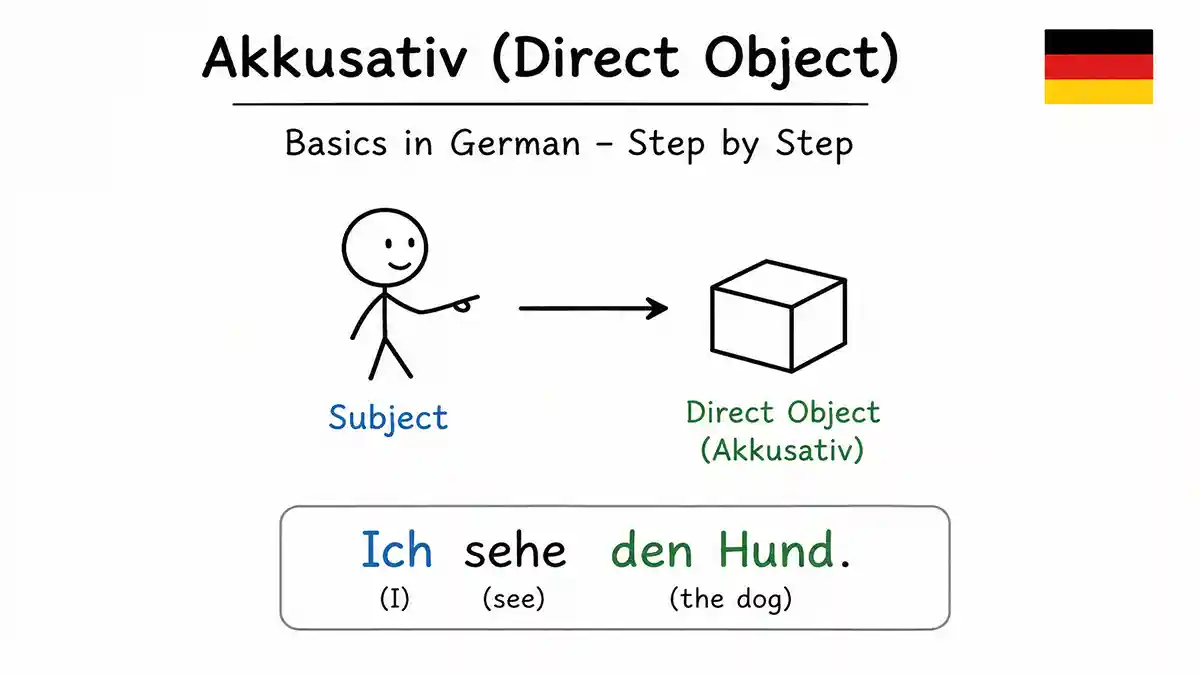
In the last two sentences we say den Sommer and den Frühling after the verb mögen, because the season is the direct object, so der changes to den. This is the same rule you learn for the accusative case at level A1.
Common Mistakes with the Seasons and Months in German
- Using am with a month: the correct form is im Mai, not am Mai.
- Using im with a specific date: the correct form is am 5. Mai, not im 5. Mai.
- Dropping the article before a season: say im Winter, never in Winter without the article.
- Writing them in lowercase: months and seasons are nouns, so they are always capitalized.
- Pronouncing W as English “w”: in German it sounds like “v”, so Winter is “VIN-ter”.
- Using the US date order: German dates go day, month, year, so 03.04. is April 3rd, not March 4th.
- Forgetting the dot after the day: write 5. Mai with a dot because the number is an ordinal.
- Mixing up der and die: every month and every season is masculine and takes der.
A Quick Exercise to Lock It In
- Ich habe ___ Mai Geburtstag.
- Mein Geburtstag ist ___ 5. Mai.
- ___ Winter schneit es oft.
- Ich lerne ___ Januar Deutsch.
- Der Kurs dauert ___ März ___ Mai.
For long-term memory try this simple plan: learn three months a day so that you finish all twelve in four days, write one sentence about the weather in German every day, hang a German calendar in your room, and say the date out loud every morning.
Conclusion: What to Remember from This Lesson
There are four seasons, Frühling, Sommer, Herbst and Winter, and twelve months from Januar to Dezember. All of them are masculine, take der, and are written with a capital letter. Use im with months and seasons, am with specific days, and seit for “since”, and remember the date order: day, month, year. Once you master this lesson, you have a basic building block for talking about appointments, weather, birthdays and holidays in any everyday situation.
Complete Guide from DeutschPlayLearn German From Scratch for Free: Complete A1 to Advanced GuideStarting your journey and need a clear, free roadmap? Explore proficiency levels from A1 to advanced, along with top methods, resources, and tips to start with confidence.Frequently Asked Questions About Seasons and Months in German
What are the seasons in German?
What are the months in German?
Which article do months and seasons take in German?
How do I say “in May” or “in winter” in German?
What is the difference between im and am with months and dates?
How do I write the date in German?
Are months and seasons capitalized in German?
References
Sources
- Duden - the reference German dictionary for checking spelling and grammatical gender.
- Deutscher Wetterdienst (DWD) - the German Weather Service, which uses the meteorological definition of the seasons.
- DW Learn German - free German courses from Deutsche Welle.
- Common European Framework of Reference for Languages (CEFR) - definition of levels A1 to C2.