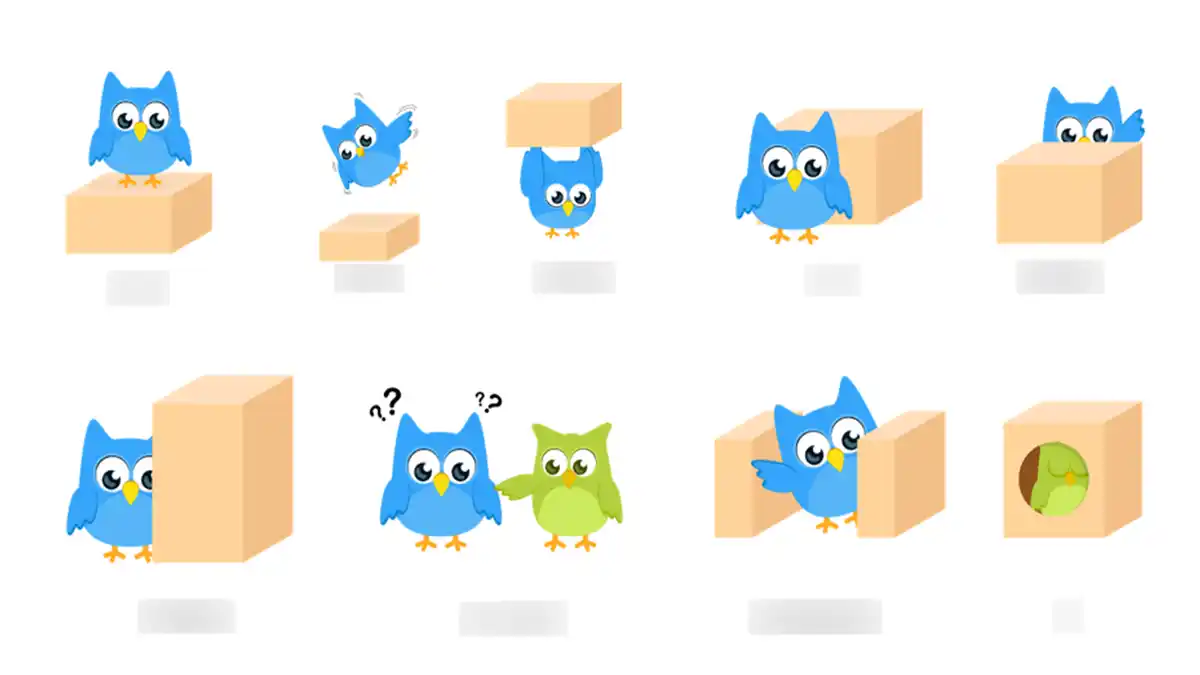
The Wechselpräpositionen at a Glance: The Nine and Their Rule
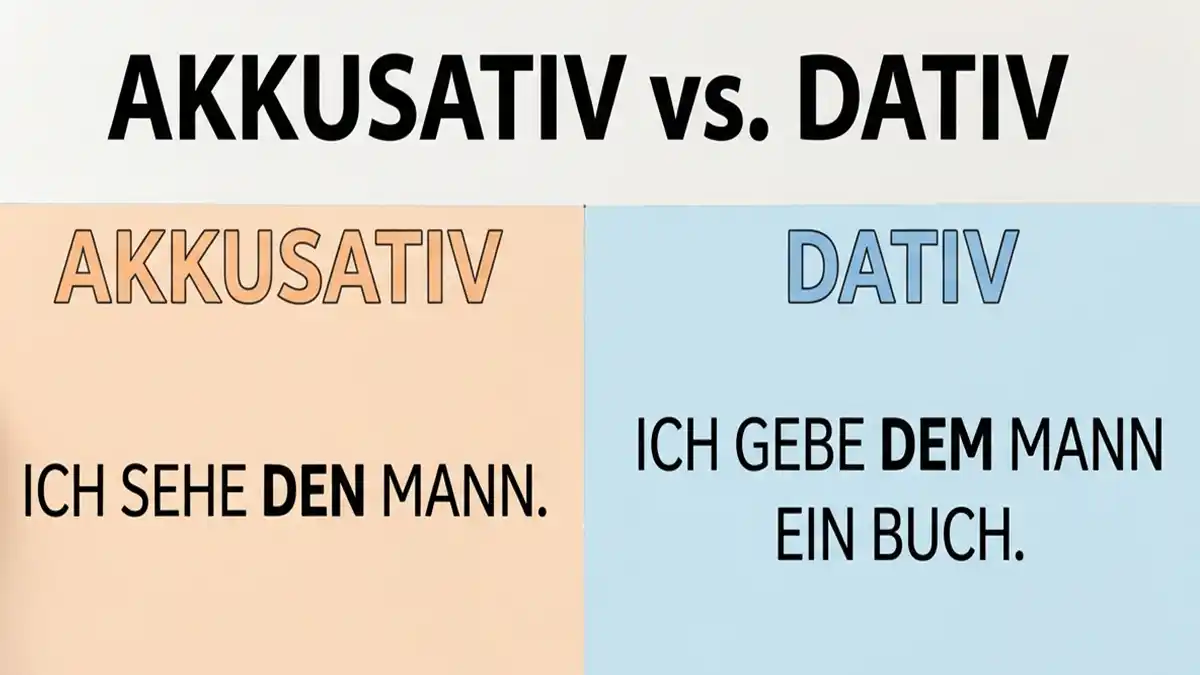
The Wechselpräpositionen are prepositions that do not stick to one case: they take the Akkusativ or the Dativ depending on meaning, hence the name “two-way”. There are nine: an, auf, hinter, in, neben, über, unter, vor, zwischen. The short rule: Wo? (where?) means Dativ, and Wohin? (where to?) means Akkusativ. To understand the difference between the two cases themselves, review the difference between Akkusativ and Dativ.
| Preposition | Meaning | Wo? → Dativ | Wohin? → Akkusativ |
|---|---|---|---|
| an | at / on (vertical surface) | Das Bild hängt an der Wand. | Ich hänge das Bild an die Wand. |
| auf | on (horizontal surface) | Das Buch liegt auf dem Tisch. | Ich lege das Buch auf den Tisch. |
| hinter | behind | Der Hund liegt hinter dem Sofa. | Der Hund läuft hinter das Sofa. |
| in | in / into | Ich bin in der Küche. | Ich gehe in die Küche. |
| neben | next to | Die Lampe steht neben dem Bett. | Ich stelle die Lampe neben das Bett. |
| über | above / over | Die Lampe hängt über dem Tisch. | Ich hänge die Lampe über den Tisch. |
| unter | under | Die Katze schläft unter dem Tisch. | Die Katze kriecht unter den Tisch. |
| vor | in front of | Das Auto steht vor dem Haus. | Ich stelle das Fahrrad vor das Haus. |
| zwischen | between | Der Stuhl steht zwischen dem Tisch und dem Schrank. | Ich stelle den Stuhl zwischen den Tisch und den Schrank. |
The Basic Rule: Wo or Wohin?
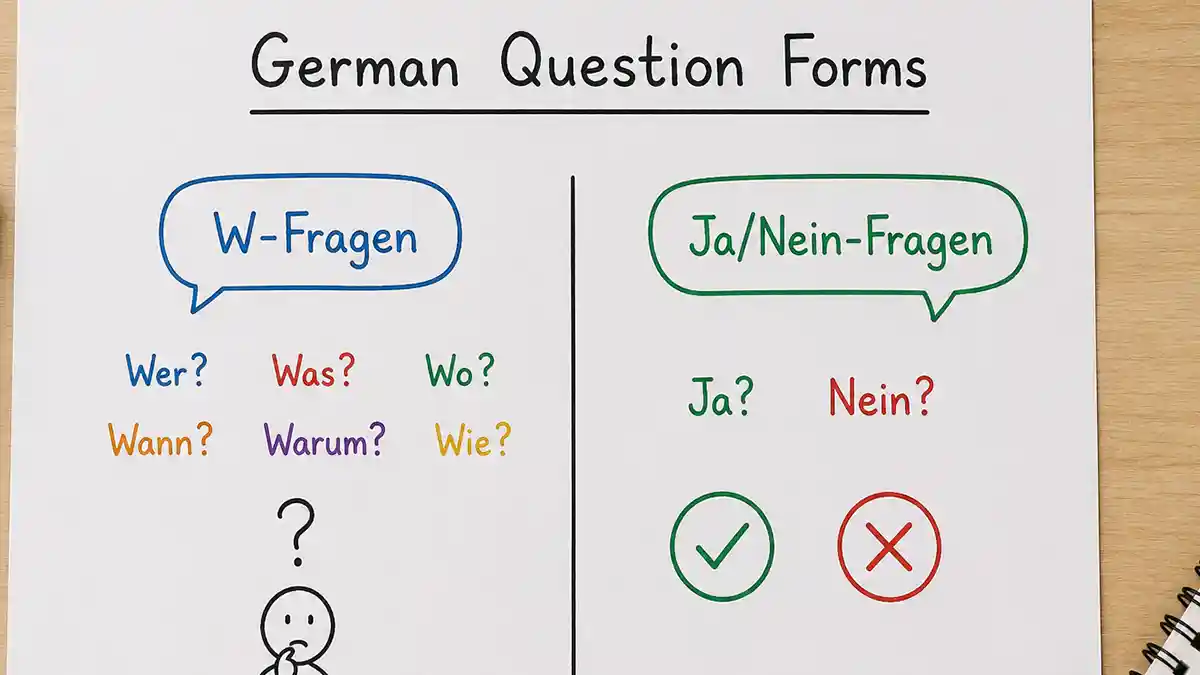
First ask yourself: do you describe a fixed position or a movement that changes the place? If you need to review question words, read question words in German.
| Question | Meaning | Case | The idea |
|---|---|---|---|
| Wo? | Where? | Dativ | Rest: the thing is in a place |
| Wohin? | Where to? | Akkusativ | Movement and direction: the thing moves to a new place |
To remember it, use this sentence: Wo? = rest = Dativ, Wohin? = movement = Akkusativ. The official Goethe-Institut cheat sheet describes the two cases in a playful way: Akkusativ is “in motion” and Dativ is “chilled”.
How Do the Articles Change? The Akkusativ and Dativ Table
| Gender | Akkusativ (Wohin?) | Dativ (Wo?) | Example |
|---|---|---|---|
| Masculine (der) | den | dem | auf den Tisch / auf dem Tisch |
| Feminine (die) | die | der | in die Küche / in der Küche |
| Neuter (das) | das | dem | neben das Bett / neben dem Bett |
| Plural (die) | die | den + n | auf die Regale / auf den Regalen |
Note that feminine, neuter and plural do not change in the Akkusativ; the only change there is in the masculine (den). The Dativ changes all the articles and adds an n to plural nouns unless they already end in n or s.
Position Verbs: legen, liegen and the Rest
There are pairs of verbs where the first expresses putting something somewhere (movement, so Akkusativ) and the second being in a place (rest, so Dativ). Understanding transitive verbs helps here, so review the most important Akkusativ verbs.
| Movement → Akkusativ | Rest → Dativ |
|---|---|
| legen: Ich lege das Buch auf den Tisch. | liegen: Das Buch liegt auf dem Tisch. |
| stellen: Ich stelle die Flasche auf den Tisch. | stehen: Die Flasche steht auf dem Tisch. |
| setzen: Ich setze das Kind auf den Stuhl. | sitzen: Das Kind sitzt auf dem Stuhl. |
| hängen: Ich hänge das Bild an die Wand. | hängen: Das Bild hängt an der Wand. |
Note that hängen has two forms with the same spelling: weak and transitive (to hang something) and strong and intransitive (to be hanging). And these are the forms of the other verbs:
| Verb | Past | Participle | Type |
|---|---|---|---|
| legen | legte | gelegt | weak transitive |
| liegen | lag | gelegen | strong intransitive |
| stellen | stellte | gestellt | weak transitive |
| stehen | stand | gestanden | strong intransitive |
| setzen | setzte | gesetzt | weak transitive |
| sitzen | saß | gesessen | strong intransitive |
| hängen (T) | hängte | gehängt | weak transitive |
| hängen (I) | hing | gehangen | strong intransitive |
Wo, Wohin and Woher: The Full Place System
The picture is not complete without the third question Woher? (where from?), answered by prepositions that always take the Dativ, such as aus and von. For more vocabulary about places and directions, read directions in German.
| Place | Wo? (where) | Wohin? (where to) | Woher? (where from) |
|---|---|---|---|
| Building (Supermarkt) | im Supermarkt | in den Supermarkt / zum Supermarkt | aus dem Supermarkt / vom Supermarkt |
| Home | zu Hause | nach Hause | von zu Hause |
| Country without article | in Deutschland | nach Deutschland | aus Deutschland |
| Doctor or person | beim Arzt | zum Arzt | vom Arzt |
| Sea | am Meer | ans Meer | vom Meer |
Contractions: am, im, ins, aufs
| Full form | Contraction | Case | Example |
|---|---|---|---|
| an + dem | am | Dativ | Ich sitze am Fenster. |
| an + das | ans | Akkusativ | Ich gehe ans Fenster. |
| in + dem | im | Dativ | Ich bin im Garten. |
| in + das | ins | Akkusativ | Ich gehe ins Kino. |
| auf + das | aufs | Akkusativ | Ich lege es aufs Bett. |
| hinter + dem / über + das / unter + dem / vor + dem | hinterm / übers / unterm / vorm | mostly colloquial | Das Auto steht vorm Haus. |
an vs auf vs in vs über: When to Use Each?
| Preposition | When? | Examples |
|---|---|---|
| an | An edge, a vertical surface or something right next to it | am Fenster, an der Wand, am Meer, an der Tür |
| auf | A horizontal surface, open places and events | auf dem Tisch, auf der Straße, auf dem Markt, auf einer Party |
| in | Inside an enclosed space, a defined area or an institution | in der Küche, in der Schule, im Supermarkt, in der Stadt |
| über | Above without touching, or crossing (Akkusativ) | Die Lampe hängt über dem Tisch. Ich gehe über die Brücke. |
As for vor, hinter and neben, they describe position relative to something else, and zwischen needs two things (or a plural). Practise by writing two sentences for each preposition: one with Wo and one with Wohin, which is the fastest way to lock them in.
Exceptions: Movement Within a Place and Fixed Expressions
Movement within the same place → Dativ
If something moves inside a single place and changes only its activity, not its place, it stays Dativ. Some university research points out that explaining the case by the verb alone is not enough, since the whole meaning of the sentence decides. Compare:
| Dativ (within the place) | Akkusativ (change of place) |
|---|---|
| Die Kinder spielen im Garten. | Die Kinder laufen in den Garten. |
| Er geht im Zimmer auf und ab. | Er geht ins Zimmer. |
| Der Fisch schwimmt im Teich. | Der Fisch schwimmt in den Teich. |
Non-local meanings
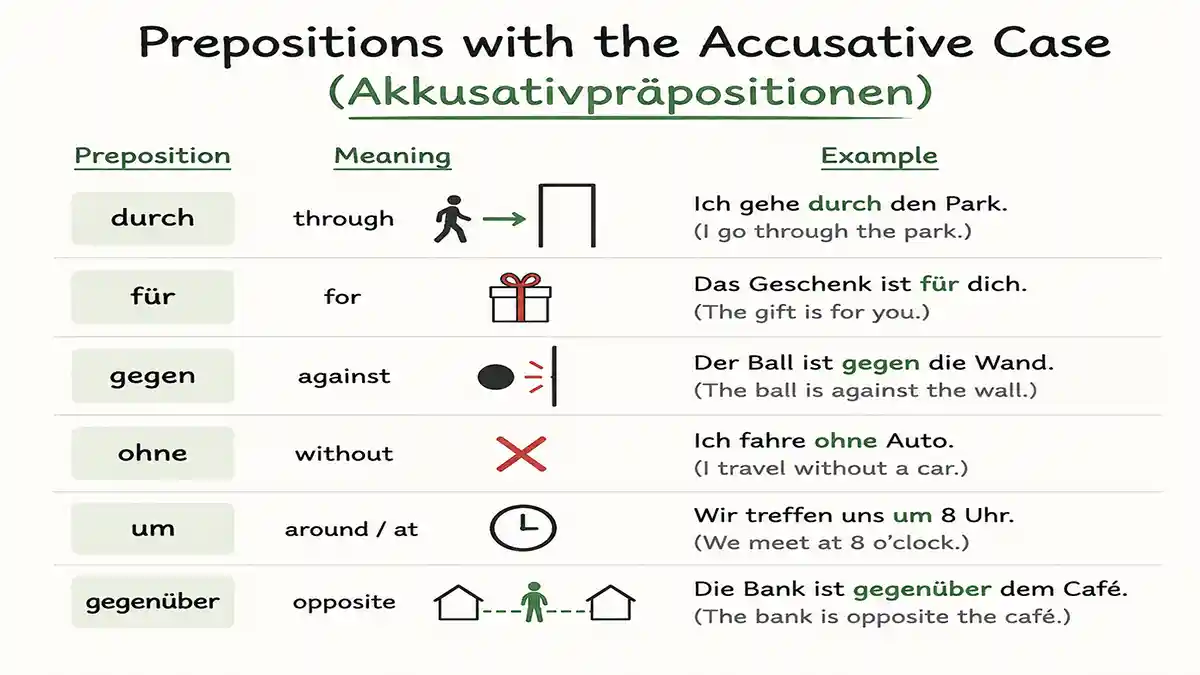
Outside place, fixed expressions control the case. In time, we mostly use the Dativ with am, im and vor. We have already contrasted this with the prepositions that take Akkusativ that never change. These are the most common cases:
| Expression | Case | Example |
|---|---|---|
| am Montag / im Mai | Dativ | Am Montag habe ich Unterricht. |
| vor einer Woche | Dativ | Vor einer Woche war ich dort. |
| warten auf | Akkusativ | Ich warte auf den Bus. |
| denken an | Akkusativ | Ich denke an dich. |
| sprechen über | Akkusativ | Wir sprechen über das Wetter. |
| sich freuen auf (the future) | Akkusativ | Ich freue mich auf den Urlaub. |
| Angst haben vor | Dativ | Sie hat Angst vor dem Hund. |
| teilnehmen an | Dativ | Er nimmt am Kurs teil. |
Some of these expressions are verbs that require a specific case, so you may benefit from reviewing the most important Dativ verbs.
Common Mistakes with Wechselpräpositionen
| Mistake | Correct | Reason |
|---|---|---|
| Ich gehe in der Schule. | Ich gehe in die Schule. | movement to a destination (Wohin) → Akkusativ |
| Das Buch liegt auf den Tisch. | Das Buch liegt auf dem Tisch. | rest (Wo) → Dativ |
| Ich stelle die Lampe neben dem Bett. | Ich stelle die Lampe neben das Bett. | stellen = putting (movement) → Akkusativ |
| Er wohnt in die Stadt. | Er wohnt in der Stadt. | wohnen describes a fixed location → Dativ |
| Ich fahre in Berlin. | Ich fahre nach Berlin. | a city without an article → nach |
| Ich warte auf dem Bus. | Ich warte auf den Bus. | fixed expression: warten auf + Akkusativ |
| Das Bild hängt an die Wand. | Das Bild hängt an der Wand. | intransitive hängen → Dativ |
Exercises with Answers
| # | Sentence | What to fill in |
|---|---|---|
| 1 | Ich gehe in ___ Küche. | die (feminine) |
| 2 | Ich bin in ___ Küche. | die (feminine) |
| 3 | Er legt das Handy auf ___ Tisch. | der (masculine) |
| 4 | Das Handy liegt auf ___ Tisch. | der (masculine) |
| 5 | Sie hängt das Bild an ___ Wand. | die (feminine) |
| 6 | Das Bild hängt an ___ Wand. | die (feminine) |
| 7 | Wir stellen den Stuhl neben ___ Fenster. | das (neuter) |
| 8 | Der Stuhl steht neben ___ Fenster. | das (neuter) |
| 9 | Die Katze schläft unter ___ Bett. | das (neuter) |
| 10 | Ich warte auf ___ Bus. | der (masculine) |
Click to show the answers
Tips for Memorizing the Two-Way Prepositions
- Memorize the nine like a short chant: an, auf, hinter, in, neben, über, unter, vor, zwischen.
- Ask Wo or Wohin before you choose the article in every sentence.
- Memorize the verb pairs legen/liegen, stellen/stehen, setzen/sitzen and hängen/hängen.
- Learn nouns with their articles because gender decides the article.
- Act the sentence out: put the book on the table and say Ich lege das Buch auf den Tisch, then leave it and say Das Buch liegt auf dem Tisch.
- Write down your mistakes and review them weekly.
Conclusion: How to Master the Wechselpräpositionen
The Wechselpräpositionen are nine prepositions that take the Akkusativ for direction (Wohin) and the Dativ for location (Wo). Ask the question first, then pick the article from the table by gender, and watch the verb pairs, movement within a place, fixed expressions and contractions.
And remember that mastering them comes from repeating full sentences, not from memorizing the rule alone.
To write more complex and natural sentences while avoiding common verb-placement errors in subordinate clauses, review how to use relative pronouns in German step by step.
Complete Guide from DeutschPlayLearn German From Scratch for Free: Complete A1 to Advanced GuideStarting your journey and need a clear, free roadmap? Explore proficiency levels from A1 to advanced, along with top methods, resources, and tips to start with confidence.Frequently Asked Questions About the Wechselpräpositionen
What are Wechselpräpositionen?
How do I choose between Akkusativ and Dativ with these prepositions?
What is the difference between legen and liegen?
Does the verb alone decide the case?
What does Woher mean and how do I answer it?
Why do we say nach Berlin and not in Berlin for direction?
What do am, im, ins and aufs mean?
Are these prepositions used for time?
How do I practise the Wechselpräpositionen?
References and Sources
Sources
- Goethe-Institut: Spickzettel „Wechselpräpositionen“ (PDF) - An official cheat sheet: why they are named so, the Wo and Wohin rule, and article changes.
- Lingoda: Wie man Wechselpräpositionen richtig verwendet - An explanation that the verb can signal state or movement and that Wo means Dativ.
- StudySmarter: Präpositionen - The rest-versus-movement rule and legen/liegen examples.
- Forum Wirtschaftsdeutsch: Präpositionen nach Kasus (PDF) - A classification of prepositions by case, including the two-way ones in local meaning.
- Radboud University: thesis on case choice with Wechselpräpositionen - A university thesis criticizing explaining case choice by the verb alone.
- EasyDeutsch: Vorschau 137 deutsche Präpositionen (PDF) - A sample of a book that presents the two-way prepositions one by one.
- QuillBot: Lokale Präpositionen mit Dativ und Akkusativ - A summary: Dativ for position and Akkusativ for direction.