Key Direction Words in German
| German | English | Approximate pronunciation |
|---|---|---|
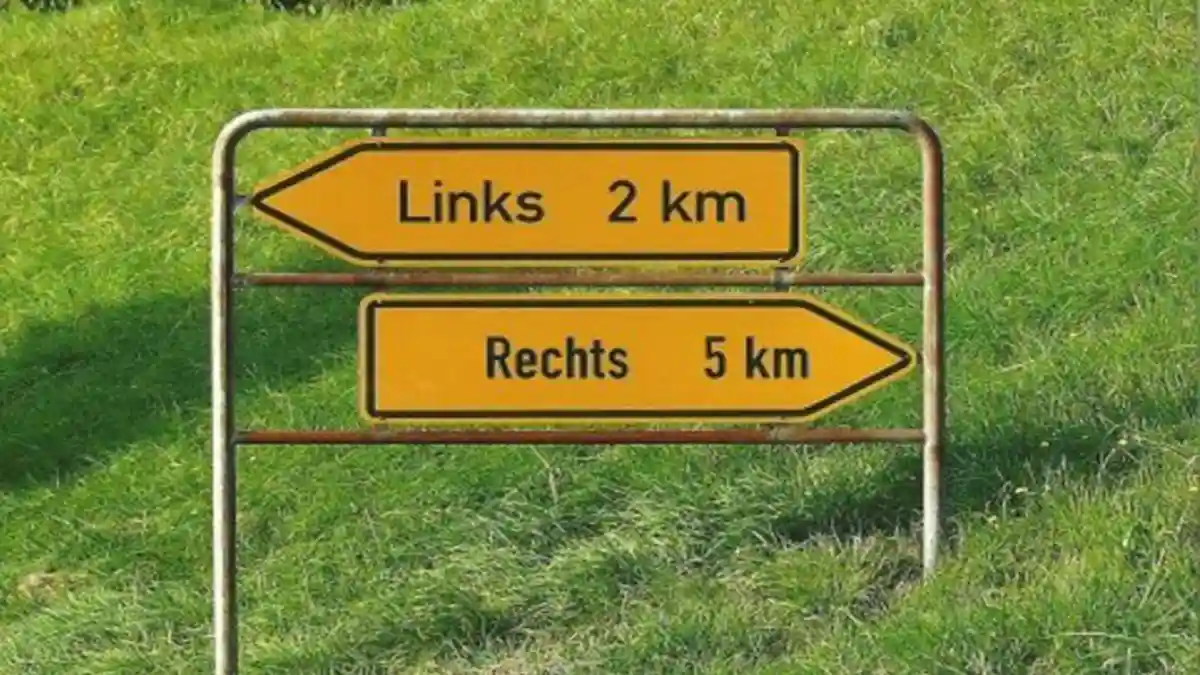
| links | left | lingks |
| rechts | right | rekhts |
| geradeaus | straight ahead | guh-RAH-deh-ows |
| zurück | back | tsoo-RÜK |
| hier | here | heer |
| dort / da | there | dort / dah |
| nah | near | nah |
| weit | far | vyte |
| die Ecke | corner | dee EK-uh |
| die Kreuzung | intersection | dee KROY-tsoong |
| die Ampel | traffic light | dee AHM-pel |
| die Straße | street | dee SHTRAH-suh |
| der Platz | square / plaza | dair plats |
| die Brücke | bridge | dee BRÜK-uh |
| der Kreisverkehr | roundabout | dair KRYS-fair-kair |
| die Seite | side | dee ZY-tuh |
| die Richtung | direction | dee RIKH-toong |
| der Zebrastreifen | pedestrian crossing | dair TSAY-brah-shtry-fen |
| die Fußgängerzone | pedestrian zone | dee FOOS-geng-er-tso-nuh |
| die Einbahnstraße | one-way street | dee YNE-bahn-shtrah-suh |
| die Sackgasse | dead end | dee ZAK-gah-suh |
Cardinal Directions in German
| German | English |
|---|---|
| der Norden | north |
| der Süden | south |
| der Osten | east |
| der Westen | west |
| der Nordosten | northeast |
| der Nordwesten | northwest |
| der Südosten | southeast |
| der Südwesten | southwest |
| nördlich von | north of |
| südlich von | south of |
How to Ask for Directions in German
| Question in German | English |
|---|---|
| Entschuldigung, wie komme ich zum Bahnhof? | Excuse me, how do I get to the train station? |
| Wo ist die nächste Apotheke? | Where is the nearest pharmacy? |
| Gibt es hier in der Nähe einen Supermarkt? | Is there a supermarket near here? |
| Können Sie mir bitte helfen? | Can you help me, please? |
| Ist es weit von hier? | Is it far from here? |
| Wie weit ist es bis zum Flughafen? | How far is it to the airport? |
| Wie lange dauert es zu Fuß? | How long does it take on foot? |
| Kann ich zu Fuß dorthin gehen? | Can I walk there? |
| Ich suche die Post. | I’m looking for the post office. |
| Ich habe mich verlaufen. | I’m lost. |
| Sind wir auf dem richtigen Weg zum Museum? | Are we on the right way to the museum? |
| Können Sie mir das auf der Karte zeigen? | Can you show me that on the map? |
If you are told to take a bus or a subway, you will need the vocabulary for verbs, tickets and stops. Our lesson on transportation in German covers Welche U-Bahn muss ich nehmen?, Muss ich umsteigen? and more.
How to Give Directions in German
| Sentence in German | English |
|---|---|
| Gehen Sie geradeaus. | Go straight ahead. |
| Biegen Sie links ab. | Turn left. |
| Biegen Sie rechts ab. | Turn right. |
| Nehmen Sie die zweite Straße links. | Take the second street on the left. |
| Gehen Sie bis zur Kreuzung. | Go as far as the intersection. |
| An der Ampel gehen Sie rechts. | At the traffic light, go right. |
| Überqueren Sie die Straße. | Cross the street. |
| Gehen Sie über die Brücke. | Go over the bridge. |
| Gehen Sie an der Kirche vorbei. | Walk past the church. |
| Folgen Sie der Straße. | Follow the street. |
| Am Kreisverkehr nehmen Sie die zweite Ausfahrt. | At the roundabout, take the second exit. |
| Es ist auf der linken Seite. | It’s on the left-hand side. |
| Es ist gleich um die Ecke. | It’s just around the corner. |
| Es ist etwa fünf Minuten zu Fuß. | It’s about five minutes on foot. |
| Sie können es nicht verfehlen. | You can’t miss it. |
| Gehen Sie zurück. | Go back. |
Direction Verbs: The Imperative with Sie and du
| Infinitive | With Sie (formal) | With du (informal) | Meaning |
|---|---|---|---|
| gehen | Gehen Sie | Geh | to walk / go |
| abbiegen | Biegen Sie … ab | Biege … ab | to turn |
| nehmen | Nehmen Sie | Nimm | to take |
| fahren | Fahren Sie | Fahr | to drive / go by vehicle |
| folgen | Folgen Sie | Folge | to follow |
| überqueren | Überqueren Sie | Überquere | to cross |
When to Use zum and zur
The word zu means “to” and is followed by the dative case. It merges with the article:
- zu + dem = zum for masculine and neuter nouns (der / das).
- zu + der = zur for feminine nouns (die).
| Noun | zu + article | English |
|---|---|---|
| der Bahnhof | zum Bahnhof | to the train station |
| der Supermarkt | zum Supermarkt | to the supermarket |
| das Krankenhaus | zum Krankenhaus | to the hospital |
| das Hotel | zum Hotel | to the hotel |
| die Apotheke | zur Apotheke | to the pharmacy |
| die Bank | zur Bank | to the bank |
| die Post | zur Post | to the post office |
| die Schule | zur Schule | to the school |
Once you reach a pharmacy or hospital you will need the words for doctors and symptoms, which our German medical vocabulary lesson covers.
Location Prepositions: Where Is the Place?
| Preposition | Meaning | Example |
|---|---|---|
| neben | next to | Die Bank ist neben der Post. |
| vor | in front of | Das Hotel ist vor dem Bahnhof. |
| hinter | behind | Die Apotheke ist hinter dem Supermarkt. |
| zwischen | between | Das Café ist zwischen der Bank und dem Park. |
| an | at / on (touching) | Das Museum ist an der Ecke. |
| gegenüber | opposite | Das Restaurant ist gegenüber dem Hotel. |
| in der Nähe von | near | Die Schule ist in der Nähe vom Park. |
| über | above / over | Die Brücke ist über dem Fluss. |
| unter | under | Die U-Bahn fährt unter der Stadt. |
City Places in German
| German | English |
|---|---|
| der Bahnhof | train station |
| die Bushaltestelle | bus stop |
| der Flughafen | airport |
| die Apotheke | pharmacy |
| das Krankenhaus | hospital |
| die Arztpraxis | doctor’s office |
| die Bank | bank |
| der Geldautomat | ATM |
| die Post | post office |
| der Supermarkt | supermarket |
| die Bäckerei | bakery |
| das Restaurant | restaurant |
| das Café | café |
| das Hotel | hotel |
| die Schule | school |
| die Universität | university |
| die Bibliothek | library |
| das Museum | museum |
| der Park | park |
| die Kirche | church |
| die Moschee | mosque |
| das Rathaus | town hall |
| die Polizei | police |
| die Tankstelle | gas station |
| das Kino | cinema |
When you arrive at a restaurant, café or bakery you will want to order food and drinks, so review German food vocabulary to complete the situation with confidence.
Distance, Order and Landmarks: Be More Precise
| German | English |
|---|---|
| die erste Straße | the first street |
| die zweite Straße | the second street |
| die dritte Straße | the third street |
| hundert Meter | one hundred meters |
| ein Kilometer | one kilometer |
| zehn Minuten zu Fuß | ten minutes on foot |
| mit dem Bus | by bus |
| das Gebäude | building |
| die Kirche | church |
| das Schild | sign |
One of the easiest ways to pinpoint a place is to mention a colorful landmark, such as Die Bäckerei ist im roten Haus (the bakery is in the red house) or Gehen Sie zum gelben Gebäude (go to the yellow building). Learn the color names and how they change with the noun in our lesson on colors in German.
When you ask whether a place is open, you will need the days: Die Apotheke ist am Sonntag geschlossen (the pharmacy is closed on Sunday). That is why we recommend reviewing the days of the week in German along with geöffnet (open) and geschlossen (closed).
Practical Dialogues About Directions in German
Dialogue 1: Asking for the train station (formal)
Dialogue 2: Looking for a pharmacy
Dialogue 3: Between friends (informal)
These dialogues are part of the everyday German conversations and expressions every learner needs, so combine them with greetings, introductions and shopping to build complete conversations.
Common Mistakes When Learning Directions in German
- Forgetting politeness: start with Entschuldigung or Entschuldigen Sie bitte before asking.
- Mixing up zum and zur: zum is for masculine and neuter nouns, zur for feminine ones.
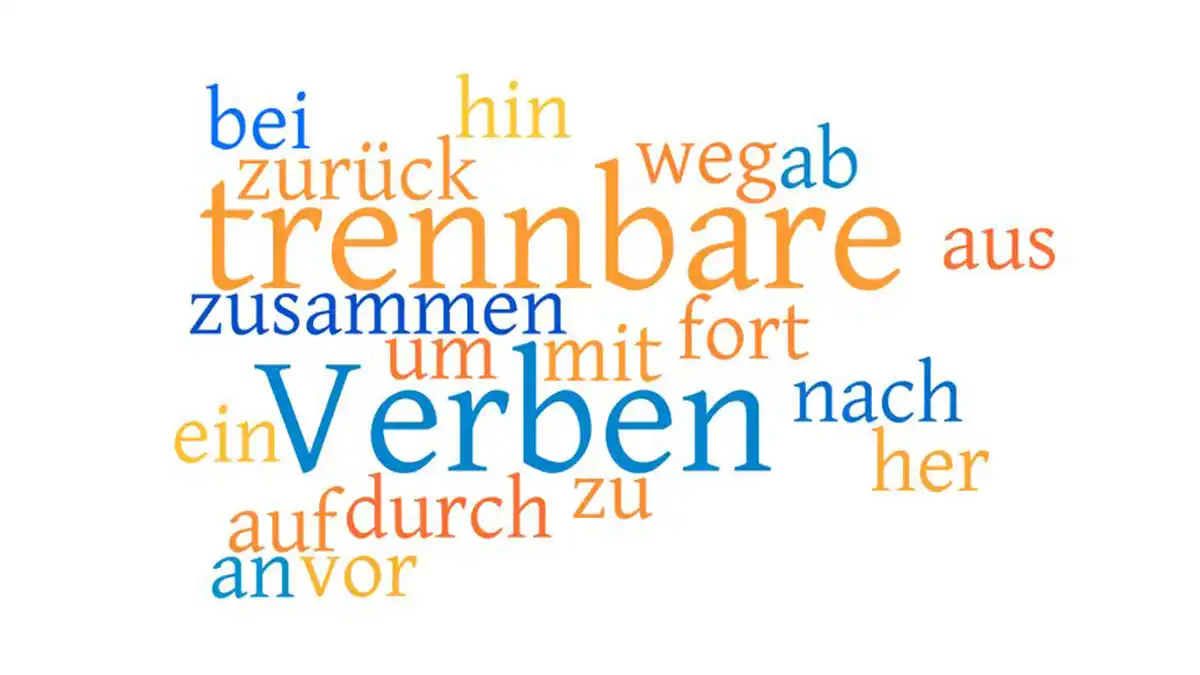
- Forgetting the separable prefix: say Biegen Sie links ab, not Biegen ab Sie links.
- Mixing up Sie and du: use Sie with strangers and older people, du with friends and children.
- Mixing up Wo and Wohin: Wo is for location (dative), Wohin is for movement toward a place (accusative).
Directions in German: Practice Exercises
Exercise 1: Choose the correct answer
- 1. What does geradeaus mean?
- 2. Wie komme ich ___ Bahnhof?
- 3. How do you say “Turn left” in German?
- 4. What does die Kreuzung mean?
- 5. Die Bank ist neben ___ Post.
Exercise 2: Fill in the blank
- Wie komme ich ___ Apotheke?
- Gehen Sie ___ bis zur Ampel.
- Das Hotel ist ___ dem Bahnhof.
- An der Kreuzung biegen Sie ___ ab.
- Das Café ist gleich um die ___.
Word bank: zur – geradeaus – vor – links – Ecke
Answers
Exercise 1: 1-b, 2-a, 3-a, 4-b, 5-b.
Exercise 2: 1. zur — 2. geradeaus — 3. vor — 4. links — 5. Ecke
How to Memorize Directions in German
Start with the three core words links, rechts, geradeaus, then add die Kreuzung, die Ampel and die Ecke. After that, memorize one question and one answer and swap only the place name: Wie komme ich zum / zur …?
Practice with a real map of your city: explain to yourself the way from your home to the nearest pharmacy, station or school in German. Over time you will understand signs, ask passers-by and give directions with confidence. To plan your next step, read about the German language levels from A1 to C2.
Complete Guide from DeutschPlayLearn German From Scratch for Free: Complete A1 to Advanced GuideStarting your journey and need a clear, free roadmap? Explore proficiency levels from A1 to advanced, along with top methods, resources, and tips to start with confidence.Frequently Asked Questions About Directions in German
What are the most important direction words in German?
How do I ask for directions in German?
When do I use zum and when zur?
What is the difference between Gehen Sie and Geh?
How do I say a place is near or far?
References
Sources
- DWDS German dictionary - to check word meanings and usage.
- PONS German–English dictionary - to look up vocabulary and translations.
- Duden dictionary - to confirm spelling and conjugation rules.