German Dativ Verbs: The Most Important Verbs with Examples from A1 to C1
If you follow the learning levels on the platform, you will notice that some German verbs are not followed by the direct object in Akkusativ as you might expect, but by Dativ. We say Ich helfe meinem Vater, not Ich helfe meinen Vater.
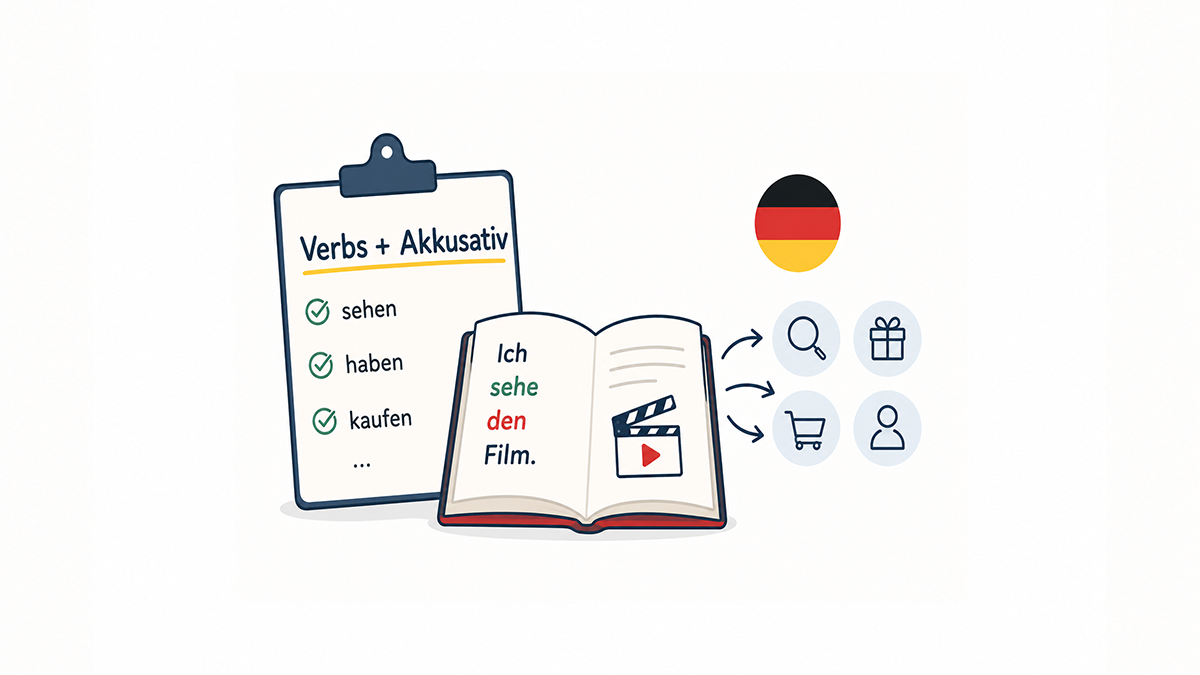
The challenge is that Dativ with verbs does not follow a rule you can guess from the meaning, so it is best to learn each verb together with its case. This guide covers the most important ones from A1 to C1. If you have not read the most important Akkusativ verbs yet, we recommend starting there for comparison.
Study tip: All verbs and examples include interactive audio buttons that read the words aloud in clear German to train your ear and speed up memorization.
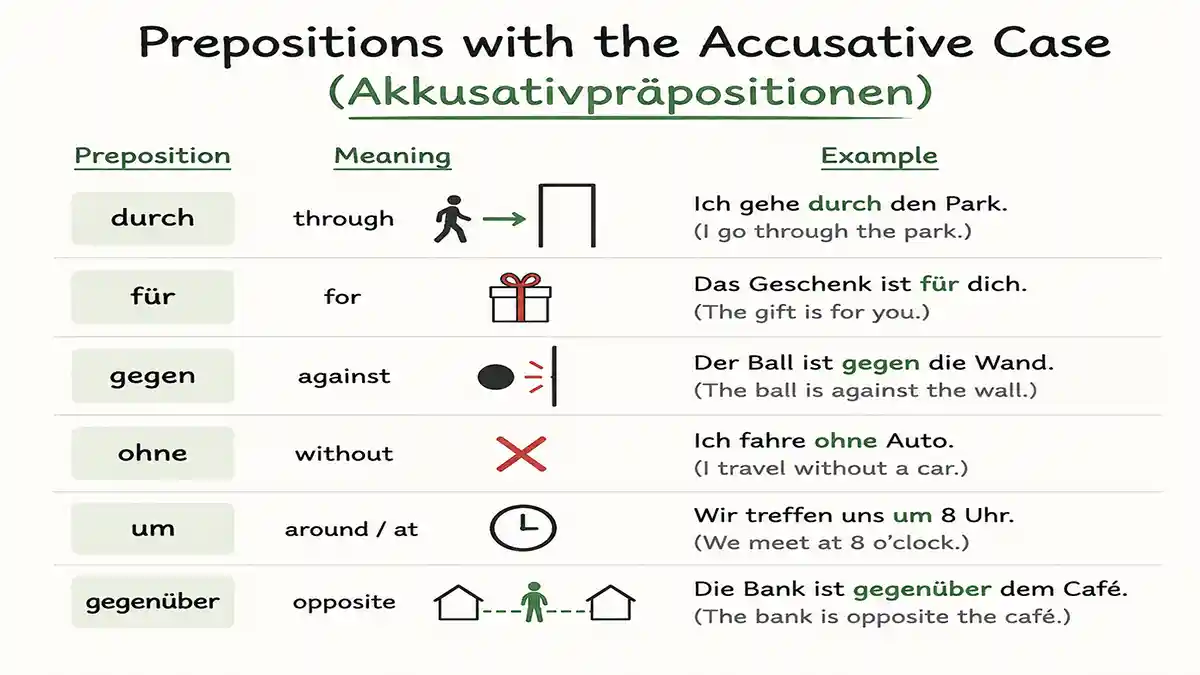
Besides verbs, Dativ is tied to fixed prepositions such as (mit, bei, nach, von, zu, aus, seit), while (für, durch, ohne, gegen, um) take Akkusativ, as explained in prepositions with the accusative case. You can conjugate any verb on this list with the verb conjugation tool.
1. How Many Dativ Verbs Are There in German?
- helfen : to help
- antworten : to answer
- folgen : to follow
- gefallen : to like
- gehören : to belong to
- glauben : to believe
- danken : to thank
- fehlen : to miss / to be absent
- passen : to fit / to suit
- vertrauen : to trust
- verzeihen : to forgive
- widersprechen : to contradict
- zustimmen : to agree
- gratulieren : to congratulate
- begegnen : to meet
- gehorchen : to obey
- nützen : to be useful
- dienen : to serve
2. What Is Dativ in German?
- Ich helfe meinem Vater. : I help my father. (meinem Vater receives the help, so it is Dativ)
- Ich danke dir. : I thank you. (dir is a Dativ pronoun because danken requires Dativ)
3. Dativ Verbs vs Akkusativ Verbs
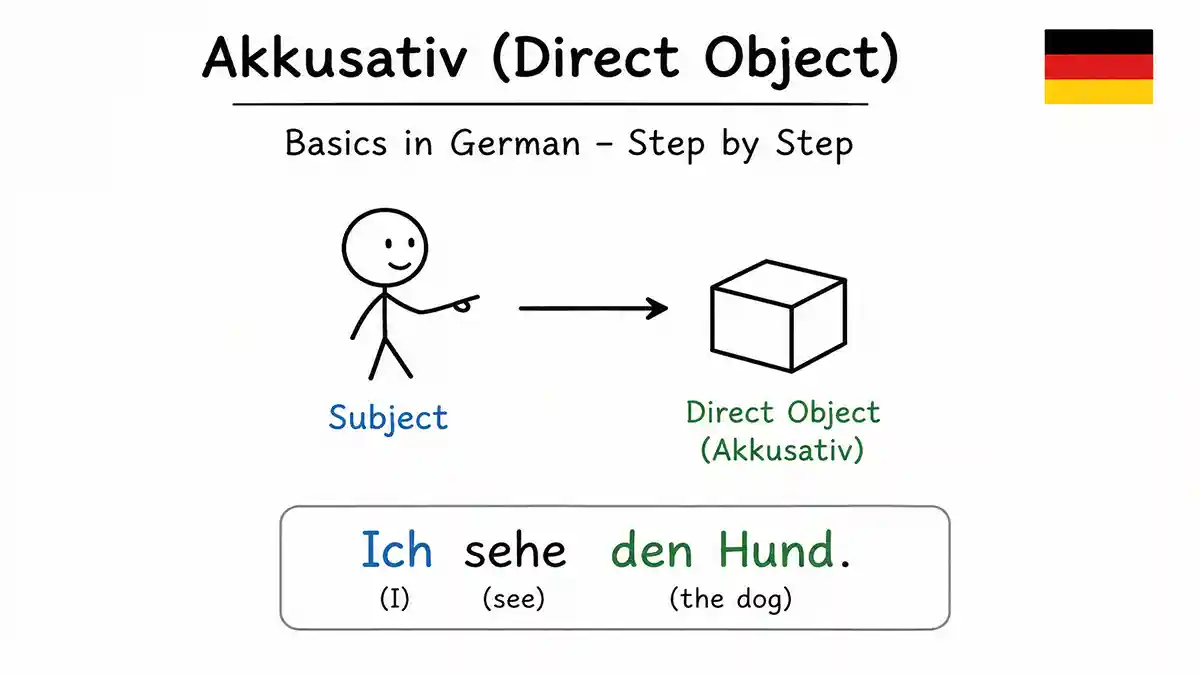
- Ich sehe den Mann. : I see the man. (sehen + Akkusativ)
- Ich helfe dem Mann. : I help the man. (helfen + Dativ)
- Ich helfe meinen Vater. ❌ Ich helfe meinem Vater. ✅
4. The Dativ Rule: Articles and Pronouns
| Gender | Nominativ | Dativ | Example |
|---|---|---|---|
| Masculine | der Mann | dem Mann | Ich helfe dem Mann. |
| Feminine | die Frau | der Frau | Ich helfe der Frau. |
| Neuter | das Kind | dem Kind | Ich helfe dem Kind. |
| Plural | die Kinder | den Kindern | Ich helfe den Kindern. |
| Subject | ich | du | er | sie | es | wir | ihr | sie (plural) | Sie |
|---|---|---|---|---|---|---|---|---|---|
| Dativ | mir | dir | ihm | ihr | ihm | uns | euch | ihnen | Ihnen |
- Er hilft mir. : He helps me.
- Ich glaube dir. : I believe you.
- Wir vertrauen ihm. : We trust him.
- Sie antwortet ihr. : She answers her.
- Der Lehrer hilft uns. : The teacher helps us.
- Ich gratuliere euch. : I congratulate you all.
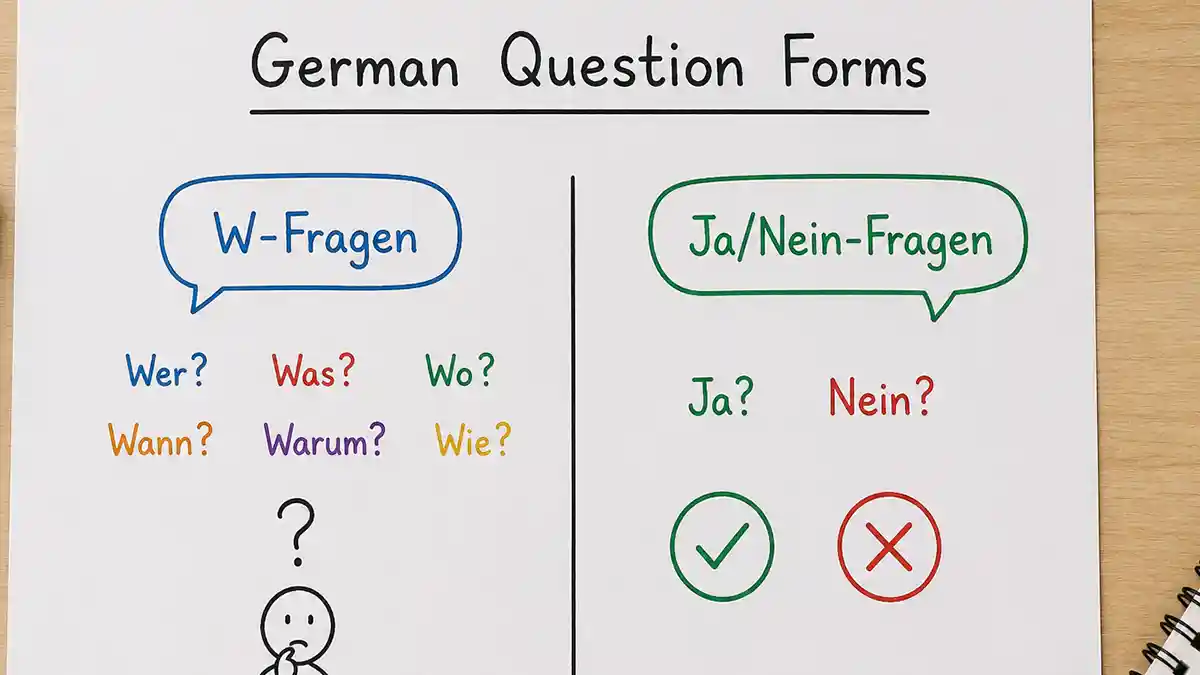
5. The Dativ Question: Wem?
| Question | Verb | Answer |
|---|---|---|
| Wem antwortet sie? | antworten | Sie antwortet ihrem Vater. |
| Wem gehört das Buch? | gehören | Es gehört mir. |
| Wem gratulierst du? | gratulieren | Ich gratuliere dem Sieger. |
| Wem hilft der Mann? | helfen | Er hilft Ludwina. |
6. The Most Important Dativ Verbs by Level
1. Dativ verbs at level A1
- antworten : to answer
- Ich antworte dir später. : I will answer you later. (antworten + Dativ)
- folgen : to follow
- Ich folge dem Mann unauffällig. : I follow the man discreetly.
- gefallen : to be pleasing to / to like
- Gefällt dir deine neue Wohnung? : Do you like your new apartment? (The person who likes something takes Dativ: dir.)
- gehören : to belong to
- Das Auto gehört dem neuen Nachbarn. : The car belongs to the new neighbor.
- glauben : to believe (someone)
- Warum glaubst du mir nicht? : Why don't you believe me? (mir is Dativ here.)
- helfen : to help
- Sie hilft dem alten Mann. : She helps the old man. (One of the most important Dativ verbs for A1: helfen + Dativ.)
- passieren : to happen to
- Passiert dir das öfters? : Does that happen to you often? (dir is Dativ here.)
- raten : to advise
- Der Arzt hat meinem Opa geraten, sich auszuruhen. : The doctor advised my grandfather to rest. (jemandem raten = to advise someone.)
- schmecken : to taste good to
- Pizza schmeckt meinem Vater nicht. : My father doesn't like pizza. (The person tasting takes Dativ: meinem Vater.)
- wehtun : to hurt
- Ich werde dir wehtun. : I will hurt you. (wehtun + Dativ (separable verb: tut ... weh).)
- zuhören : to listen to
- Die Schüler hören dem Lehrer zu. : The students listen to the teacher. (Separable verb: hören ... zu, and it takes Dativ.)
2. Dativ verbs at level A2
- befehlen : to command
- Der General befiehlt dem Soldaten zu schießen. : The general orders the soldier to shoot.
- danken : to thank
- Ich danke dir für deine Hilfe. : I thank you for your help. (jemandem danken; the reason takes für + Akkusativ.)
- fehlen : to miss / to be missing
- Du fehlst mir! : I miss you! (The sentence structure differs from English: the person who misses takes Dativ.)
- nachlaufen : to run after
- Ich laufe dem Ball nach. : I run after the ball.
- nachrennen : to race after
- Ich renne dem Auto nach. : I race after the car.
- hinterherlaufen : to run/walk after
- Ich laufe dem Ball hinterher. : I run after the ball.
- hinterherrennen : to race after
- Ich renne dem Auto hinterher. : I race after the car.
- passen : to fit / to suit
- Die Hose passt mir nicht mehr. Ich bin zu dick. : The pants don't fit me anymore. I'm too fat. (passen + Dativ)
- vertrauen : to trust
- Ich vertraue meinem Bruder. : I trust my brother.
- vergeben : to forgive
- Ich kann meinem Mann den Seitensprung nicht vergeben. : I cannot forgive my husband for the affair.
- verzeihen : to forgive
- Ich kann meinem Mann den Seitensprung nicht verzeihen. : I cannot forgive my husband for the affair.
- widersprechen : to contradict / to disagree with
- Der Chef widerspricht seinem Mitarbeiter. : The boss contradicts his employee.
- zusehen : to watch
- Kann ich dir bei deiner Arbeit zusehen? : Can I watch you work? (With bei: jemandem bei etwas zusehen.)
- fremdgehen : to cheat on one's partner
- Bist du mir fremdgegangen? : Did you cheat on me?
- zustimmen : to agree with
- Der Politiker stimmt dem neuen Gesetz zu. : The politician agrees to the new law. (Separable verb: stimmt ... zu; the person or thing agreed with takes Dativ.)
3. Dativ verbs at level B1
- ähneln : to resemble
- Ich ähnele meinem Bruder. : I resemble my brother.
- begegnen : to meet / to run into
- Ich bin heute Morgen zufällig einem alten Freund begegnet. : This morning I ran into an old friend by chance.
- beistehen : to stand by / to support
- Ich stehe dir in dieser schweren Zeit bei. : I stand by you in this difficult time.
- beitreten : to join
- Ich bin gestern einem Fußballclub beigetreten. : Yesterday I joined a football club.
- drohen : to threaten
- Der Lehrer droht den Schülern mit extra Hausaufgaben. : The teacher threatens the students with extra homework.
- entgegengehen : to go to meet
- Ich gehe dir schon mal entgegen. : I'll go ahead and meet you.
- entgegenfahren : to drive to meet
- Er fährt dir schon entgegen. : He is already driving to meet you.
- entgegenkommen : to come to meet
- Kommst du mir entgegen? : Will you come to meet me?
- gratulieren : to congratulate
- Ich gratuliere dir zum Geburtstag. : Happy birthday to you. (Key structure: jemandem zu etwas gratulieren.)
- sich nähern : to approach
- Der Löwe nähert sich seiner Beute. : The lion approaches its prey.
- sich schaden : to harm oneself
- Du schadest dir selbst mit deinem schlechten Verhalten. : You harm yourself with your bad behavior.
4. Dativ verbs at level B2
- einfallen : to occur to
- Fällt dir noch etwas ein? : Can you think of anything else? (Very common expression: Was fällt dir ein? = "How dare you?" (literally: what occurred to you?).)
- gehorchen : to obey
- Der Soldat gehorcht dem General. : The soldier obeys the general.
- genügen : to be enough
- Das genügt mir. : That is enough for me.
- guttun : to do good
- Ein Urlaub würde dir guttun. : A vacation would do you good. (Separable verb: tut ... gut.)
- nützen : to be useful to
- Der Sieg nützt dem Team nichts mehr. : The victory no longer helps the team at all.
- ausweichen : to dodge / to avoid
- Du konntest dem Hindernis zum Glück noch ausweichen. : Luckily you could still dodge the obstacle.
5. Dativ verbs at level C1
- dienen : to serve
- Wie kann ich Ihnen dienen? : How may I serve you? (Also used in formal and academic contexts.)
- gelingen : to succeed
- Das Bild ist dir wirklich gut gelungen. : The picture really turned out well for you. (The person who succeeds takes Dativ: dir.)
- misslingen : to fail
- Der Test ist mir total misslungen. : The test totally went wrong for me.
7. Quick Table of the Most Important Dativ Verbs
| Verb | Meaning | Short example |
|---|---|---|
| helfen | to help | Ich helfe dir. |
| antworten | to answer | Ich antworte ihm. |
| folgen | to follow | Ich folge ihm. |
| gefallen | to like | Das gefällt mir. |
| gehören | to belong to | Das gehört mir. |
| glauben | to believe | Ich glaube dir. |
| danken | to thank | Ich danke dir. |
| fehlen | to miss | Du fehlst mir. |
| passen | to fit | Das passt mir. |
| vertrauen | to trust | Ich vertraue dir. |
| verzeihen | to forgive | Ich verzeihe dir. |
| widersprechen | to contradict | Ich widerspreche dir. |
| zustimmen | to agree | Ich stimme dir zu. |
| gratulieren | to congratulate | Ich gratuliere dir. |
| begegnen | to meet | Ich begegne ihm. |
| gehorchen | to obey | Ich gehorche ihm. |
| nützen | to be useful | Das nützt mir. |
| dienen | to serve | Wie kann ich Ihnen dienen? |
| gelingen | to succeed | Das gelingt mir. |
| misslingen | to fail | Das misslingt mir. |
8. How to Memorize Dativ Verbs Easily
- Ich helfe meinem Bruder. : I help my brother.
- Ich danke meiner Mutter. : I thank my mother.
- Ich vertraue meinem Freund. : I trust my friend.
- Ich gratuliere dir zum Geburtstag. : Happy birthday to you.
9. Frequently Asked Questions (FAQ)
How many Dativ verbs are there in German?
There is no fixed number. It is best to focus on the most commonly used verbs such as helfen, antworten, danken, gefallen and gehören.
How do I know a verb needs Dativ?
No single rule covers every verb, so memorize each verb with its case (e.g. jemandem helfen). The question Wem? helps you recognize the person in Dativ.
What is the difference between helfen and sehen in terms of case?
helfen takes Dativ (Ich helfe dem Mann), while sehen takes Akkusativ (Ich sehe den Mann), even though "the man" is the object in English in both cases.
What happens to articles in Dativ?
Masculine and neuter: dem; feminine: der; plural: den, usually with -n added to the noun (den Kindern).
What are the Dativ pronouns?
mir, dir, ihm, ihr, ihm, uns, euch, ihnen, Ihnen.
Can a verb take both Dativ and Akkusativ?
Yes, some verbs take both, e.g. Ich gebe dem Kind einen Apfel (Dativ for the person, Akkusativ for the thing). See the basics of the object for the difference between direct and indirect objects.
Do Dativ verbs appear only at A1?
No. They start at A1 (like helfen and gefallen) and continue up to C1 (like gelingen and dienen).
10. Books and Curricula (References)
Trusted Academic and Linguistic Sources
Dativ verbs and their usage were compiled based on internationally recognized standard curricula:
- Duden Online Wörterbuch - the first reference for German verb rules, usage and conjugation.
- DWDS (Digitales Wörterbuch der deutschen Sprache) - the unified language database for German words and verbs.
- Menschen A1 Kursbuch - standard German course book from Hueber.
- Netzwerk neu A1 - German course series with core grammar from Klett.
- Goethe-Institut Lernmaterialien - CEFR frameworks and exams from the Goethe-Institut.
- telc Deutsch A1 Grammatik - European language proficiency and grammar exam specifications.