Colors in German: Color Names and How to Use Them in Sentences
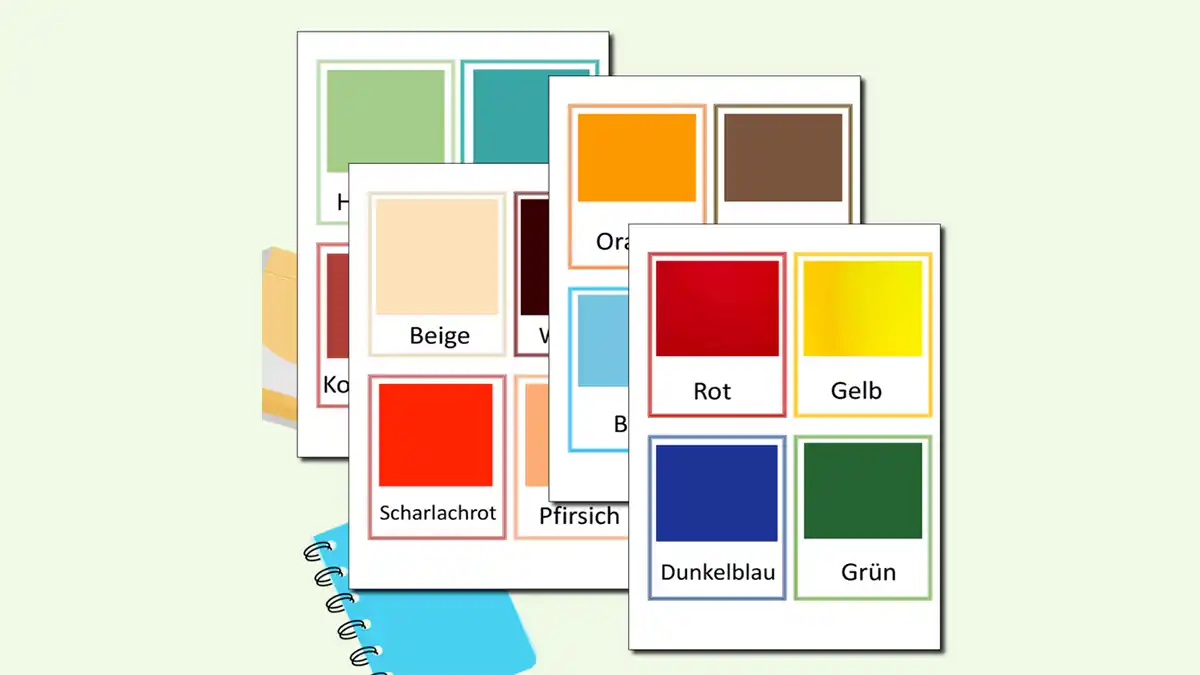
Colors are core vocabulary every German learner needs from the start: you use them constantly when talking about clothes, describing a person or a house, or shopping. They are part of Lektion 5 at level A1 in the learning levels on the platform.
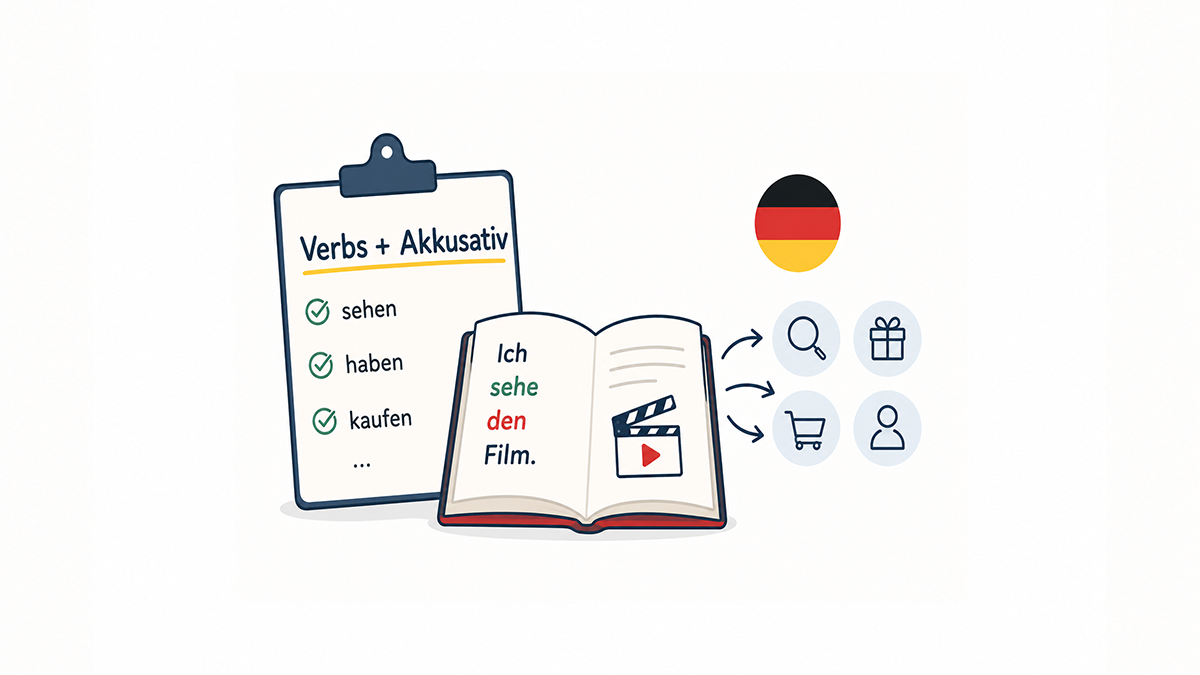
In this lesson you will learn color names with audio and meanings, the difference between using a color as a noun and as an adjective, and how the adjective ending changes by position. You can practice the words in the Colors game (Die Farben).
Study tip: All colors and examples include interactive audio buttons that read the words aloud in clear German for faster memorization.
For questions like Welche Farbe hat das? see forming questions in German, and for shopping and conversation phrases browse daily conversations and expressions.
1. The Most Important Colors in German
| German | English |
|---|---|
| rot | red |
| blau | blue |
| gelb | yellow |
| grün | green |
| schwarz | black |
| weiß | white |
| orange | orange |
| rosa | pink |
| pink | bright pink |
| lila | purple |
| violett | violet |
| braun | brown |
| grau | gray |
| beige | beige |
| türkis | turquoise |
| gold | gold |
| silber | silver |
2. Basic Colors in German
- rot : red
- Das Auto ist rot. : The car is red.
- Ich trage ein rotes T-Shirt. : I am wearing a red T-shirt.
- blau : blue
- Der Himmel ist blau. : The sky is blue.
- Ich habe einen blauen Stift. : I have a blue pen.
- gelb : yellow
- Die Banane ist gelb. : The banana is yellow.
- Das gelbe Auto ist neu. : The yellow car is new.
- grün : green
- Das Gras ist grün. : The grass is green.
- Ich möchte ein grünes T-Shirt kaufen. : I want to buy a green T-shirt.
- schwarz : black
- Mein Auto ist schwarz. : My car is black.
- Er trägt eine schwarze Jacke. : He is wearing a black jacket.
- weiß : white
- Der Schnee ist weiß. : The snow is white.
- Sie trägt ein weißes Kleid. : She is wearing a white dress.
3. More Important Colors in German
- braun : Der Tisch ist braun. The table is brown.
- grau : Ich habe einen grauen Pullover. I have a gray sweater.
- orange : Die Orange ist orange. The orange is orange.
- rosa : Das Mädchen trägt ein rosa Kleid. The girl is wearing a pink dress.
- lila : Meine Tasche ist lila. My bag is purple.
- türkis : Das Meer ist türkis. The sea is turquoise.
- beige : Ich möchte eine beige Hose kaufen. I want to buy beige pants.
- gold : Der Ring ist gold. The ring is gold.
- silber : Das Auto ist silber. The car is silver.
4. How to Ask About the Color of Something in German
- Welche Farbe hat das? : What color is this?
- Welche Farbe hat das Auto? : What color is the car?
- Welche Farbe hat dein T-Shirt? : What color is your T-shirt?
- Welche Farbe hat deine Tasche? : What color is your bag?
- Das Auto ist rot. : The car is red.
- Mein T-Shirt ist blau. : My T-shirt is blue.
- Meine Tasche ist schwarz. : My bag is black.
- Welche Farbe magst du? : Which color do you like?
- Ich mag die Farbe Blau. : I like the color blue.
- Welche Farben magst du? : Which colors do you like?
- Ich mag Blau und Grün. : I like blue and green.
5. How to Say "My Favorite Color" in German
- Meine Lieblingsfarbe ist Blau. : My favorite color is blue.
- Meine Lieblingsfarbe ist Schwarz. : My favorite color is black.
- Meine Lieblingsfarbe ist Grün. : My favorite color is green.
- Was ist deine Lieblingsfarbe? : What is your favorite color?
- Welche Farbe magst du am liebsten? : Which color do you like best?
6. Colors as Adjectives in German
- Das Auto ist rot. : The car is red.
- Die Tasche ist schwarz. : The bag is black.
- Die Häuser sind weiß. : The houses are white.
- Das ist ein rotes Auto. : This is a red car. (rot → rotes)
- Das ist eine schwarze Tasche. : This is a black bag. (schwarz → schwarze)
| Gender | German | English |
|---|---|---|
| Masculine | der rote Stift | the red pen |
| Masculine | der blaue Pullover | the blue sweater |
| Masculine | der schwarze Tisch | the black table |
| Feminine | die rote Tasche | the red bag |
| Feminine | die blaue Jacke | the blue jacket |
| Feminine | die grüne Hose | the green pants |
| Neuter | das rote Auto | the red car |
| Neuter | das blaue Kleid | the blue dress |
| Neuter | das schwarze T-Shirt | the black T-shirt |
| Plural | die roten Schuhe | the red shoes |
| Plural | die blauen Autos | the blue cars |
| Plural | die grünen T-Shirts | the green T-shirts |
7. Clothes and Light and Dark Colors
- Ich trage ein schwarzes T-Shirt. : I am wearing a black T-shirt.
- Sie trägt eine rote Jacke. : She is wearing a red jacket.
- Er trägt eine blaue Jeans. : He is wearing blue jeans.
- Meine Schuhe sind weiß. : My shoes are white.
- Meine Hose ist grau. : My pants are gray.
- Ich möchte ein grünes Kleid kaufen. : I want to buy a green dress.
- hellblau : light blue
- dunkelblau : dark blue
- hellgrün : light green
- dunkelgrün : dark green
- hellrot : light red
- dunkelrot : dark red
- Ich mag Hellblau. : I like light blue.
- Mein Auto ist dunkelblau. : My car is dark blue.
- Sie trägt ein hellgrünes Kleid. : She is wearing a light green dress.
- Das Kleid ist bunt. : The dress is colorful.
- Ich mag bunte Kleidung. : I like colorful clothes.
8. Hair and Eye Colors
- Sie hat blonde Haare. : She has blond hair.
- Er hat schwarze Haare. : He has black hair.
- Ich habe braune Haare. : I have brown hair.
- Sie hat rote Haare. : She has red hair.
- Er hat blaue Augen. : He has blue eyes.
- Sie hat grüne Augen. : She has green eyes.
- Ich habe braune Augen. : I have brown eyes.
9. Colors in Daily Life
- Haben Sie dieses T-Shirt in Schwarz? : Do you have this T-shirt in black?
- Gibt es diese Hose auch in Blau? : Is there also this pair of pants in blue?
- Ich möchte dieses Kleid in Rot. : I would like this dress in red.
- Welche Farbe hat dein Auto? : What color is your car?
- Mein Auto ist weiß. : My car is white.
- Nimm die blaue Tasche. : Take the blue bag.
- Das rote Auto gehört mir. : The red car belongs to me.
10. Key Color Sentences to Memorize
| German | English |
|---|---|
| Welche Farbe ist das? | What color is this? |
| Welche Farbe hat das? | What color is this? |
| Was ist deine Lieblingsfarbe? | What is your favorite color? |
| Meine Lieblingsfarbe ist Blau. | My favorite color is blue. |
| Das Auto ist rot. | The car is red. |
| Die Tasche ist schwarz. | The bag is black. |
| Ich trage ein weißes T-Shirt. | I am wearing a white T-shirt. |
| Sie trägt ein rotes Kleid. | She is wearing a red dress. |
| Er hat blaue Augen. | He has blue eyes. |
| Sie hat blonde Haare. | She has blond hair. |
| Ich mag dunkle Farben. | I like dark colors. |
| Ich mag helle Farben. | I like light colors. |
| Das Kleid ist bunt. | The dress is colorful. |
11. An Easy Way to Memorize and Practice Colors
| Color | Association | Sentence |
|---|---|---|
| rot | a red apple | Der Apfel ist rot. |
| blau | the sky | Der Himmel ist blau. |
| grün | the grass | Das Gras ist grün. |
| gelb | a banana | Die Banane ist gelb. |
| schwarz | a black car | Mein Auto ist schwarz. |
| weiß | white snow | Der Schnee ist weiß. |
| braun | a brown table | Der Tisch ist braun. |
| grau | a gray sky | Der Himmel ist grau. |
| Question | Answer |
|---|---|
| Welche Farbe hat eine Banane? | Die Banane ist gelb. |
| Welche Farbe hat das Gras? | Das Gras ist grün. |
| Welche Farbe hat der Himmel? | Der Himmel ist blau. |
| Was ist deine Lieblingsfarbe? | Meine Lieblingsfarbe ist Schwarz. (example; answer with your own) |
| Welche Farbe hat dein Auto? | Mein Auto ist weiß. (example; use your car's color) |
12. Frequently Asked Questions (FAQ)
How do I say "What color is this?" in German?
You say Welche Farbe hat das? or Welche Farbe ist das?.
What is the difference between rot and rotes?
rot is used after sein (Das Auto ist rot), while rotes is used before a neuter noun (ein rotes Auto) because the color is an adjective there.
Do all colors take endings before a noun?
No. Colors like rosa, lila, beige and türkis are usually used without endings (ein rosa Kleid).
What is the difference between hell and dunkel?
hell means light and dunkel means dark; you add them before the color: hellblau, dunkelgrün.
How do I say "my favorite color" in German?
Meine Lieblingsfarbe ist ..., for example: Meine Lieblingsfarbe ist Blau.
How do I describe hair and eye color?
Use haben: Sie hat blonde Haare and Er hat blaue Augen.
13. Books and Curricula (References)
Trusted Academic and Linguistic Sources
Color vocabulary and its usage were compiled based on internationally recognized standard curricula:
- Duden Online Wörterbuch - the first reference for German verb rules, usage and conjugation.
- DWDS (Digitales Wörterbuch der deutschen Sprache) - the unified language database for German words and verbs.
- Menschen A1 Kursbuch - standard German course book from Hueber.
- Netzwerk neu A1 - German course series with core grammar from Klett.
- Goethe-Institut Lernmaterialien - CEFR frameworks and exams from the Goethe-Institut.
- telc Deutsch A1 Grammatik - European language proficiency and grammar exam specifications.