Table of the best 10 German songs to learn German in 2026
| Song | Artist / Band | Suggested level | Main learning benefit |
|---|---|---|---|
| Helene Fischer | A1–A2 | Clear rhythm, simple words and prepositions | |
| Rammstein | A1–A2 | Conjugating haben and hassen and telling them apart | |
| Die Ärzte | A2–B1 | Direct dialogue and light colloquial language | |
| Tokio Hotel | A2–B1 | Clear pronunciation and sentences about feelings | |
| Nena | A2–B1 | Numbers, plurals and simple political vocabulary | |
| Silbermond | B1 | The superlative and expressing feelings | |
| Herbert Grönemeyer | B1 | Abstract vocabulary and expressing humanity | |
| Wir sind Helden | B1–B2 | Wordplay and more complex expressions | |
| Die Fantastischen Vier | B1–B2 | Fast listening and rhythm in rap | |
| Peter Fox | B2 | Vocabulary of change and city life in fast rap |
Why are songs an effective way to learn German?
The best German songs to learn German introduce you to the natural rhythm of the language and the real pronunciation of words in an emotional context, something that is hard to get from books alone. Their main advantages are:
- Natural repetition: repeated choruses fix words and structures in your memory without deliberate memorizing.
- Better pronunciation: singing along trains your tongue on German sounds and on how words are linked.
- Getting to know the culture: every song reflects a side of Germany’s history and the interests of its young people.
- Fits any moment: you can listen on the way, at work or before bed.
Choosing the right song for your level matters most, though; a song far above your level can turn into mere noise. If you are not sure of your current level, check the guide to German language levels from A1 to C2 to see exactly where you stand.
1. “Atemlos durch die Nacht” – Helene Fischer
Atemlos durch die Nacht by Helene Fischer is one of the best-known German songs of recent years. It was released in 2013 on the album Farbenspiel and sits between light pop and Schlager.
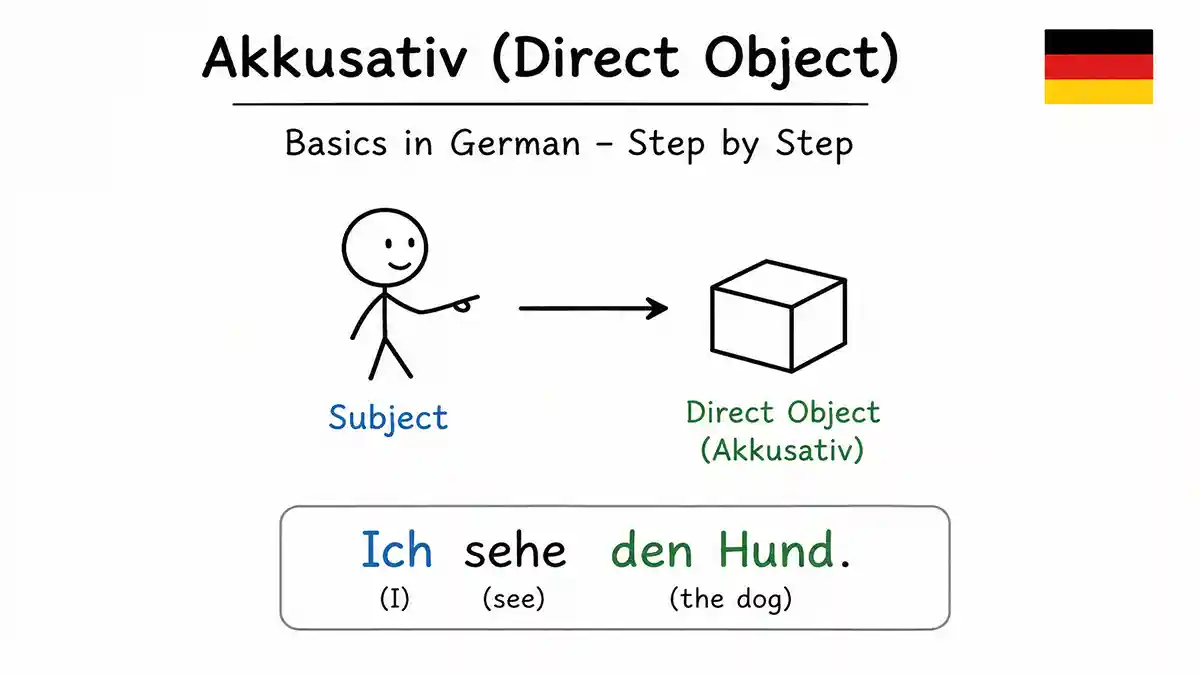
The song suits beginners because its rhythm is clear and the singer’s pronunciation is precise and relatively slow. Its title alone also teaches you an important grammar point: the preposition durch, which is followed by the accusative (Akkusativ).
Vocabulary and grammar points
Here are some words and concepts you can pick up from the song’s mood and theme:
| Word / Expression | Meaning |
|---|---|
die Nacht | the night |
atemlos | breathless |
tanzen | to dance |
das Licht | the light |
fühlen | to feel |
der Moment | the moment |
durch + Akkusativ | through / by means of |
These practice sentences are our own (not lyrics from the song) and use the same points:
After listening, try to find other words ending in -los such as atemlos and arbeitslos. This suffix means “without” and helps you expand your vocabulary quickly.
2. “Du hast” – Rammstein
Du hast by Rammstein was released in 1997 on the album Sehnsucht. It is one of the most widely known German songs internationally, even though it is heavy industrial rock.
It is useful for learners because the title plays on the similar sound of two verbs: haben (to have) and hassen (to hate). That makes it a great chance to practice conjugating both verbs in the “you” form. The singer’s pronunciation is also clear and relatively slow for this style of music.
Vocabulary and grammar points
Here are words related to the song’s theme that you can review:
| Word / Expression | Meaning |
|---|---|
haben | to have |
hassen | to hate |
fragen | to ask |
antworten | to answer |
schweigen | to be silent |
treu | faithful |
das Versprechen | the promise |
These practice sentences are our own and help you tell the two verbs apart:
Write out the conjugation of both verbs with all pronouns, then listen to the repeated section and try to notice the difference in pronunciation between a single s and a double ss. Remember that the song has a dark tone and is not to everyone’s taste.
3. “Junge” – Die Ärzte
Junge by Die Ärzte was released in 2007 on the album Jazz ist anders. It is a rock song built on direct speech addressed to a young man, with a humorous and likeable style.
The text combines simple everyday language with questions and advice, which introduces you to how Germans talk in family and school conversations. It suits those who have finished A2 basics and want to hear language closer to real life.
Vocabulary and grammar points
Useful words on this theme include:
| Word / Expression | Meaning |
|---|---|
der Junge | the boy |
die Schule | the school |
lernen | to learn |
die Eltern | the parents |
der Rat | the advice |
erwachsen | grown-up |
faul | lazy |
These practice sentences are our own:
Notice how direct questions and the informal du form are used in the song, then try writing similar questions you could ask a friend or relative.
4. “Durch den Monsun” – Tokio Hotel
Durch den Monsun was the first main single by Tokio Hotel in 2005, released on the album Schrei. It became hugely popular among teenagers in Germany and abroad.
Its idea revolves around longing, a journey and the wish to reach someone dear. The singer’s pronunciation is clear and the song’s vocabulary repeats, which makes it easy to follow. The title also contains durch with the accusative again, so you can review the rule you learned.
Vocabulary and grammar points
Words connected to the song include:
| Word / Expression | Meaning |
|---|---|
der Monsun | the monsoon |
der Regen | the rain |
die Reise | the journey |
das Ziel | the goal / destination |
vermissen | to miss |
warten | to wait |
die Sehnsucht | the longing |
These practice sentences are our own:
This song is suitable for practicing verbs of feeling such as vermissen and warten auf, verbs that require learning the right preposition with them.
5. “99 Luftballons” – Nena
99 Luftballons is one of the best-known German songs in the world. It was released by Nena in 1983 and expresses, in a simple way, fear of war and the political tension of that period.
Its idea is simple and its pronunciation is clear, and it gives you a chance to practice large numbers in German such as neunundneunzig (99), as well as forming plurals with -s in the word Luftballons. It also introduces you to a historical and cultural side of Germany in the 1980s.
Vocabulary and grammar points
Words you can benefit from include:
| Word / Expression | Meaning |
|---|---|
der Luftballon | the balloon |
die Zahl | the number |
der Himmel | the sky |
der Krieg | the war |
der Frieden | the peace |
die Angst | the fear |
die Welt | the world |
These practice sentences are our own:
Read about the song’s historical background after listening, then try writing three sentences about peace using the vocabulary above.
6. “Das Beste” – Silbermond
Das Beste by Silbermond was released in 2006 on the album Laut gedacht. It is a calm pop-rock song that expresses gratitude and appreciation for the important people in our lives.
Its title revolves around das Beste, “the best”, an example of the superlative used as a noun. That makes it ideal for reviewing the comparison of the adjective gut: gut – besser – am besten.
Vocabulary and grammar points
Words that help you express gratitude and feelings include:
| Word / Expression | Meaning |
|---|---|
das Beste | the best |
das Leben | the life |
die Zeit | the time |
glücklich | happy |
dankbar | grateful |
die Hoffnung | the hope |
die Liebe | the love |
These practice sentences are our own:
After listening, look for other words that appear in the superlative and write a sentence from your daily life for each one.
7. “Mensch” – Herbert Grönemeyer
Mensch by Herbert Grönemeyer was released in 2002 and gave its name to a successful album. It is one of the most prominent German songs about being human, with its weakness and strength.
The language is relatively simple but carries deep, abstract vocabulary. It is suitable for learning how to express general ideas and feelings in German. The singer’s voice is distinctive, and his pronunciation takes a slightly trained ear.
Vocabulary and grammar points
Vocabulary worth noting down:
| Word / Expression | Meaning |
|---|---|
der Mensch | the human being |
das Herz | the heart |
das Gefühl | the feeling |
der Fehler | the mistake |
schwach | weak |
stark | strong |
irren | to err / to be mistaken |
These practice sentences are our own:
This song is useful for practicing calm pronunciation and expressing general ideas, which you need in speaking exams when you talk about social topics.
8. “Nur ein Wort” – Wir sind Helden
Nur ein Wort by Wir sind Helden was released in 2005 on the album Von hier an blind. It is a text-focused pop-rock song about words and their power to change feelings and relationships.
Singer Judith Holofernes has a poetic, musical writing style, so the song needs a slightly higher language level. It is useful, though, for learning how German expresses emotions indirectly.
Vocabulary and grammar points
Words that express the song’s theme include:
| Word / Expression | Meaning |
|---|---|
das Wort | the word |
sagen | to say |
schweigen | to be silent |
die Sprache | the language |
die Stille | the silence |
brauchen | to need |
die Wahrheit | the truth |
These practice sentences are our own:
Don’t try to understand every line the first time; focus on the repeated words, then look up the meaning of the figurative expressions you didn’t understand.
9. “Die Da!?” – Die Fantastischen Vier
Die Da!? by Die Fantastischen Vier was released in 1992 and is considered a landmark of German hip hop. It uses a humorous narrative style to tell a social situation at a fast tempo.
Rap is a good chance to train fast listening and connected speech, but it needs a higher language level. One grammar benefit in the title is the demonstrative die da, which points to a person away from you.
Vocabulary and grammar points
Words and expressions linked to the song’s theme:
| Word / Expression | Meaning |
|---|---|
die Frau da | that woman over there |
sehen | to see |
kennen | to know (a person) |
die Party | the party |
der Typ | the guy (colloquial) |
schüchtern | shy |
ansprechen | to speak to / approach |
These practice sentences are our own:
The song is old and some expressions are colloquial, so don’t copy every phrase you hear into your formal speech. Use it to train your ear, and rely on the written text from a licensed source to understand the fast parts.
10. “Alles neu” – Peter Fox
Alles neu by Peter Fox comes from the album Stadtaffe (2008). It blends rap, reggae and electronic music and talks about new beginnings and changing your life.
The rhythm is fast and the text is full of imagery and colloquial expressions, which is why it suits B2. But it is rich in vocabulary about the city, change and the future, and it helps you practice understanding informal texts.
Vocabulary and grammar points
Vocabulary you can benefit from includes:
| Word / Expression | Meaning |
|---|---|
neu | new |
die Veränderung | the change |
das Jahr | the year |
die Stadt | the city |
anfangen | to begin |
vergessen | to forget |
die Zukunft | the future |
These practice sentences are our own:
Listen to the song several times: the first for the rhythm, the second for the words you know, and the third for new words. Don’t get discouraged if you don’t catch the speed the first time.
How to choose the right song for your German level
If you are at A1
Start with Atemlos durch die Nacht and Du hast; both have clear pronunciation and simple vocabulary and structures. Pay attention to the rhythm and repeated words, and don’t worry about missing some lines.
If you are at A2
Try Junge, Durch den Monsun and 99 Luftballons. At this stage, try to grasp the general idea of the song and note down ten new words from it.
If you are at B1
Move on to Das Beste and Mensch, and start reading the full lyrics with a translation, then listen again without looking at the text to test your understanding.
If you are at B2
Try Nur ein Wort, Die Da!? and Alles neu, and focus on figurative expressions, colloquial words and the speed of delivery.
The best way to use German songs to learn German in 2026
1. Listen first without looking at the lyrics
Listen to the song once or twice to get a feel for the rhythm, the mood and the words you understand. If you want to watch the official video with German subtitles, look for it among the best YouTube channels to learn German, which explain words and expressions in a simple way.
2. Read the lyrics and their meaning from a licensed source
Look up the lyrics on a licensed website or music platform that shows them with a translation, then read them along with the song. Don’t copy the lyrics into files you publish, because they are protected by copyright.
3. Pick only five words
Don’t try to memorize everything you hear. Choose five words or expressions and build sentences of your own with them, such as:
To review these words daily in an organized way, you can use the best apps to learn German, which let you build review cards and short quizzes.
4. Sing along to improve pronunciation
Sing quietly along with the singer and focus on how the words are pronounced and linked. If the song is fast, lower the speed in the video player to 0.75 and increase it gradually.
5. Write sentences about the song’s topic
After listening, write three sentences about the song’s topic or how it makes you feel, such as:
And avoid the trap of passive learning: don’t just listen, but turn what you heard into words and sentences you use yourself.
Where can you listen to German songs legally?
1. Spotify
It has a wide variety of playlists of German songs, and you can search by artist or song name; sometimes the lyrics appear while playing.
Spotify →
2. YouTube Music
Good for finding official versions and music videos, and subtitles or lyrics may be available depending on the song.
YouTube Music →
3. Apple Music
It offers a large catalog of German songs and shows the lyrics for many tracks.
Apple Music →
4. Genius
A website that shows explanations of the meanings of many songs along with their lyrics, which helps you understand figurative expressions.
Genius →
Frequently asked questions about learning German from songs
Can you learn German from songs?
What are the best German songs to learn German for beginners?
Should I look up the lyrics before listening?
Are all German songs to learn German suitable for learners?
How many songs should I study per week?
Conclusion: which German song should you start with?
The best song for learning German is not necessarily the most famous one, but the one you can partly understand and enjoy. If you are a beginner, start with Atemlos durch die Nacht; if you are at B1, choose Das Beste or Mensch; and once you reach B2, try Alles neu.
Don’t limit your learning to music; mix your sources between songs, German series to learn German and German movies to learn German so that you are exposed to the language in different contexts and styles. And if you want to support all this with organized study with a teacher, explore the best German language centers in Egypt and choose what suits you.
Remember that the goal is not to memorize a song’s lyrics but to turn what you hear into words and sentences you use yourself. Listen, sing along, note five words, and then write your own sentences.
Musik macht das Lernen leichter! — Music makes learning easier!
Trusted references
Academic and educational sources
- Goethe-Institut - curriculum frameworks for the CEFR levels.
- DW Learn German - learning courses and materials for German learners.
- Council of Europe – CEFR - the Common European Framework of Reference for Languages.