The Best Books to Learn German at a Glance
| Your goal | Best choice |
|---|---|
| Starting from zero in a structured course | Menschen or Netzwerk neu |
| Preparing to live and work in Germany | Schritte plus Neu |
| Learning in small, short parts | Momente |
| Systematic grammar explanation | Begegnungen and Grammatik aktiv |
| Moving from B1 to B2 | Kontext |
| A core book for B2 | Sicher! aktuell B2 or Vielfalt B2 |
| Practising for the Goethe exam | Mit Erfolg zum Goethe-Zertifikat |
How Did We Choose the Best Books to Learn German?
Alignment with the CEFR
We chose books with a clear level (A1, A2, B1 and B2), because a book that does not state its level precisely wastes your time. We also made sure the list covers the whole road from zero to B2, so you do not have to look for a replacement path halfway through.
Use in courses and exams
We preferred books whose publishers state a link to exams such as Start Deutsch, Goethe-Zertifikat, telc and ÖSD, or that appear in the course lists of the Goethe-Institut and universities, because that shows they are tested in real teaching.
Audio and companion material
A language is learned with the ear as much as the eye. We therefore valued audio files and interactive exercises or companion apps, and you should check that the edition you buy includes audio or a download link.
Progression and plenty of exercises
A good book introduces new material in small doses and repeats it in varied exercises, combining reading, listening, writing and speaking. We favoured books that come with a workbook or clear exercise sections.
Suitability for Arabic-speaking learners
Most of these books are monolingual, meaning explanations are in German only. That is excellent for immersion, but at first it requires a dictionary, translator or teacher, so we advise combining the book with a source that explains in Arabic.
Up-to-date edition
Exam formats change, as happened with the Goethe-Zertifikat B2 in 2019. Always buy the latest edition, marked “neu” or “aktuell” where available, and check the edition number and year before paying.
The 10 Best Books to Learn German from A1 to B2
A note: we based our descriptions on publisher data (Hueber, Klett, Cornelsen and Schubert) and on the book lists published by the Goethe-Institut and universities. Editions, prices and audio availability can change over time, so check the official publisher page before you buy. We do not show prices in this article because they vary by country and store.
Menschen (Hueber)
Best for: Beginners studying in a course or with a teacherMenschen is one of the most widely used German as a foreign language series in university courses and language schools. Hueber describes it as a course for adults and young adults covering A1 to B1, available in three volumes (A1, A2, B1) or six half volumes (A1.1, A1.2, A2.1, A2.2, B1.1, B1.2).
Each level has a coursebook (Kursbuch) and a workbook (Arbeitsbuch) with audio, and the bibliographic data of recent editions says the coursebook comes with an augmented-reality app (Ar-App). Lessons are built on short everyday situations, moving from introducing yourself and numbers to talking about work, housing and future plans.
- A famous series with plenty of supporting material
- Clear split into volumes or half volumes
- Balanced practice of reading, listening, speaking and writing
- Instructions are in German only, so you need a teacher or dictionary
- The series itself does not cover B2
Netzwerk neu (Klett)
Best for: Exam preparation with digital contentNetzwerk neu is the updated edition of Klett’s Netzwerk series, aimed at young adults and adults and leading to A1, A2 and B1. It comes in three volumes or six parts, and Klett says each level has 12 chapters in the coursebook and its matching exercise book.
Klett states that it prepares for Start Deutsch 1 and 2, Goethe-Zertifikat A2 and B1, the Deutsch-Test für Zuwanderer and ÖSD exams, and the Klett Augmented app plays audio and video from your phone. Teaching is monolingual German, so it suits learners who can use a translator or teacher when needed.
- Direct preparation for Goethe and ÖSD exams
- An app for audio and video on your phone
- Organised into 12 chapters per level
- All explanations are in German
- Needs steady commitment so lessons do not pile up
Schritte plus Neu (Hueber)
Best for: Everyday life, work and integration coursesSchritte plus Neu is a series of six volumes, with every two volumes leading to one level: A1, A2 and B1. Each volume combines the coursebook and workbook in a single binding, which saves you carrying two books and makes it easier to keep track.
Its lessons focus on everyday life, work and housing, and according to the publisher’s description they match the requirements of the Deutsch-Test für Zuwanderer (A2–B1), which is why it is widely used in integration courses in Germany. It is a good choice if you plan to live or work in Germany and want practical language before academic language.
If you want to expand your vocabulary and practice correct pronunciation without relying on an active internet connection, make sure to explore our curated list of the best offline German Arabic dictionaries tailored for everyday learning.
- Coursebook and workbook in one volume
- Content aimed at daily life and work
- Suits those preparing to move or take integration courses
- Stops at B1 and does not continue to B2
- Less academic in style than some alternatives
Begegnungen (Schubert)
Best for: Learners who prefer systematic grammar explanationBegegnungen is a series from the Leipzig publisher Schubert covering A1, A2 and B1 in a combined course and workbook. Its authors, Buscha and Szita, also wrote a separate grammar exercise book called “B Grammatik”, so you can combine the series with a grammar book by the same authors.
It suits learners who like to understand a rule before applying it, and it is a good alternative when you want to change the style of your main series. Because its digital resources are less well known than Hueber’s and Klett’s, check that audio files come with the edition you buy.
- Clear attention to grammar
- Pairs with a grammar exercise book by the same authors
- A good alternative for variety
- Fewer digital resources than the best-known series
- Less common in courses, so fewer supporting materials
Momente (Hueber)
Best for: Learners who want progress in small partsMomente is a Hueber series split into small half volumes: A1.1, A1.2, A2.1, A2.2, B1.1 and B1.2, each with a coursebook and a workbook. This split makes the books lighter and easier to finish, which helps anyone who tires of big textbooks.
The Goethe-Institut lists the series among the books used in some of its online courses, according to its list for Spain, and it appears in study plans of European universities. It stops at B1, so you need a new book to move on to B2.
- Small parts that encourage consistency
- Used in Goethe-Institut online courses
- A coursebook and workbook for every part
- You need six parts to reach B1
- Ends at B1
Grammatik aktiv (Cornelsen)
Best for: Fixing grammar through practiceGrammatik aktiv is a grammar and exercise book from Cornelsen for German as a foreign language, with one volume for A1 to B1, one for B1+ and another for B2 and C1. You can therefore stay with the same publisher from the start to the advanced levels.
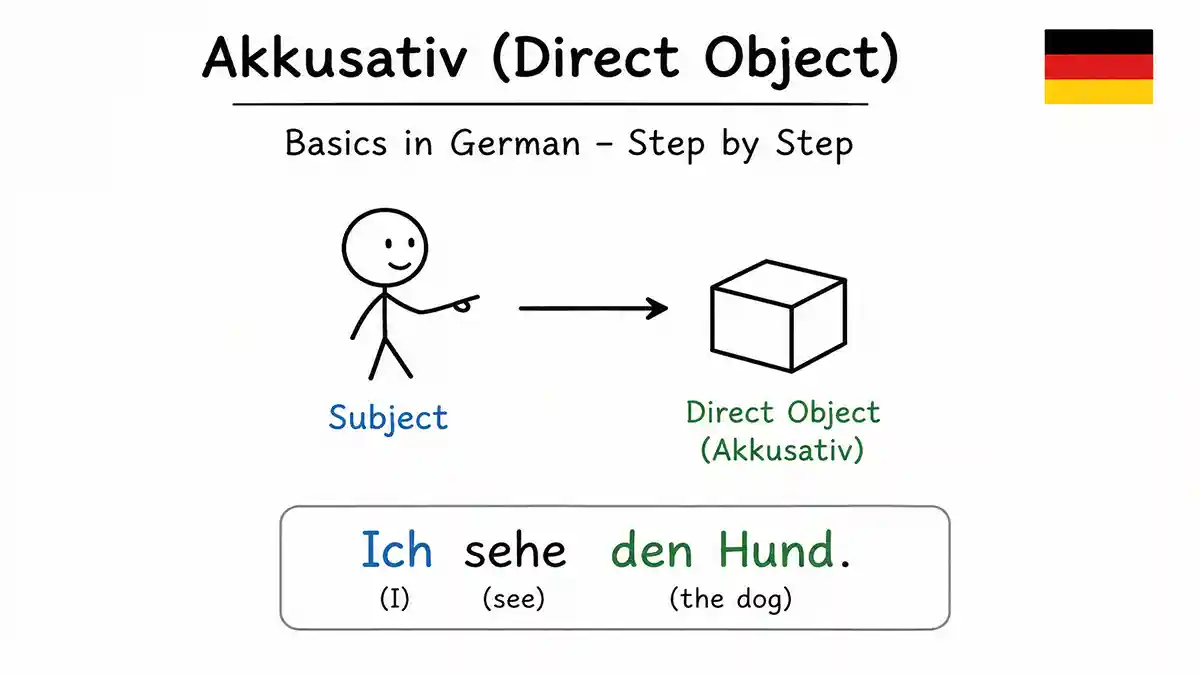
It does not replace a coursebook, but it covers points every learner must repeat: noun cases, separable verbs, sentence order and prepositions. Use it as a reference after each unit in your main book, and do only the exercises on the point you got wrong instead of reading it from cover to cover.
- Covers A1 to C1 across volumes
- Many exercises that fix the rule
- Good for self-study after each unit
- Not a full coursebook
- Explanations are in German, so you need a translator or teacher
Kontext (Klett)
Best for: Moving from B1 to B2Kontext is a Klett series for the intermediate levels, with B1+ and B2 volumes plus a shorter edition (Kontext B1+ express). It is the bridge many learners need after finishing a B1 book, preparing for B2 and for the language of university and work.
It appears in the lists of some German universities for study-related language support, and in the Goethe-Institut list under its B1.3 and B1.4 route. The book is meant for those who have actually finished B1 and is not for beginners; expect more vocabulary and long texts.
- A suitable bridge from B1 to B2
- Texts and tasks closer to university and work language
- A shorter express edition for those with less time
- Not for those who have not finished B1
- Texts are longer and harder than beginner books
Sicher! aktuell B2 (Hueber)
Best for: Preparing for the Goethe-Zertifikat B2Sicher! aktuell B2 updates Hueber’s Sicher! series to match the revised Goethe-Zertifikat B2 format in use since January 2019, as well as the telc B2, telc B1–B2 Beruf and ÖSD ZB2 exams. It comes in two parts, B2.1 (lessons 1–6) and B2.2 (lessons 7–12), each with coursebook and workbook in one volume.
It contains new tasks that fit the changed exam formats, and digital editions with audio, video and extra exercises are available. It is a strong choice for anyone who wants to pass B2 for study or work, but you should finish B1 confidently before starting.
- Updated for the current Goethe B2 exam
- Also covers telc and ÖSD exams
- Digital editions with audio and video
- Requires a solid B1 base
- Takes a long time to finish both parts
Vielfalt B2 (Hueber)
Best for: Structured B2 courses, or an alternative to Sicher!Vielfalt B2 is another Hueber book, available in two parts (B2.1 and B2.2) with coursebook and workbook in one volume. It appears in the Goethe-Institut’s lists of books for B2 courses, and C1 parts follow it. It is a suitable alternative if you want to change books or your course uses it.
One advantage of its use in Institut courses is that teachers of those courses know it well, so it is easier to get explanations and support. As with every B2 book, rely on a separate exam-practice book to train on real test formats.
- Used in Goethe-Institut B2 courses
- Followed by two parts for C1
- Coursebook and workbook in one volume
- Less known among self-learners
- Does not replace an exam-practice book
Mit Erfolg zum Goethe-Zertifikat B1 / B2 (Klett)
Best for: Practising Goethe exam modelsMit Erfolg zum Goethe-Zertifikat is an exam-practice series from Klett, with a practice book (Übungsbuch) and a test book (Testbuch) for each level, available for B1 and B2 among others. The Goethe-Institut lists it among the books for its exam-preparation courses at these levels.
Use it after finishing your main book or in the last weeks before the exam; it shows you the task formats and the time available for each part of reading, listening, writing and speaking. Do not start with it from zero, because these are practice books and not teaching books.
- Models close to the Goethe exam format
- A separate practice book and test book
- Shows your weak points before the exam
- Not meant for learning from scratch
- Only useful if you are actually preparing for the exam
Comparison Table of the 10 Books
| Book | Publisher | Levels | Best for |
|---|---|---|---|
| 1. Menschen | Hueber | A1 – B1 | Beginners studying in a course or with a teacher |
| 2. Netzwerk neu | Klett | A1 – B1 | Exam preparation with digital content |
| 3. Schritte plus Neu | Hueber | A1 – B1 | Everyday life, work and integration courses |
| 4. Begegnungen | Schubert | A1 – B1 | Learners who prefer systematic grammar explanation |
| 5. Momente | Hueber | A1 – B1 | Learners who want progress in small parts |
| 6. Grammatik aktiv | Cornelsen | A1 – B1, then B1+ and B2/C1 | Fixing grammar through practice |
| 7. Kontext | Klett | B1+ and B2 | Moving from B1 to B2 |
| 8. Sicher! aktuell B2 | Hueber | B2 | Preparing for the Goethe-Zertifikat B2 |
| 9. Vielfalt B2 | Hueber | B2 | Structured B2 courses, or an alternative to Sicher! |
| 10. Mit Erfolg zum Goethe-Zertifikat | Klett | B1 and B2 | Practising Goethe exam models |
A Step-by-Step Study Plan from A1 to B2
Your plan depends on the Common European Framework of Reference. If you do not know the difference between the levels, first read our explanation of German language levels to find where you stand now and what you need to reach. Then use the table below as a map: choose one main series that takes you from A1 to B1, then move on to the B2 books.
| Level | Suggested main book | Suggested supplement | Official exam |
|---|---|---|---|
| A1 | Menschen A1, Netzwerk neu A1 or Schritte plus Neu 1–2 | Grammatik aktiv (A1 section) | Start Deutsch 1 |
| A2 | The A2 part of the same series | Grammatik aktiv + a dictionary | Start Deutsch 2 or Goethe-Zertifikat A2 |
| B1 | The B1 part of the same series, or Momente B1 | Mit Erfolg zum Goethe-Zertifikat B1 | Goethe-Zertifikat B1 |
| B1+ | Kontext B1+ | Grammatik aktiv (B1+) | Preparatory practice |
| B2 | Sicher! aktuell B2 or Vielfalt B2 | Mit Erfolg zum Goethe-Zertifikat B2 | Goethe-Zertifikat B2 |
Exams are measuring stations, not goals in themselves. Start Deutsch 1 measures A1, and the Goethe-Zertifikat A2, B1 and B2 measure their matching levels. Alternative exams such as telc and ÖSD are accepted by many bodies, so confirm which exam your university, embassy or employer requires before choosing a preparation book.
How to Study Effectively from Books
Set a fixed schedule
Consistency matters more than session length. A daily session of 45 to 60 minutes beats three hours at the weekend. Split it into three parts: a new lesson from the coursebook, then exercises from the workbook, then a review of the previous day’s vocabulary.
Use the audio in every lesson
Listen to the text before you read it, then read it along with the audio, then repeat it aloud. This builds your ear and pronunciation together and is faster than silent reading.
Record your mistakes
Keep a notebook of repeated errors: noun gender, verb position and plural forms, and review it every week. When you meet a sentence you do not understand, you can use one of the best German translator apps to grasp the meaning, but try to guess it yourself first.
Combine the book with Arabic explanations
If the German explanations in the book slow you down, rely on videos that explain the same rules in Arabic. We gathered a full path in our guide to learning German for beginners in Arabic on YouTube; watch the lesson tied to the unit you are studying, then return to the exercises.
Consider a structured course if possible
Books give you the curriculum, but a teacher corrects your pronunciation, answers your questions and keeps you accountable. If you are in Egypt, see our list of the best German language centers in Egypt and ask the centre which book it teaches so you can buy the same one.
Sources That Complement Your Books
The book is the backbone of your learning, but language grows through varied exposure. These sources complement what you learn from books and break the boredom:
- Learning apps: for daily practice of vocabulary and sentences, see the best apps to learn German.
- YouTube: free explanations and listening practice in the best YouTube channels to learn German.
- Movies: enjoyable viewing that trains your ear on natural pronunciation, with our movies to learn German.
- Series: short episodes that help you follow everyday dialogue, arranged in our list of German series to learn German.
- Songs: they fix vocabulary and rhythm, so listen to German songs to learn German after you read the lyrics.
Give each source a fixed weekly slot so that entertainment does not swallow your study time, and always start with the book, then add the rest.
Common Mistakes When Learning German from Books
Buying a book that does not fit your level
Test your level honestly before you buy. If you buy above your level you will stop after two weeks, and if you buy below it you will waste time. Use the free tests on the Goethe-Institut website to find your starting point.
Neglecting the workbook
The coursebook introduces the content, but the exercises are what fix it. Whoever skips them will not remember what they read.
Only reading without speaking
Language is a skill of speech and hearing before it is reading. Repeat sentences aloud, record yourself, and look for a speaking partner or teacher.
Jumping between books
Many people change books whenever they get bored and never finish any. Commit to one book until the end, then evaluate your experience.
Moving up before mastering the current level
Moving from A2 to B1 without a base means B1 will feel impossible. Go up only when you solve the book’s exercises easily and understand the texts without much help.
German Terms You Will See on Book Covers
| German term | Meaning |
|---|---|
| das Lehrbuch | textbook |
| das Kursbuch | coursebook |
| das Arbeitsbuch | workbook |
| das Übungsbuch | practice book |
| die Grammatik | grammar |
| der Wortschatz | vocabulary |
| die Lösung | answer key / solution |
| das Hörverstehen | listening comprehension |
| die Prüfung | exam |
| das Zertifikat | certificate |
Conclusion: Which Book Should You Start With?
You do not need ten books, but one core book per stage plus a grammar book and an exam-practice book. Start with Menschen, Netzwerk neu or Schritte plus Neu for A1 to B1, add Grammatik aktiv to fix the grammar, then move to Kontext and Sicher! aktuell B2 or Vielfalt B2 to reach B2, and finish with Mit Erfolg zum Goethe-Zertifikat to practise for the exam.
Success depends less on the book than on regularity: an hour a day with audio, exercises and correcting your mistakes will take you to B2 faster than any “magic” book. Choose your book today and start the first lesson.
Complete Guide from DeutschPlayLearn German From Scratch for Free: Complete A1 to Advanced GuideStarting your journey and need a clear, free roadmap? Explore proficiency levels from A1 to advanced, along with top methods, resources, and tips to start with confidence.Frequently Asked Questions About German Learning Books
What is the best book to learn German for beginners?
Should I start with one book or combine several?
What is the difference between a Kursbuch and an Arbeitsbuch?
Do I need a teacher with these books?
How many books do I need to go from A1 to B2?
Are these books available in Arabic?
What is the best book for German grammar?
What is the best book to prepare for the Goethe B1 and B2 exams?
Can I learn German from books alone?
How do I get the audio files for a book?
Which edition should I buy?
References and Sources
Sources
- Goethe-Institut: online course book list - Names the books used, such as Momente, Kontext, Vielfalt and Mit Erfolg.
- Goethe-Institut: general course book list - Lists the books used in courses from A1 to B2.
- Klett: Netzwerk neu A1 - The publisher’s official page for the Netzwerk neu series.
- Klett: Netzwerk series - Description of the series, levels and volumes.
- Hueber: Menschen brochure - Shows the levels and editions of Menschen.
- Hueber: Sicher! aktuell B2/1 - An official excerpt about the book’s update for B2 exams.
- Hueber shop: A1 to B1 books - A list of the books and levels offered by the publisher.