1. What Is Ausbildung and How Does It Work? (Was ist Ausbildung?)
Ausbildung is vocational training that combines work at a company with study at a vocational school (Berufsschule), which is why it is called the dual system (Duales System). You spend most of your time at the company and receive a monthly training allowance, while attending school one or two days a week or in intensive blocks depending on the occupation. For more details, see our complete Ausbildung guide.
- Duration: between two and three and a half years depending on the occupation, and it may be shorter if you already have a relevant qualification.
- Exams: They are administered by the Chambers of Industry and Commerce (IHK) or Chambers of Crafts (HWK), and you receive a qualification recognized throughout Germany.
- Minimum training allowance: For training contracts beginning in 2026, it is €724 in the first year,854 in the second,977 in the third,1,014 in the fourth, for occupations covered by the Vocational Training Act. Many sectors pay more under collective agreements.
2. Most In-Demand Ausbildung Specializations
1. Nursing (Pflegefachfrau / Pflegefachmann)
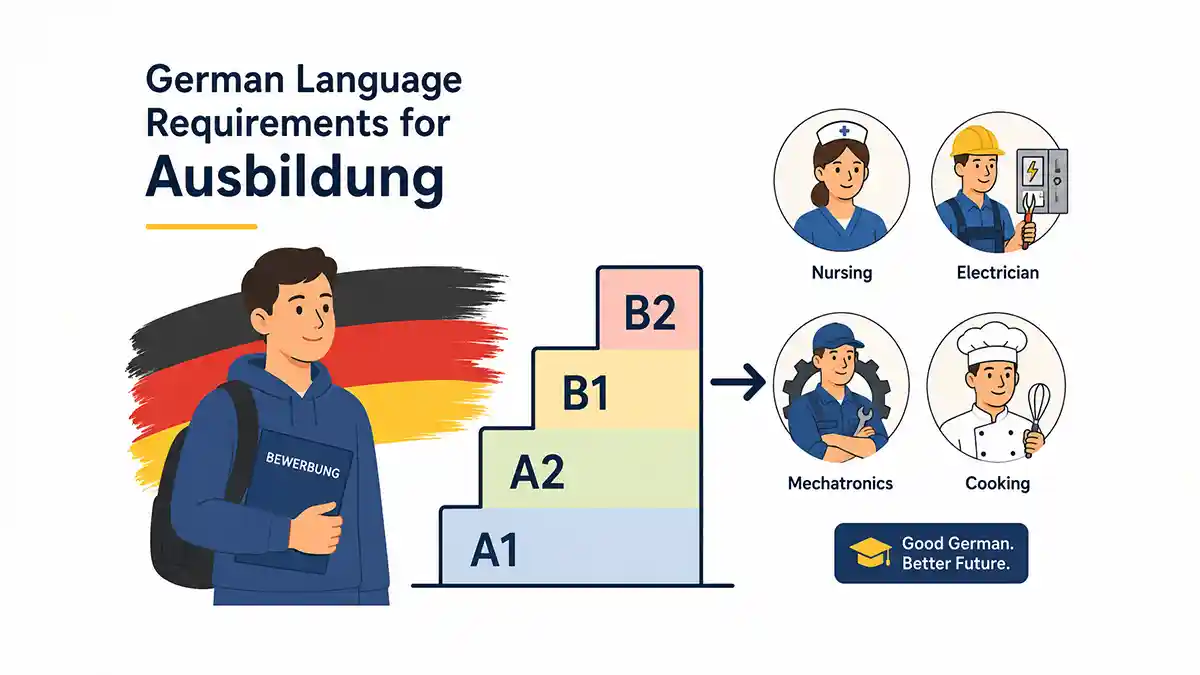
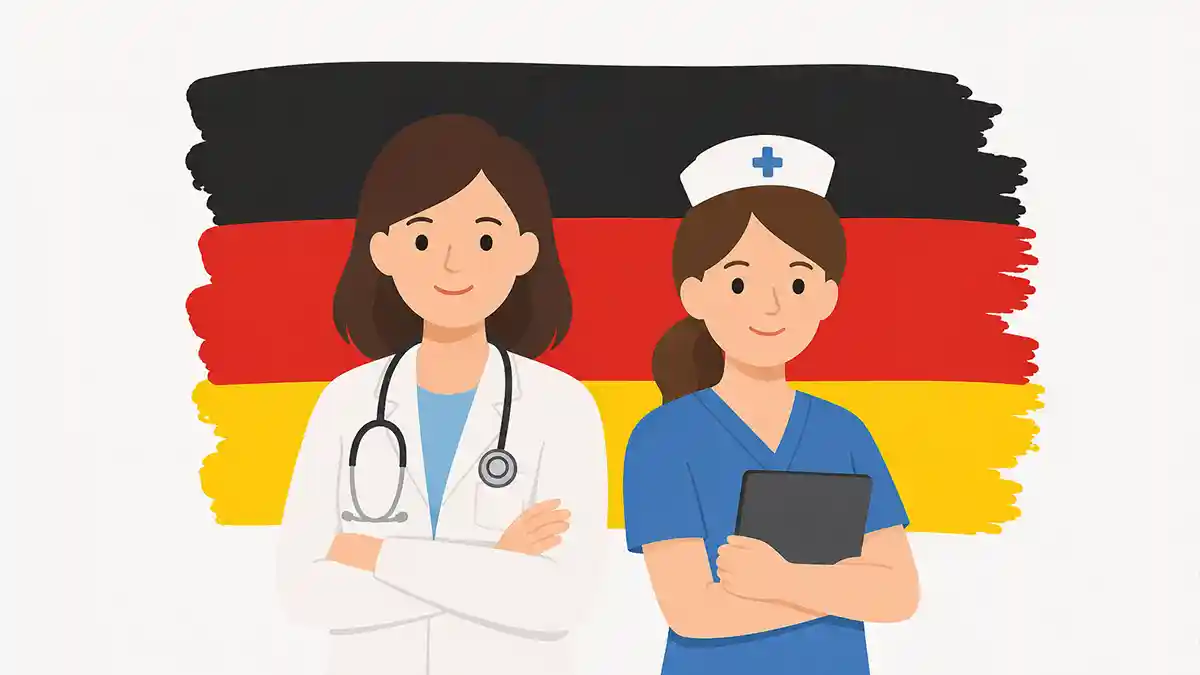
Since 2020, nursing pathways have been unified into a general three-year training program leading to the title Pflegefachfrau/Pflegefachmannwhere you learn to care for people in hospitals, care homes, and home-care settings. Pay is among the higher levels for training occupations at institutions covered by collective agreements, and B2 is often required because you will work with patients and doctors and write medical reports. Learn more in our article on German for the medical sector.
2. Information Technology (Fachinformatiker/in)
You will usually choose between application development (Anwendungsentwicklung)andsystem integration (Systemintegration)with newer pathways such as data analysis and process management also available. The required level is B1 to B2 depending on the company, and competition is higher because the occupation is attractive to German applicants too. Personal projects or a GitHub profile can strengthen your application, and technical English is an advantage but does not compensate for weak German in an interview.
3. Mechatronics and Technical Trades
- Mechatroniker/in: combines mechanics, electrical engineering, and programming, and is in demand in manufacturing.
- Kfz-Mechatroniker/in: vehicle maintenance, including electric vehicles today.
- Elektroniker/in: electrical technician with specializations such as energy and building technology.
- Anlagenmechaniker/in SHK: heating, ventilation, air-conditioning, and plumbing systems, with demand growing alongside heat-pump expansion.
These occupations often accept B1, but the theoretical exam requires a good understanding of terminology, so do not rely on the minimum level alone. You can later progress to the Meisterwhich is an advanced professional qualification that can allow you to open your own business and train apprentices.
4. Logistics and Commerce
- Fachkraft für Lagerlogistik: warehouse and supply-chain management, and is among the easier occupations to enter from a language perspective.
- Kaufmann/-frau für Büromanagement: office administration and correspondence, where language is crucial because the work relies heavily on writing and communication.
- Einzelhandel / Groß- und Außenhandel: retail, wholesale, and foreign trade.
Cybersecurity is not usually taught as a standalone Ausbildung occupation; many people specialize in it after Fachinformatiker training or through later courses.
3. Quick Comparison of the Specializations
4. Application Requirements for Students from Outside the EU
- A confirmed training place: A training contract with a German company, or a place at a vocational school for school-based training.
- Language: Usually, a level of B1 under the CEFR is required. Learn about German language levels from A1 to C2 and the differences between Goethe, telc, and TestDaF exams to choose the right exam.
- Proof of financial means: For company-based training, your livelihood is considered secured if the allowance reaches €1,048 gross or €822 net per month (2026); otherwise, you can cover the difference with a blocked account or declaration of commitment.
- Federal Employment Agency approval: The Federal Employment Agency may be involved to ensure that you work under the same conditions as German trainees; this is an internal procedure and requires no action from you.
Important note: For school-based training, you need to prove at least €959 net per month (2026) through a blocked account (Sperrkonto), declaration of commitment, or scholarship. As for the visa for seeking an Ausbildung place it requires you to be under 35, have B1 and a school-leaving qualification that qualifies you for university admission, and have a blocked account of at least €1,091 per month. It allows a stay of up to 9 months. Ask the embassy or foreigners authority directly before depositing any money.
5. Common Mistakes That Can Lead to Rejection
- A CV that is not structured in the German style. Use a tabular CV (Tabellarischer Lebenslauf) in reverse chronological order with clear dates.
- Using the same motivation letter for every company. Mention the company and occupation by name and explain why you chose the occupation and the company. Learn how to write one in our article on writing in German.
- Applying without a language certificate, or with a level that is insufficient for the occupation. Companies do not want to risk taking on a trainee who cannot understand the lessons.
- Delaying the recognition of certificates. Start the process before applying, not afterward, because it can take months.
- Applying to too few companies. Broaden your search and do not be discouraged by the first rejection.
6. How Can You Improve Your Chances of Acceptance?
- Search official platforms: the Federal Employment Agency (Arbeitsagentur), Make it in Germany, and specialized job platforms such as Ausbildung.de.
- Do not limit yourself to major cities. Companies in medium-sized and smaller cities often face shortages of trainees, and living costs are lower there.
- Raise your German to B2 even if the advertisement asks for B1. If you are worried about the difficulty of German, read How Difficult Is German?.
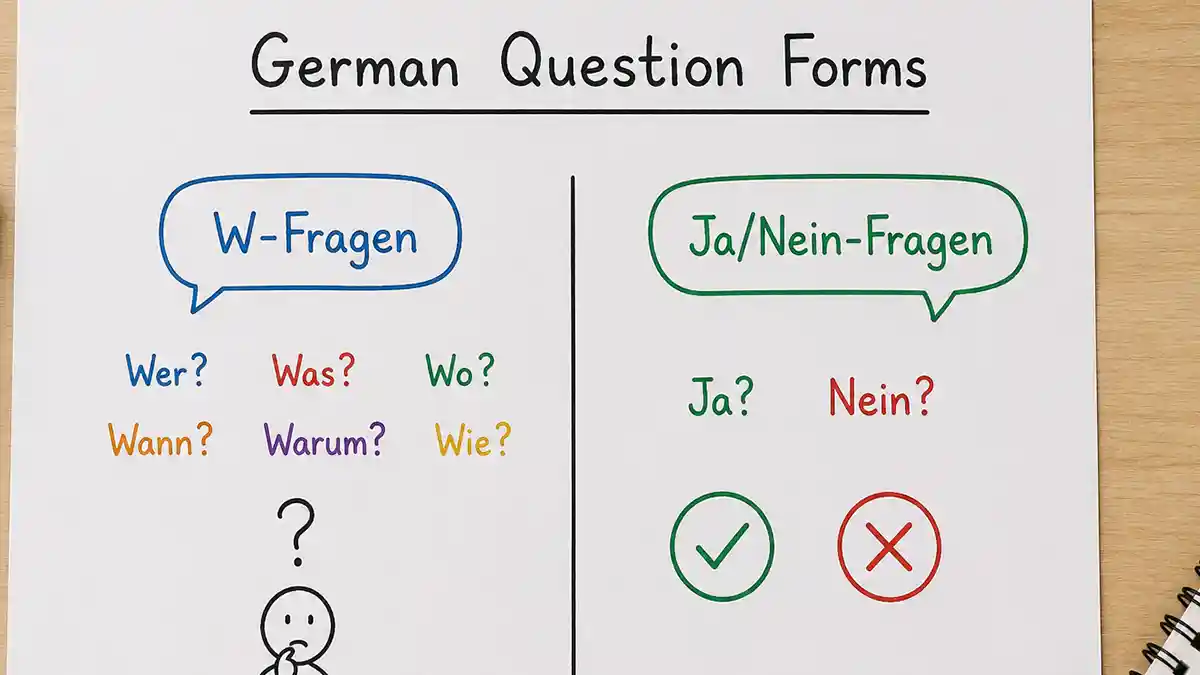
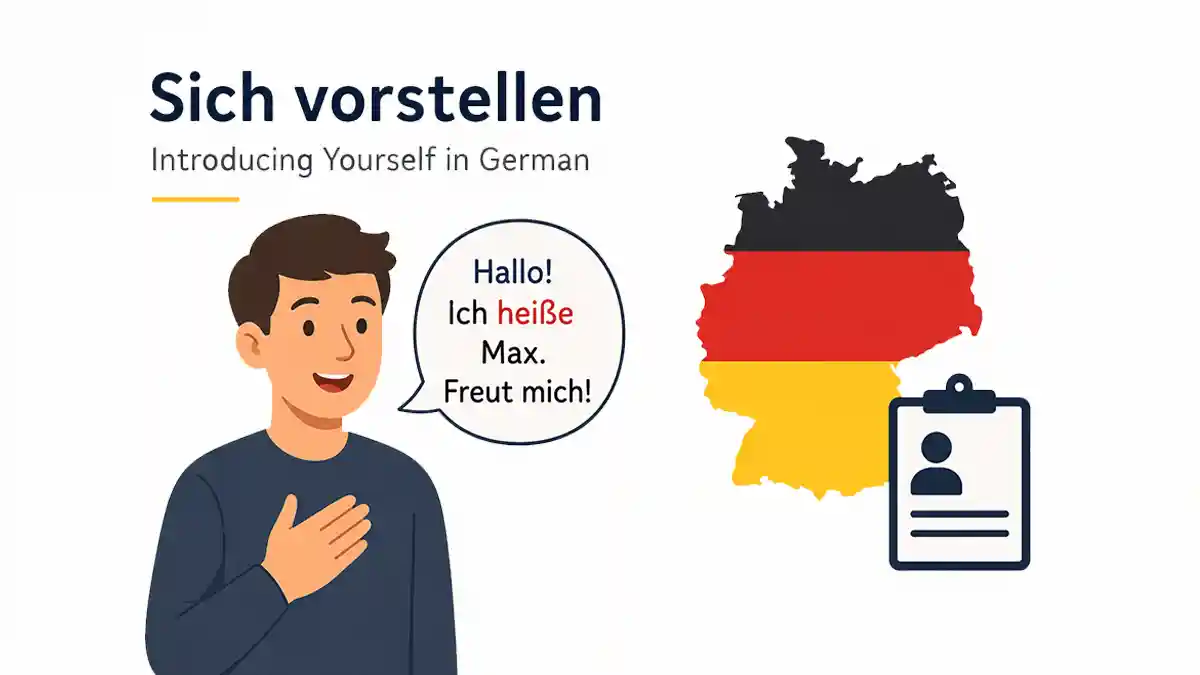
- Practice for the interview: prepare Introducing Yourself in German and practice Forming Questions in German so you can ask the company questions with confidence.
- Try a Praktikum before applying if possible; it gives you insight into the occupation and a connection with the company.
- After arriving: you will need everyday German, and our guide to Everyday German Conversations.