Names of Transportation in German with Translation
| German | Article | English | Approximate pronunciation |
|---|---|---|---|
| das Auto | das | car | dahs OW-toh |
| der Bus | der | bus | dair booss |
| die Bahn | die | rail / train (depends on context) | dee bahn |
| der Zug | der | train | dair tsook |
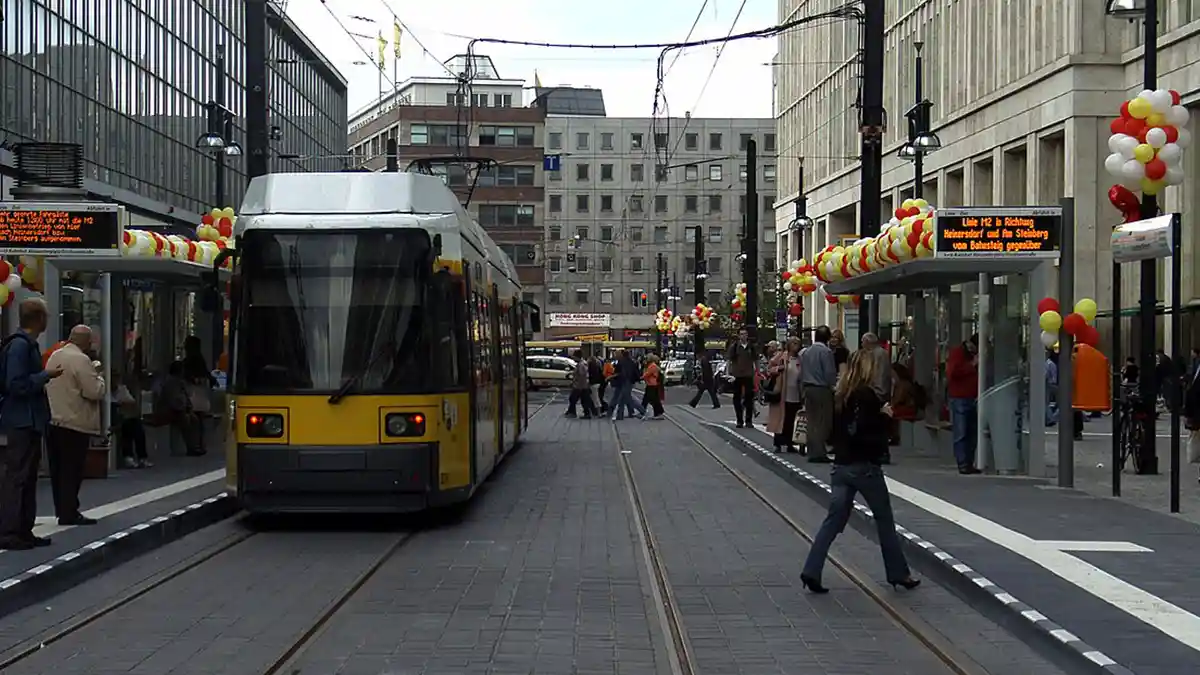
| die Straßenbahn | die | tram / streetcar | dee SHTRAH-sen-bahn |
| die U-Bahn | die | subway / metro | dee OO-bahn |
| die S-Bahn | die | suburban train | dee ESS-bahn |
| das Taxi | das | taxi | dahs TAK-see |
| das Fahrrad | das | bicycle | dahs FAHR-raht |
| das Motorrad | das | motorcycle | dahs MOH-tor-raht |
| der Roller | der | scooter | dair ROL-er |
| das Flugzeug | das | airplane | dahs FLOOK-tsoyk |
| das Schiff | das | ship | dahs shif |
| das Boot | das | boat | dahs boht |
| die Fähre | die | ferry | dee FAIR-uh |
| der Hubschrauber | der | helicopter | dair HOOP-shrow-ber |
| der Lastwagen | der | truck | dair LAST-vah-gen |
| der Lkw | der | truck (short for Lastkraftwagen) | dair EL-kah-VEH |
| der Krankenwagen | der | ambulance | dair KRAHN-ken-vah-gen |
| das Feuerwehrauto | das | fire truck | dahs FOY-er-vair-ow-toh |
| das Polizeiauto | das | police car | dahs po-lee-TSY-ow-toh |
| der Schulbus | der | school bus | dair SHOOL-booss |
Language tip: always learn the article together with the noun, not the noun alone, because a German noun’s gender affects articles, pronouns and cases. We color-coded der, die and das in the table to help you remember. Note that der Krankenwagen (ambulance) also appears in German medical vocabulary.
Transportation is called Verkehrsmittel in German, a compound of Verkehr (traffic, transport) and Mittel (means).
Land Transportation in German
1. The car – das Auto
Das Auto is one of the essential words in everyday conversation.
To describe the color of a car, bus or bike, see our lesson on colors in German for the color names and how to use them with nouns.
2. The bus – der Bus
Der Bus is used for getting around cities and between some towns.
Another key word is die Bushaltestelle: the bus stop.
3. The train – der Zug
Der Zug means train and is used for travel between cities.
Useful train vocabulary:
| German | English |
|---|---|
| der Bahnhof | train station |
| der Bahnsteig | platform |
| die Fahrkarte | ticket |
| die Abfahrt | departure |
| die Ankunft | arrival |
| die Verspätung | delay |
| der Fahrplan | timetable |
| der Schaffner | conductor / ticket inspector |
| der Sitzplatz | seat |
| der Speisewagen | dining car |
On a long journey you may want to order a meal or a drink in the dining car, and German food vocabulary will help. Reading der Fahrplan also requires days of the week in German, because train times differ between weekdays and the weekend.
4. The subway – die U-Bahn
Die U-Bahn is the underground railway, short for Untergrundbahn.
5. The suburban train – die S-Bahn
Die S-Bahn connects different parts of a city with the surrounding area. The exact system varies from one German city to another.
6. The tram – die Straßenbahn
Die Straßenbahn is the tram, which usually runs on rails in the street or on dedicated tracks.
7. The bicycle – das Fahrrad
Das Fahrrad is the standard word for bicycle.
Related words: der Fahrradhelm (bike helmet) and der Fahrradweg (bike path).
8. The taxi – das Taxi
Das Taxi is the taxi or cab.
Air and Sea Transportation in German
Air transportation
| German | English |
|---|---|
| das Flugzeug | airplane |
| der Flughafen | airport |
| der Pilot | pilot (male) |
| die Pilotin | pilot (female) |
| der Flug | flight |
| das Flugticket | plane ticket |
| der Reisepass | passport |
| das Gepäck | luggage |
| der Koffer | suitcase |
| der Abflug | takeoff / departure |
| die Landung | landing |
Sea transportation
| German | English |
|---|---|
| das Schiff | ship |
| das Boot | boat |
| die Fähre | ferry |
| der Hafen | port / harbor |
| der Kapitän | captain |
| die Kreuzfahrt | cruise |
Key Verbs for Transportation in German
| German verb | Meaning | Example |
|---|---|---|
| fahren | to go / drive by vehicle | Ich fahre mit dem Bus. |
| fliegen | to fly | Ich fliege nach Berlin. |
| gehen | to go on foot | Ich gehe zu Fuß. |
| laufen | to walk or run, depending on context | Ich laufe zur Schule. |
| nehmen | to take | Ich nehme ein Taxi. |
| einsteigen | to get on / board | Ich steige in den Bus ein. |
| aussteigen | to get off | Ich steige aus dem Zug aus. |
| umsteigen | to change / transfer | Ich steige in Frankfurt um. |
| ankommen | to arrive | Der Zug kommt um 10 Uhr an. |
| abfahren | to depart | Der Zug fährt um 8 Uhr ab. |
| abfliegen | to take off (plane) | Das Flugzeug fliegt um 9 Uhr ab. |
| buchen | to book | Ich buche ein Ticket. |
| reservieren | to reserve a seat or place | Ich reserviere einen Sitzplatz. |
| warten | to wait | Ich warte auf den Bus. |
Conjugating fahren in the present tense
Fahren is one of the most important transportation verbs. It is irregular: the stem vowel changes from a to ä for du and er/sie/es.
| Pronoun | Conjugation | English |
|---|---|---|
| ich | fahre | I go / drive |
| du | fährst | you go / drive |
| er / sie / es | fährt | he / she / it goes / drives |
| wir | fahren | we go / drive |
| ihr | fahrt | you (plural) go / drive |
| sie / Sie | fahren | they / you (formal) go / drive |
fahren vs. gehen vs. fliegen
- fahren: to travel by vehicle or to drive.
Ich fahre mit dem Auto zur Arbeit. → I drive to work. - gehen: to go on foot, or to go in a general sense depending on context.
Ich gehe zu Fuß zur Schule. → I walk to school. - fliegen: to travel by plane or to fly.
Ich fliege nach Deutschland. → I’m flying to Germany.
Why “mit dem Bus” and “mit der Bahn”?
When talking about how you travel, German uses the preposition mit (by, with), and the noun after it is in the dative case.
| Phrase | English |
|---|---|
| mit dem Auto | by car |
| mit dem Bus | by bus |
| mit dem Zug | by train |
| mit dem Fahrrad | by bike |
| mit dem Taxi | by taxi |
| mit der Bahn | by train / rail |
| mit der U-Bahn | by subway |
| mit der Straßenbahn | by tram |
| mit der S-Bahn | by S-Bahn |
Notice that:
- masculine der becomes dem in the dative.
- neuter das becomes dem in the dative.
- feminine die becomes der in the dative.
So we say Ich fahre mit dem Bus, never Ich fahre mit der Bus.
How to Ask About Transportation and Directions
| Question in German | English |
|---|---|
| Wo ist der Bahnhof? | Where is the train station? |
| Wo ist die nächste Bushaltestelle? | Where is the nearest bus stop? |
| Wie komme ich zum Flughafen? | How do I get to the airport? |
| Welche U-Bahn muss ich nehmen? | Which subway line do I need to take? |
| Wann fährt der nächste Zug? | When does the next train leave? |
| Wie lange dauert die Fahrt? | How long does the trip take? |
| Wo kann ich eine Fahrkarte kaufen? | Where can I buy a ticket? |
| Wie viel kostet eine Fahrkarte? | How much is a ticket? |
| Muss ich umsteigen? | Do I have to change? |
| An welcher Haltestelle muss ich aussteigen? | At which stop do I need to get off? |
| Ist dieser Platz frei? | Is this seat free? |
| Hat der Zug Verspätung? | Is the train delayed? |
To avoid getting lost while exploring German cities, check out our guide on how to describe routes in German to master directional prepositions and movement verbs easily.
A short conversation at the train station
Short dialogues like this are part of everyday German conversations and expressions that every beginner needs, so practice them alongside other situations such as introductions, shopping and booking appointments.
Important Words at Transport Stations
| German | English |
|---|---|
| die Haltestelle | stop |
| der Bahnhof | train station |
| der Flughafen | airport |
| der Fahrplan | timetable |
| die Fahrkarte | ticket |
| das Ticket | ticket |
| der Fahrkartenautomat | ticket machine |
| der Eingang | entrance |
| der Ausgang | exit |
| die Richtung | direction |
| die Linie | line |
| die Endstation | last stop |
| die Verspätung | delay |
| die Verbindung | connection |
| der Anschluss | connecting service |
| die Einzelfahrkarte | single ticket |
| die Tageskarte | day pass |
| die Monatskarte | monthly pass |
| die Rückfahrkarte | return ticket |
| die Fahrgemeinschaft | carpool |
German Sentences About Going to Work and School
Try swapping the day in these sentences (for example Am Montag or Am Freitag) after reviewing the days of the week in German. It is the easiest way to build new sentences about your weekly routine.
Transportation in German: Practice Exercises
Exercise 1: Choose the correct answer
- 1. What does das Fahrrad mean?
- a. airplane
- b. bicycle
- c. bus
- 2. What is the correct article for Bus?
- a. der
- b. die
- c. das
- 3. How do you say “I go by train” in German?
- a. Ich fahre mit dem Zug.
- b. Ich fliege mit dem Zug.
- c. Ich gehe mit dem Zug.
- 4. What does der Flughafen mean?
- a. train station
- b. port
- c. airport
- 5. What does mit der U-Bahn mean?
- a. by bus
- b. by subway
- c. by bike
Exercise 2: Fill in the blank
- Ich fahre mit ___ Bus zur Arbeit.
- Wir fahren mit ___ Auto nach Berlin.
- Meine Mutter fährt mit ___ Bahn.
- Ich möchte eine ___ nach München kaufen.
- Wo ist der nächste ___?
Word bank: Fahrkarte – Bahnhof – dem – der
Answers
Exercise 1: 1-b, 2-a, 3-a, 4-c, 5-b.
Exercise 2: 1. dem — 2. dem — 3. der — 4. Fahrkarte — 5. Bahnhof
How to Memorize German Transportation Vocabulary
The best way to learn transportation vocabulary is to split it into small groups: land, air and sea transport, then learn the verbs and sentences that go with them.
Start with the core words das Auto, der Bus, der Zug, die U-Bahn, das Fahrrad, then practice building sentences about your own way to work or school. Don’t forget to review the articles and the dative case after mit.
With daily practice you will understand station signs, buy tickets and ask for directions with more confidence. To see where this lesson fits in your learning path, read about the German language levels from A1 to C2 and choose your next step.
Complete Guide from DeutschPlayLearn German From Scratch for Free: Complete A1 to Advanced GuideStarting your journey and need a clear, free roadmap? Explore proficiency levels from A1 to advanced, along with top methods, resources, and tips to start with confidence.Frequently Asked Questions About Transportation in German
What are the names of transportation in German?
What is the difference between fahren, gehen and fliegen?
Why do we say “mit dem Bus” and not “mit der Bus”?
How do I ask when the train leaves in German?
What does Verkehrsmittel mean?
References
Sources
- DWDS German dictionary - to check word meanings and usage.
- PONS German–English dictionary - to look up vocabulary and translations.
- Deutsche Bahn - for the train, ticket and timetable vocabulary used in Germany.