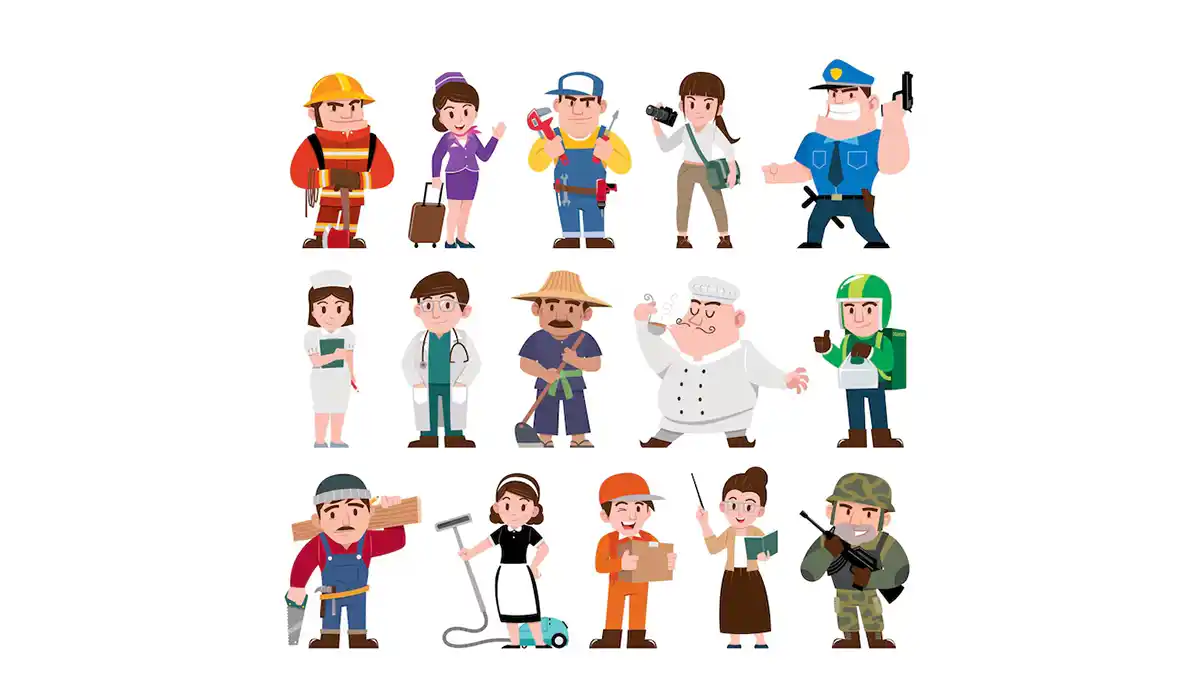
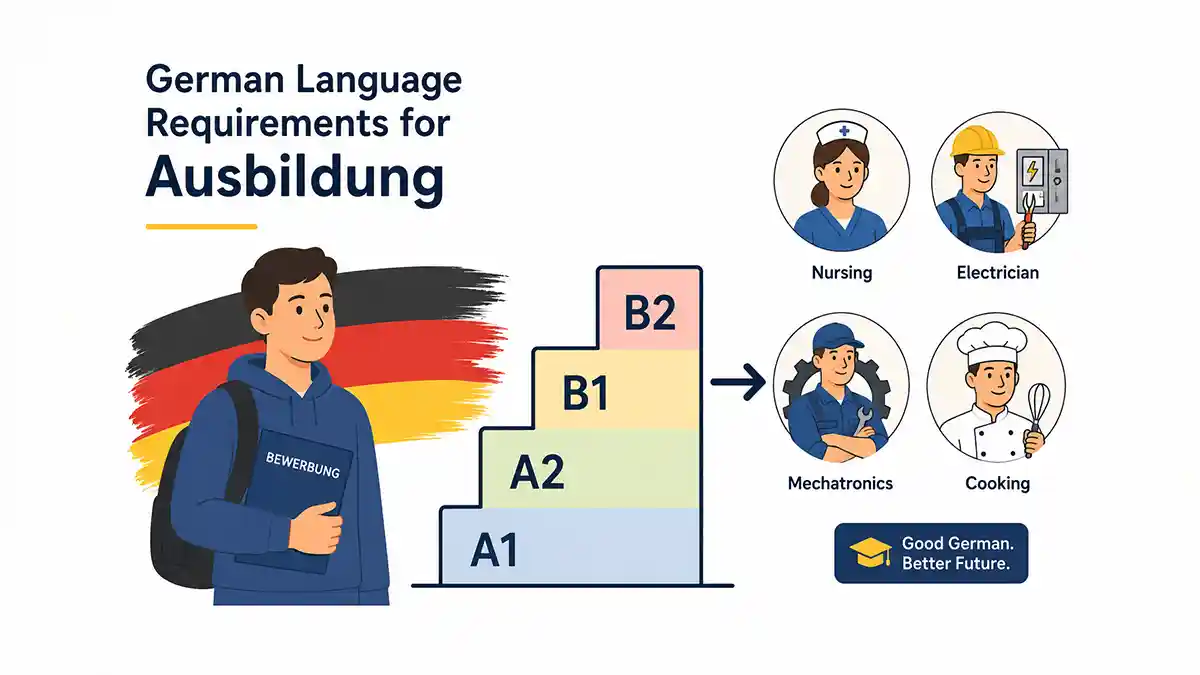
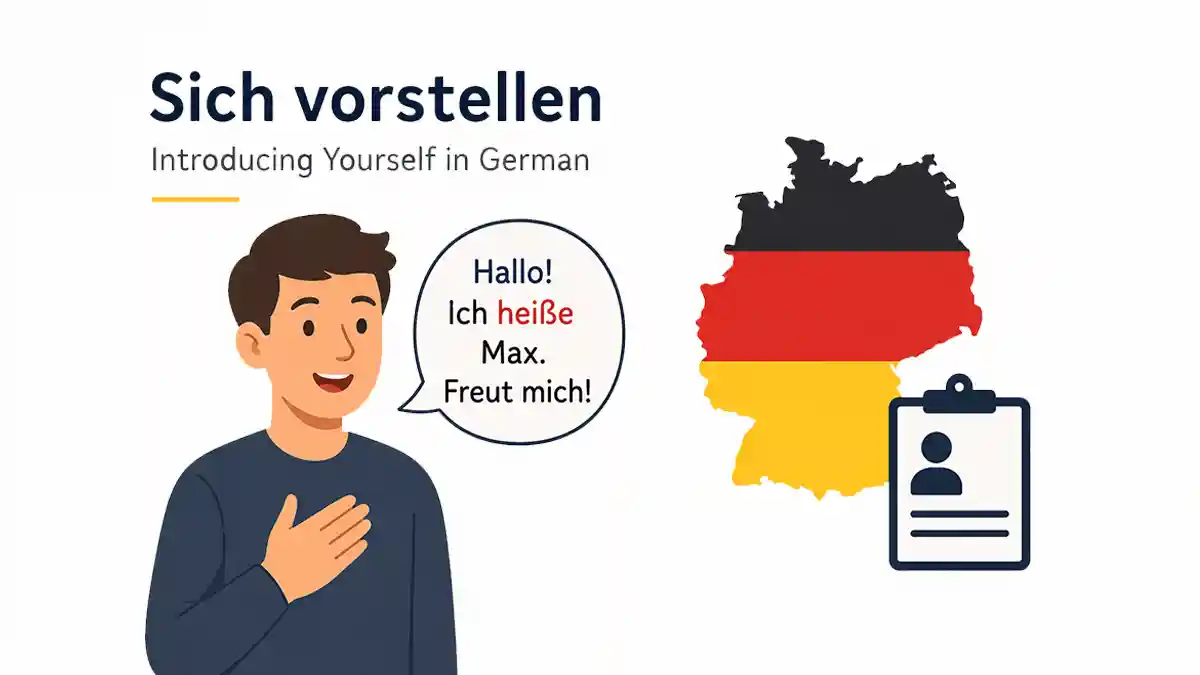
Professions in German are among the first things a beginner learns at level A1: the question “What do you do?” comes up at the first meeting, in job interviews and whenever you introduce yourself. If you are just starting, begin with Lesson 2 of level A1.1: professions, numbers and age, which teaches professions, numbers and age with interactive audio.
A profession is called der Beruf (plural die Berufe), a job position is die Stelle, and a workplace is der Arbeitsplatz.
This article is a complete reference showing more than 70 professions and specializations with masculine, feminine and plural forms, grouped by field, and it explains the difference between als and bei, job ads with (m/w/d) and vocational training. If you are interested in working in Germany, explore Ausbildung specializations in Germany and German medical vocabulary, and to pin down your level, see the German language levels from A1 to C2.
Tip: memorize each profession in two forms, masculine and feminine (der Lehrer / die Lehrerin), and click the speaker icon to hear the singular and plural.
The six most common professions in German. The tables below cover the rest, with feminine and plural forms.
How to Ask and Answer About Your Profession in German
Asking about someone’s job is one of the first questions when meeting people in Germany.
A profession is called der Beruf in German, plural die Berufe. This section summarizes the basic questions and answers that you can also practice with audio in Lesson 2 of level A1.1: professions, numbers and age on our platform, together with numbers and age.
Question in German
Meaning
Was sind Sie von Beruf?
What is your profession? (formal)
Was bist du von Beruf?
What is your profession? (informal)
Was machst du beruflich?
What do you do for a living?
Als was arbeiten Sie?
In what role do you work?
Wo arbeiten Sie?
Where do you work?
Bei welcher Firma arbeiten Sie?
Which company do you work for?
Seit wann arbeiten Sie dort?
How long have you worked there?
Answer in German
Meaning
Ich bin Lehrer / Lehrerin.
I am a teacher.
Ich arbeite als Ingenieur.
I work as an engineer.
Ich arbeite bei Siemens.
I work at Siemens.
Ich arbeite in einem Krankenhaus.
I work in a hospital.
Ich arbeite seit zwei Jahren als Verkäufer.
I’ve worked as a salesperson for two years.
Ich bin Student / Studentin.
I am a university student.
Ich bin arbeitslos und suche Arbeit.
I’m unemployed and looking for work.
The difference between als, bei, in and für
Word
Used with
Example
Meaning
als
the job title (what do you do?)
Ich arbeite als Lehrer.
I work as a teacher.
bei
the company or institution (for whom?)
Ich arbeite bei Google.
I work at Google.
in
the place (where?) with the dative
Ich arbeite in einer Schule.
I work in a school.
für
working on behalf of an organization (with the accusative)
Ich arbeite für eine Firma.
I work for a company.
💡Remember: after sein we use no article with a profession: Ich bin Lehrer. But with an adjective we do use one: Er ist ein guter Lehrer. The details are in our lesson on definite and indefinite articles in German.
Masculine, Feminine and Plural Forms of Professions
German distinguishes between a job held by a man or a woman, and you will see both in job ads.
Most feminine professions are formed by adding the suffix -in to the masculine, and their plural by adding -nen. These are the main patterns:
Rule
Masculine
Feminine
Note
add -in
der Lehrer
die Lehrerin
plural: die Lehrerinnen
add -in with an umlaut
der Arzt
die Ärztin
plural: die Ärztinnen (and die Ärzte for the masculine)
drop -e, then add -in
der Psychologe
die Psychologin
plural: die Psychologinnen
-mann → -frau
der Kaufmann
die Kauffrau
plural: die Kaufleute / die Kauffrauen
nouns made from adjectives
der Angestellte
die Angestellte
plural: die Angestellten (for both)
different feminine word
der Entbindungspfleger
die Hebamme
the common feminine form is Hebamme
The (m/w/d) tag in job ads
In German job ads you will see something like Verkäufer (m/w/d). It stands for männlich / weiblich / divers, meaning male / female / diverse, and signals that the job is open to everyone. To be gender-neutral in writing we use:
Form
Example
Meaning
Lehrerinnen und Lehrer
Lehrerinnen und Lehrer
female and male teachers
star or colon spelling
Lehrer*innen / Lehrer:innen
to include all genders
neutral words ending in -kraft
die Fachkraft, die Pflegekraft, die Lehrkraft
grammatically feminine but they cover everyone
participle form
die Mitarbeitenden
the employees (all genders)
Medical and Healthcare Professions in German
Some of the most in-demand jobs in Germany, and essential vocabulary for anyone who wants to work in healthcare.
⚠️Careful:der Student is a university student, while der Schüler is a school pupil. Don’t use Student for a school pupil.
Office, Business and Finance Professions in German
Administrative, commercial and banking jobs.
Masculine
Feminine
English
Plural (m / f)
der Kaufmann
die Kauffrau
merchant / commercial clerk
die Kaufleute / die Kauffrauen
der Bankkaufmann
die Bankkauffrau
bank clerk (vocational training)
die Bankkaufleute / die Bankkauffrauen
der Verkäufer
die Verkäuferin
salesperson
die Verkäufer / die Verkäuferinnen
der Sekretär
die Sekretärin
secretary
die Sekretäre / die Sekretärinnen
der Manager
die Managerin
manager
die Manager / die Managerinnen
der Buchhalter
die Buchhalterin
accountant
die Buchhalter / die Buchhalterinnen
der Unternehmer
die Unternehmerin
entrepreneur
die Unternehmer / die Unternehmerinnen
der Rechtsanwalt
die Rechtsanwältin
lawyer
die Rechtsanwälte / die Rechtsanwältinnen
der Berater
die Beraterin
consultant
die Berater / die Beraterinnen
Technical, Craft and Construction Professions in German
Crafts, engineering and technology, which are broad fields in German vocational training.
Masculine
Feminine
English
Plural (m / f)
der Ingenieur
die Ingenieurin
engineer
die Ingenieure / die Ingenieurinnen
der Elektriker
die Elektrikerin
electrician
die Elektriker / die Elektrikerinnen
der Mechaniker
die Mechanikerin
mechanic
die Mechaniker / die Mechanikerinnen
der Klempner
die Klempnerin
plumber
die Klempner / die Klempnerinnen
der Maler
die Malerin
painter
die Maler / die Malerinnen
der Tischler
die Tischlerin
carpenter
die Tischler / die Tischlerinnen
der Bauarbeiter
die Bauarbeiterin
construction worker
die Bauarbeiter / die Bauarbeiterinnen
der Informatiker
die Informatikerin
computer scientist
die Informatiker / die Informatikerinnen
der Programmierer
die Programmiererin
programmer
die Programmierer / die Programmiererinnen
Service, Hospitality and Transport Professions in German
The jobs we meet every day in the street, restaurant and airport.
Masculine
Feminine
English
Plural (m / f)
der Koch
die Köchin
cook / chef
die Köche / die Köchinnen
der Kellner
die Kellnerin
waiter / waitress
die Kellner / die Kellnerinnen
der Bäcker
die Bäckerin
baker
die Bäcker / die Bäckerinnen
der Friseur
die Friseurin
hairdresser
die Friseure / die Friseurinnen
der Fahrer
die Fahrerin
driver
die Fahrer / die Fahrerinnen
der Pilot
die Pilotin
pilot
die Piloten / die Pilotinnen
der Polizist
die Polizistin
police officer
die Polizisten / die Polizistinnen
der Feuerwehrmann
die Feuerwehrfrau
firefighter
die Feuerwehrmänner / die Feuerwehrfrauen
der Landwirt
die Landwirtin
farmer
die Landwirte / die Landwirtinnen
The picture of daily work is completed by knowing how to get there, so you say Ich fahre mit dem Bus zur Arbeit (I take the bus to work), which is explained with all the vehicles in our lesson on transportation in German.
Creative, Media and Translation Professions in German
Art, media and languages.
Masculine
Feminine
English
Plural (m / f)
der Künstler
die Künstlerin
artist
die Künstler / die Künstlerinnen
der Journalist
die Journalistin
journalist
die Journalisten / die Journalistinnen
der Fotograf
die Fotografin
photographer
die Fotografen / die Fotografinnen
der Schauspieler
die Schauspielerin
actor / actress
die Schauspieler / die Schauspielerinnen
der Musiker
die Musikerin
musician
die Musiker / die Musikerinnen
der Designer
die Designerin
designer
die Designer / die Designerinnen
der Autor
die Autorin
author
die Autoren / die Autorinnen
der Übersetzer
die Übersetzerin
translator (written)
die Übersetzer / die Übersetzerinnen
der Dolmetscher
die Dolmetscherin
interpreter (spoken)
die Dolmetscher / die Dolmetscherinnen
Other Work Situations in German
Not every answer is a specific profession.
Masculine
Feminine
English
Plural (m / f)
der Rentner
die Rentnerin
retiree
die Rentner / die Rentnerinnen
der Praktikant
die Praktikantin
intern (Praktikum)
die Praktikanten / die Praktikantinnen
der Hausmann
die Hausfrau
househusband / housewife
die Hausmänner / die Hausfrauen
German
English
der / die Arbeitslose
unemployed person
der / die Auszubildende (Azubi)
vocational trainee
der / die Selbstständige
self-employed person
der Freiberufler / die Freiberuflerin
freelancer
der Arbeitgeber
employer
der Arbeitnehmer
employee
Workplaces in German
Where do you work? With the preposition in and the dative.
German
English
das Büro
office
die Firma
company
das Krankenhaus
hospital
die Praxis
doctor’s office / practice
die Schule
school
die Universität
university
die Fabrik
factory
die Werkstatt
workshop
die Baustelle
construction site
das Restaurant
restaurant
die Küche
kitchen
der Flughafen
airport
die Bank
bank
die Apotheke
pharmacy
das Geschäft
shop
Ich arbeite im Krankenhaus.
I work in the hospital.
Sie arbeitet in einer Schule.
She works in a school.
Er arbeitet auf der Baustelle.
He works on the construction site.
Wir arbeiten im Büro.
We work in the office.
Verbs and Vocabulary of the World of Work
The words you will read in a work contract and a job ad.
German verb
Meaning
Example
arbeiten
to work
Ich arbeite acht Stunden am Tag.
verdienen
to earn
Er verdient gut.
sich bewerben (um / bei)
to apply for a job
Ich bewerbe mich bei einer Firma.
einstellen
to hire
Die Firma stellt neue Mitarbeiter ein.
kündigen
to quit / to dismiss
Ich möchte kündigen.
studieren
to study at university
Sie studiert Medizin.
ausbilden
to train
Der Betrieb bildet Azubis aus.
unterrichten
to teach
Er unterrichtet Mathematik.
behandeln
to treat
Die Ärztin behandelt Patienten.
reparieren
to repair
Der Mechaniker repariert das Auto.
German noun
Meaning
die Stelle / der Job
job / position
die Bewerbung
job application
der Lebenslauf
résumé / CV
das Vorstellungsgespräch
job interview
der Arbeitsvertrag
work contract
das Gehalt / der Lohn
salary / wage
die Probezeit
probation period
die Überstunden
overtime
der Urlaub
vacation / leave
der Chef / die Chefin
boss (male / female)
der Kollege / die Kollegin
colleague (male / female)
die Vollzeit / die Teilzeit
full-time / part-time
To state your working hours precisely you need the days: Ich arbeite von Montag bis Freitag (I work from Monday to Friday); you can review the days of the week in German to master them.
Professions and Vocational Training in Germany (Ausbildung)
Many German professions are learned through the dual vocational training system, which combines school and company.
In Germany many professions are learned through die Ausbildung, the vocational training that combines classes at die Berufsschule with practical training in a company. If you are looking for the best path for you, read our guide to Ausbildung specializations in Germany, which compares the most in-demand professions, language requirements and application steps.
Official profession title
Meaning
Pflegefachmann / Pflegefachfrau
qualified nurse
Medizinische/r Fachangestellte/r
medical assistant in a practice
Fachinformatiker/in
IT specialist
Elektroniker/in
electronics / electrical technician
Kfz-Mechatroniker/in
automotive mechatronics technician
Industriemechaniker/in
industrial mechanic
Kaufmann / Kauffrau im Einzelhandel
retail clerk
Bankkaufmann / Bankkauffrau
bank clerk
Koch / Köchin
cook / chef
Fachkraft für Lagerlogistik
warehouse logistics specialist
Word
Meaning
die Ausbildung
vocational training
der Auszubildende (Azubi)
trainee
die Berufsschule
vocational school
der Ausbildungsbetrieb
training company
die Ausbildungsvergütung
trainee pay
die Abschlussprüfung
final exam
die Bewerbung um einen Ausbildungsplatz
application for a training place
📌Official profession titles, requirements and pay change from time to time, so check the official Berufenet page and the details in our Ausbildung specializations article before applying.
How to Talk About Your Dream Job and Job Hunting
Sentences for the future and for ambition.
Sentence in German
Meaning
Was möchtest du werden?
What do you want to become?
Ich möchte Ärztin werden.
I want to become a doctor (female).
Ich will Ingenieur werden.
I want to become an engineer.
Mein Traumberuf ist Lehrer.
My dream job is teacher.
Ich suche eine Stelle als Verkäufer.
I’m looking for a job as a salesperson.
Ich habe einen neuen Job gefunden.
I’ve found a new job.
Ich bewerbe mich als Krankenpfleger.
I’m applying as a nurse.
Practical Dialogues About Professions in German
Practice them out loud, swapping the professions.
Dialogue 1: Getting to know each other
A: Hallo! Ich bin Sara. Was sind Sie von Beruf?
Hello! I’m Sara. What do you do for a living?
B: Ich bin Ingenieur. Und Sie?
I’m an engineer. And you?
A: Ich arbeite als Krankenschwester im Krankenhaus.
I work as a nurse in the hospital.
B: Das ist ein wichtiger Beruf!
That’s an important profession!
Dialogue 2: A job interview
Chef: Guten Tag! Was machen Sie beruflich?
Manager: Hello! What do you do for a living?
Bewerber: Ich bin Elektriker und arbeite seit drei Jahren bei einer Firma.
Applicant: I’m an electrician and have worked at a company for three years.
Chef: Warum möchten Sie bei uns arbeiten?
Manager: Why would you like to work with us?
Bewerber: Ich suche eine neue Stelle mit mehr Verantwortung.
Applicant: I’m looking for a new job with more responsibility.
Dialogue 3: Between colleagues
A: Wann machst du heute Feierabend?
When do you finish work today?
B: Um fünf Uhr. Ich arbeite Vollzeit.
At five o’clock. I work full-time.
A: Und deine Kollegin? Arbeitet sie Teilzeit?
And your colleague? Does she work part-time?
B: Ja, sie arbeitet nur am Vormittag.
Yes, she only works in the morning.
These dialogues are part of the everyday German conversations and expressions; combine them with introductions, shopping and travel to build complete conversations with confidence.
German Sayings and Idioms About Work
Everyday expressions Germans use about work and effort.
Idiom
Literal meaning
Meaning
Ohne Fleiß kein Preis.
without diligence no prize
no pain, no gain
Übung macht den Meister.
practice makes the master
practice makes perfect
Feierabend machen
to make the end of the working day
to call it a day
Hand in Hand arbeiten
to work hand in hand
to work together
Wer rastet, der rostet.
whoever rests, rusts
use it or lose it
Common Mistakes When Learning Professions in German
Avoid these to sound natural and be understood.
Using an article with a profession after sein: say Ich bin Lehrer, not Ich bin ein Lehrer (unless there is an adjective).
Forgetting -in for the feminine: a female teacher is Lehrerin, not Lehrer, and a female doctor is Ärztin with an umlaut.
Mixing up als and bei: als is for the job title, bei is for the company.
Mixing up Student and Schüler: Student is for university, Schüler is for school.
Mixing up Beruf, Arbeit and Job: Beruf is a specialized profession, Arbeit is work in general, and Job is a practical or temporary position.
Saying “Ich bin arbeiten”: the correct forms are Ich arbeite or Ich bin bei der Arbeit.
Forgetting the plural: die Ärzte and die Ärztinnen, die Lehrer and die Lehrerinnen.
Professions in German: Practice Exercises
Test yourself, then check the answers at the end of the section.
Exercise 1: Choose the correct answer
1. What is the feminine of der Lehrer?
a. die Lehrer
b. die Lehrerin
c. die Lehrerinne
2. What is the feminine of der Arzt?
a. die Arztin
b. die Ärztin
c. die Ärzte
3. How do you say “I work as an engineer”?
a. Ich arbeite als Ingenieur.
b. Ich arbeite bei Ingenieur.
c. Ich arbeite in Ingenieur.
4. What does Was sind Sie von Beruf? mean?
a. How old are you?
b. What is your profession?
c. Where do you live?
5. What is the plural of die Ärztin?
a. die Ärztinen
b. die Ärztinnen
c. die Ärzte
6. What does (m/w/d) mean in a job ad?
a. male / female / diverse
b. morning / evening / night
c. temporary / permanent / training
7. Which word fits: Ich arbeite ___ Siemens.
a. als
b. bei
c. für ein
8. Who is der Schüler?
a. a university student
b. a school pupil
c. a teacher
Exercise 2: Fill in the blank
Ich bin ___ (teacher).
Meine Schwester ist ___ (doctor, female).
Er arbeitet ___ Verkäufer.
Sie arbeitet ___ einem Krankenhaus.
Ich möchte Ingenieur ___.
Die ___ (female teachers, plural) arbeiten in der Schule.
Ich suche eine ___ als Koch.
Ich habe einen neuen ___ gefunden.
Word bank: Lehrer – Ärztin – als – in – werden – Lehrerinnen – Stelle – Job
Exercise 2: 1. Lehrer — 2. Ärztin — 3. als — 4. in — 5. werden — 6. Lehrerinnen — 7. Stelle — 8. Job
How to Memorize Professions in German
A practical plan to make the vocabulary stick.
Start with ten professions close to you: your own job and those of your family and friends, and memorize each one in the masculine, feminine and plural. Then focus on the sentence Ich arbeite als … bei … in … and swap the profession, company and place. Practice out loud with the audio in Lesson 2 of level A1.1.
Frequently Asked Questions About Professions in German
How do I ask about someone’s profession in German?
Say: Was sind Sie von Beruf? to a person you address formally, and Was bist du von Beruf? or Was machst du beruflich? to a friend. The answer is Ich bin Lehrer or Ich arbeite als Lehrer.
What is the difference between als and bei when talking about work?
We use als for the job title, as in Ich arbeite als Lehrer, and bei for the company or institution, as in Ich arbeite bei Siemens.
How do I form the feminine of German professions?
We usually add -in to the masculine, as in der Lehrer → die Lehrerin; sometimes with an umlaut, as in der Arzt → die Ärztin; and with -mann we use -frau, as in der Kaufmann → die Kauffrau.
What does (m/w/d) mean in job ads?
It is short for männlich / weiblich / divers (male / female / diverse) and means the job is open to all genders.
Do we use an article before a profession?
We use no article after sein when stating the profession alone (Ich bin Lehrer), but we use the indefinite article with an adjective (Er ist ein guter Lehrer).
What is the difference between Student and Schüler?
Der Student is a university student, and der Schüler is a pupil at school.
What is Ausbildung?
It is Germany’s dual vocational training system, combining classes at a vocational school with practical training in a company, and it leads to many professions such as nursing, electrical work and commerce.